

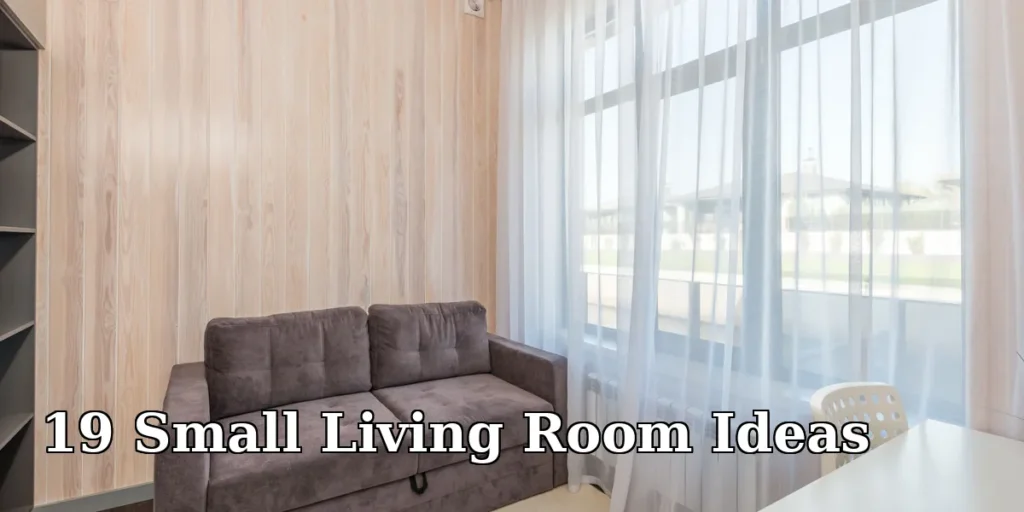
Real small living room ideas, the kind that hold up in an actual home, start long before you buy a thing. I found out the expensive way, when a beautiful sofa swallowed my whole flat.
Small Living Room Ideas That Start With a Tape Measure
With tape in hand, walk the room exactly as it stands and note every measurement that matters: length, width, each door swing, the radiator, then mark that footprint straight onto the floor. A rough floor plan sketched over the top repays the effort twice over, and one unhurried hour with a free planner such as the RoomSketcher layout guide is time you will not regret.

Seat-count comes next, since two on an ordinary evening and six on a Friday demand very different furniture. Keep one walkway open from door to seat to window, settle the biggest piece first, then let the room’s shape decide: sofa on the long wall in a narrow room, floating seats in a square one, rug and sofa back dividing open-plan, moveable pieces in a studio.
Renters lose almost nothing here: no drilling, no paint, just floor tape, a leaning shelf, and a roll-away rug. Stick to this sequence and everything else slots in behind it: measure, count seats, keep one walkway open, place the biggest piece, fix the light, sort the storage, and save colour for last.
- Tape out the footprint before anything else
- Count the seats and keep one clear walkway
- Place the biggest piece first
- Sort the light first, then storage, then colour
Let the Light Do the Heavy Lifting
For sheer value, nothing stretches a tiny room like light, and it outdoes a new sofa every time. Sort the lighting, then stand back and judge the room afresh.
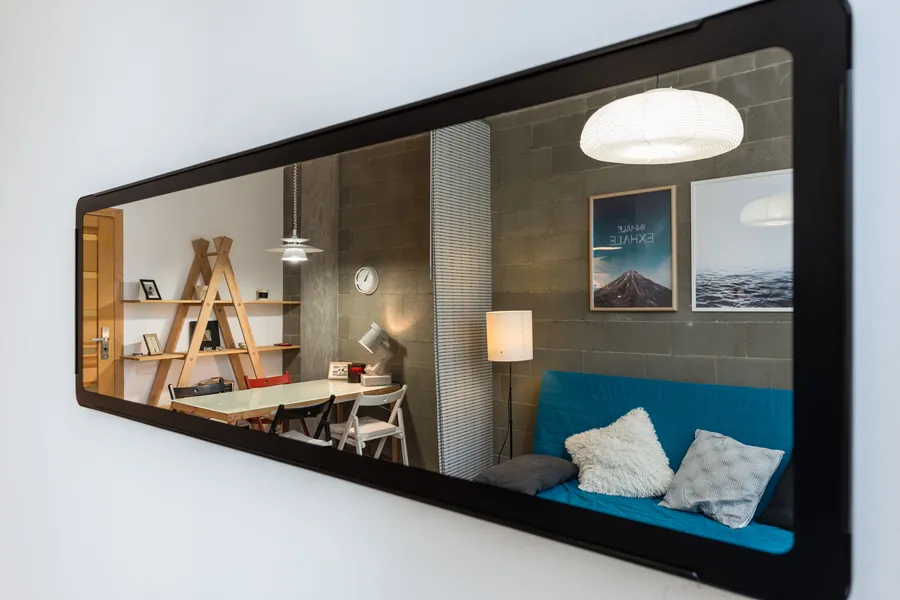
1. One Light Palette, Walls to Ceiling
Light-toned warm neutrals bounce light around the room, so off-white, soft grey or pale sand carried across walls, trim and ceiling gives you a safe starting point, since a broken paint line cuts the room into smaller pieces. In north-facing rooms colour misbehaves, so read our guide to the best paint colors for north facing rooms before you bring a single tin home.
2. A Ceiling Tint That Lifts a Low Room
Where the ceiling sits low, warm white with the faintest touch of blush lifts it without stealing any light, and the eye keeps drifting upward past the ceiling line. Keep that tint paler than the walls without exception: anything darker bears down on everything below.
3. Mirrors That Borrow Light
Hang a mirror across from the window and daylight bounces straight back in, almost a second window for free. Size it generously and it pulls double duty as a focal point, handing you light and a talking point in a single purchase.
4. Three Lights Beat One Harsh One
One overhead light alone flattens the whole room and drives hard shadows into every corner, which shrinks the space before your eyes. Layer floor lamp, table lamp and a gentle overhead glow, and evenings grow warmer while the dead corners fade away.
5. Curtains That Do Not Shrink the Window
Weighty curtains rob a room of height and fussy blinds rob it of width, so keep window dressings light and uncomplicated. Mount them high, near the ceiling, slightly beyond the frame, and the glass stays on show. Renters can get the same effect from a tension rod or the rail already there.
Seating That Fits the People, Not Just the Room
Seating trips up more small rooms than any other choice, because a sofa that behaved beautifully in the showroom rarely behaves the same way at home. Buy for the people who will really sit there, walkway included.
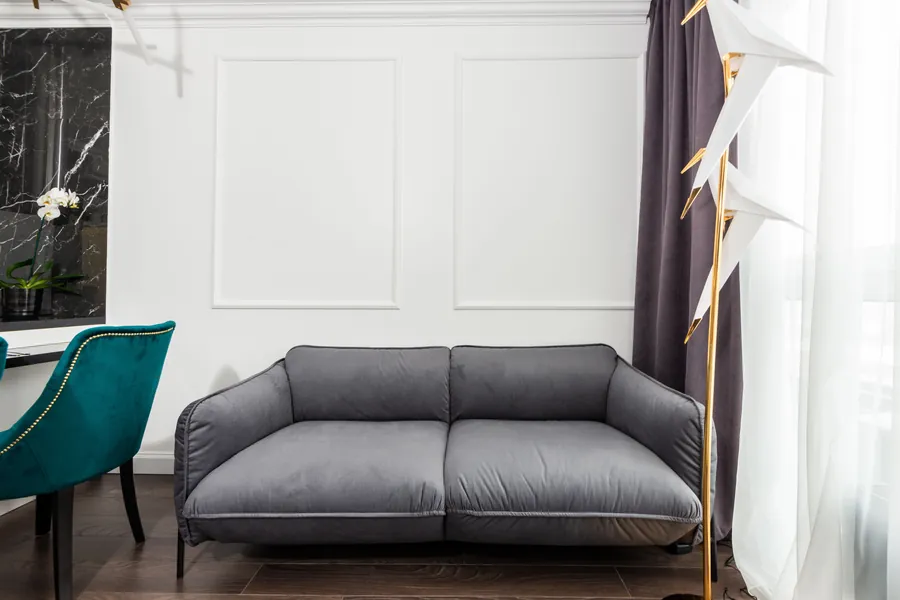
6. A Sofa That Actually Fits
In most small rooms, a two-seater of roughly 160 to 180 cm beside one accent chair wins over a three-seater squeezed in with two armchairs. Slim arms, visible legs, a lower silhouette: together they let light slip beneath and throw the floor open.
7. Pull the Sofa Off the Wall, Just a Little
Until you try it, the idea feels backwards, yet drawing the sofa a little way out lends the room depth and movement. Slide a slim console or shelf in behind it to complete the picture, and a few centimetres of floor buys a room that can breathe.
8. One Tall Lamp Instead of a Tangle of Small Ones
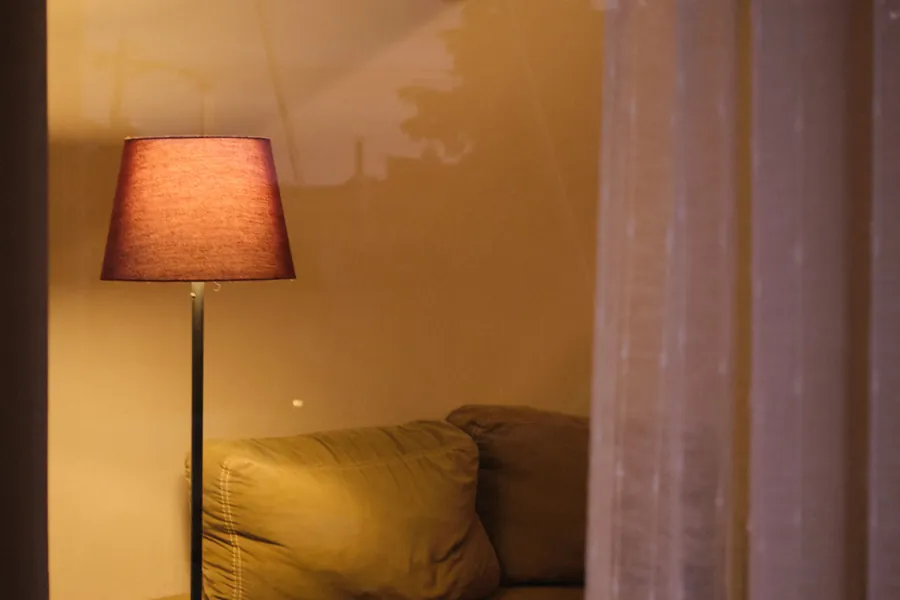
A cluster of little lamps brings tangled cords, and a small room conceals no cable. A single tall floor lamp beside the sofa covers everything: stronger light, tidier lines, a reading corner settled in one move.
Storage That Lives on the Walls, Not the Floor
No small room can conjure extra floor, so pass the burden to the walls. Everything that follows lifts clutter off the floor and pulls the gaze upward with it.
9. Furniture That Earns Its Floor Space Twice
Insist that every piece earn its keep twice, beginning with a storage ottoman that plays coffee table by day and spare seat after dark. A console behind the sofa adds surface without a bulky side table, while nesting tables slip away when unneeded.
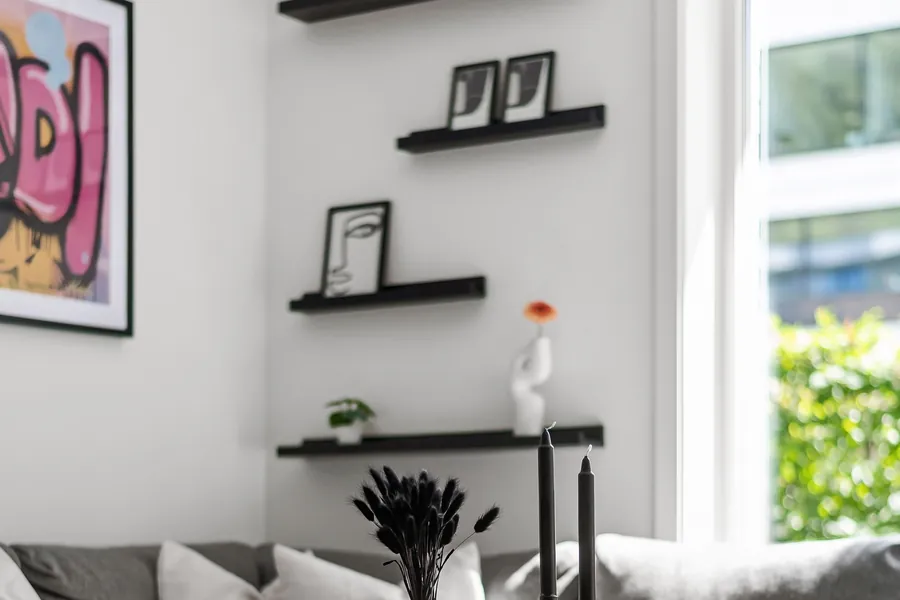
10. Walls Do the Storing Now
Tall narrow shelves, wall-fixed cabinets, floating shelves: combined they raise clutter from the floor to eye level and above. Eyes travel upward, the room reads taller, and the floor stays open for walking. For more to steal, see these clever storage ideas for tiny homes, then keep the shelves tidy.
11. A Table That Folds Flat Against the Wall
A wall-fixed drop-leaf table folds flat when you finish with it, offering a desk or coffee spot that steals nothing from the room. Where renters cannot drill, a freestanding folding table serves as well and moves house with you.
Walls, Floors and the Eye Tricks Between Them
Once light and seating are settled, the eye shapes the room. Zones, floors, colours, plants, pieces the eye scarcely registers: between them they settle calm or clutter.
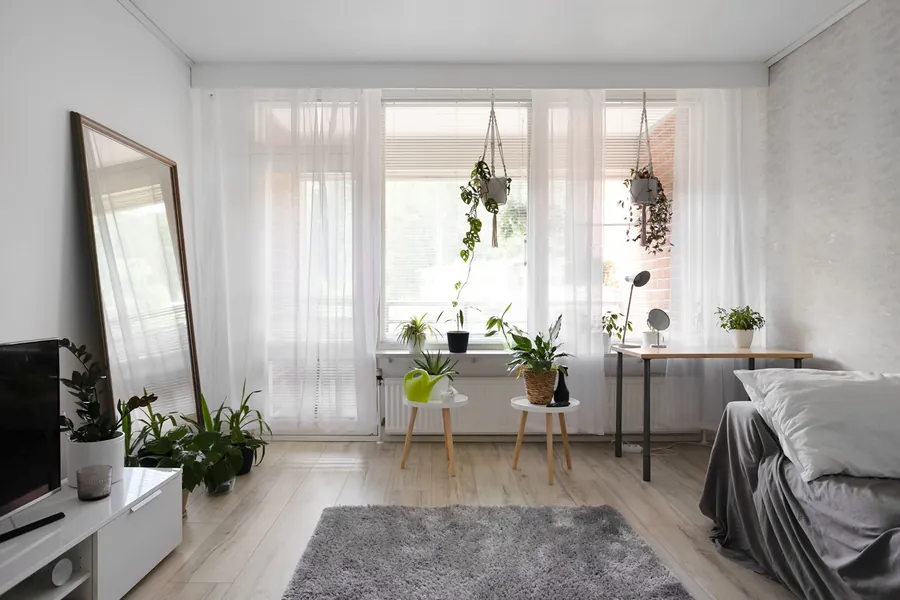
12. Zones Without Building a Wall
Open-plan rooms are just as hungry for zones, and a wall is the last luxury a small room can spare. Have a rug stake out the seating area, a shift in lighting mark it a second time, the sofa back rule the line a third, and seating, dining and work corners each come into focus alone.
13. A Rug Big Enough for the Furniture
Hardly any styling mistake crops up more often than a rug that runs too small, shredding the floor into scraps. At the very least, land the front legs of each seating piece on the rug, and the layout holds its ground.
14. Fewer Colours, Fewer Materials
Where a busy palette unsettles a room, a tight one settles it, so two or three leading colours with one accent are plenty. Run a single material through the room, the same wood tone on shelf and coffee table, and it gains a unity that a dozen finishes could never fake.
15. Plants That Add Life, Not Clutter
Well-placed plants add texture and colour for almost no floor space, so try one trailing plant on a shelf or a single tall narrow plant in a corner. For a calm, clutter-free version of this look, see our japandi living room ideas.
16. Glass Pieces You Barely Notice
A coffee table with a glass top takes up genuine floor space yet barely any visual space, and an acrylic side chair works precisely the same trick. Light passes straight through both pieces, the floor beneath reads as one continuous surface, and that counts most when floor runs tight.
TV, Upkeep and the Finishing Touch
People forget the last three tricks more than any others: a television sized to the room, a habit that keeps it working, one accent colour used with discipline. Not one of them asks for a renovation.
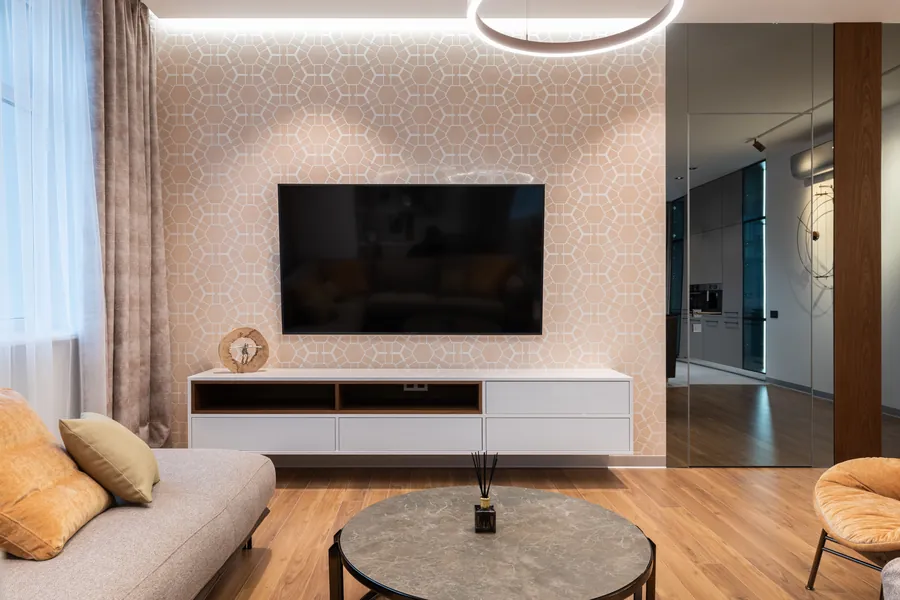
17. A TV That Fits the Seating Distance
An oversized television floods a small room outright, then bosses every other decision around. Match the screen to your actual seat, and somewhere between 40 and 50 inches suits most small living rooms.
18. Edit, Then Edit Again Each Season
In a small room clutter announces itself quickly, so work through shelves, surfaces and floor each season and retain only what earns its place. Revisit furniture placement every six to twelve months, earlier still when a new piece arrives.
19. One Accent Colour, Used Three Times
Settle on one accent colour, drop it into exactly three places, cushion, print, throw, and repetition turns into the room’s plan. Three touches read intentional; one reads accidental.
The Mistakes That Shrink Rooms Fast
Shrinking rooms usually share the same few mistakes, each with a modest fix. A sofa that runs oversized blocks sightlines and monopolises the floor, so exchange it for a slimmer profile standing on raised legs.
Too many small rugs carve the floor into zones, so lay down one larger rug, while weighty dark curtains compress walls and windows, so choose a lighter fabric hung close to the ceiling. Overhead light on its own leaves flat, harsh shadows, so build up floor, table and ambient glow in layers.
Furniture rammed flush against every wall feels boxed in, so let the key pieces float a touch, while clashing wood tones read fussy and disconnected, so echo one or two finishes. Small fixes, honestly, and a big difference.
Questions Readers Actually Ask Me
Five answers come first, before a single penny is spent. Work through them ahead of the big purchases, since they end up deciding those purchases.
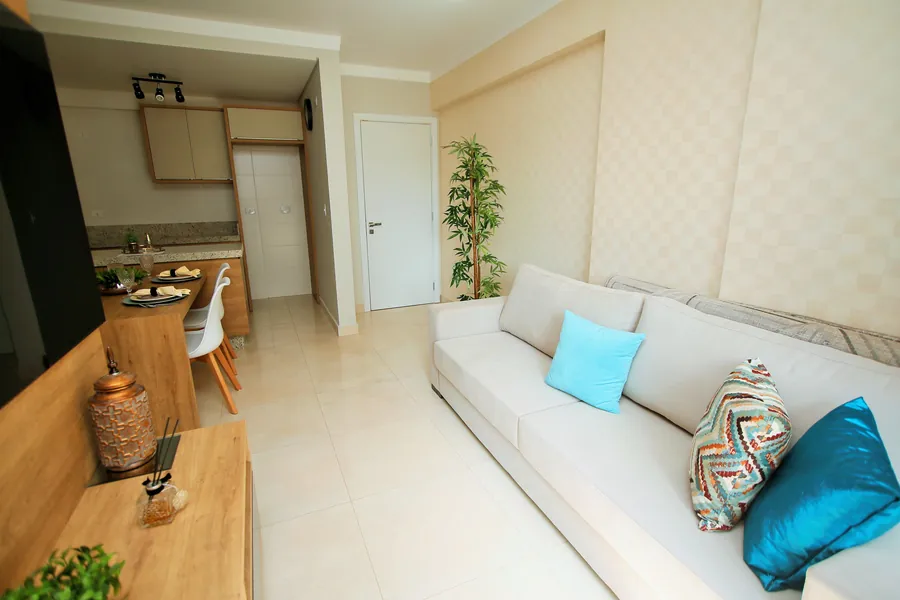
Sofa Size: What Fits Without Blocking the Walkway?
In a small room, a two-seater of about 160 to 180 cm wide generally makes the most comfortable choice. It preserves room to walk and space for the remaining furniture; a three-seater with two armchairs generally devours both.
Dark Paint: Does It Always Shrink a Room?
Not necessarily: a dark warm colour, spread evenly across the walls and paired with good lighting, lends a cosy, considered feel. Applied in patches, it breaks the room apart and makes it feel smaller.
One Big Rug or Lots of Little Ones?
One larger rug wins almost always. It draws the seating area together into one settled zone; a scattering of little rugs fractures the floor and leaves the room feeling busier than it is.
TV Size: How Big Is Too Big Here?
Your seating distance settles the question, though a screen of 40 to 50 inches suits most small living rooms without flooding the space. Choose the screen for the seat you genuinely watch from, not the biggest one on the shelf.
Open Shelves or Closed Storage: Which Wins?
A mix works best. Open shelves preserve a small room’s airiness, while closed storage conceals everyday clutter on show.
A Room That Earns Its Keep
Every choice in a small room works for the space or against it, and the finest-feeling rooms are seldom the fullest or boldest. Begin with scale, continue with light, keep a disciplined palette, then float the sofa inches out and build the lighting in layers so light moves beneath raised legs. No renovation needed, no big budget needed, just better choices repeated daily. For more rooms in this spirit, browse our home interior ideas, and pick up the tape measure before anything else.



7 Responses