

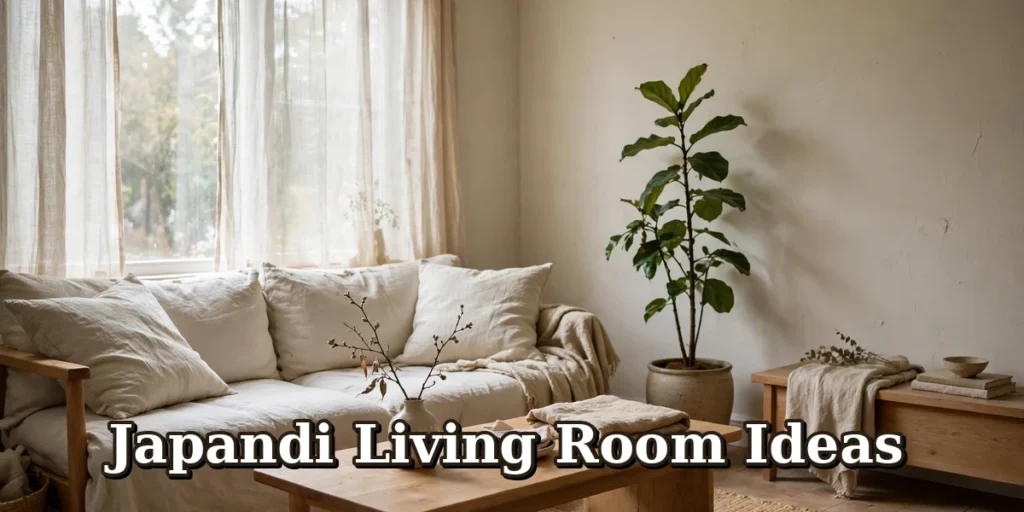
My living room drove me quietly mad for months, and I could never put my finger on why it felt wrong. Then japandi living room ideas sorted it, no rebuild needed.
Two traditions meet in this look, and both worship calm above everything else, which still surprises me. Japan brings clean lines, Scandinavia brings warmth you feel sitting down. Together they feel restful rather than empty, and honestly that balance is the promise.
Japandi Living Room Ideas: What Defines the Look
Here is the style in plain words, no waffle, no jargon, just what it honestly looks like in real rooms. Start with what Japandi actually means, because the name alone explains half the look before you even start. Japanese minimalism meets Scandinavian comfort here, neither half works alone.
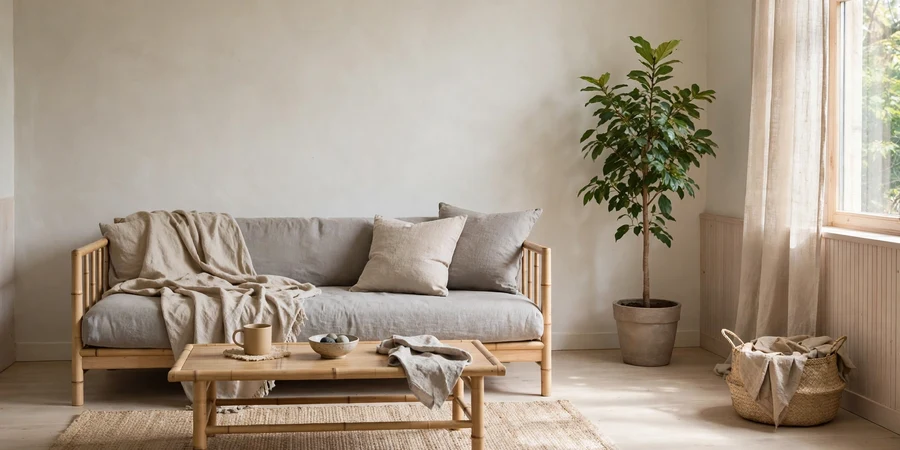
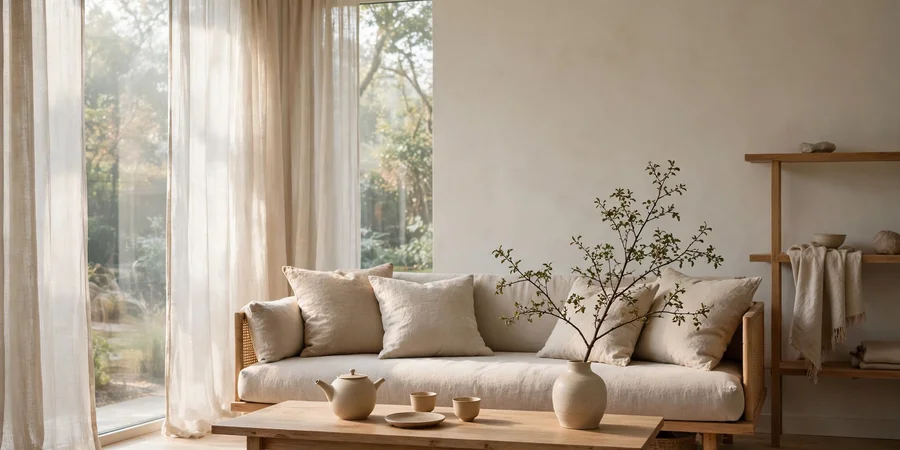
Warm and quiet is the colour rule: warm white, beige, stone grey, soft clay. Pale wood does the rest, light oak, ash, beech and bamboo, with nothing dark anywhere in sight at all. Furniture stays low and simple, close to the floor. Linen, cotton, wool and woven rattan cover the fabrics, and that mix keeps everything soft.
Light stays soft, warm and layered low throughout. Everything here has to earn its place, or it goes straight out of the door, no arguments. Declutter first, buy nothing yet, it costs nothing. Matte and natural finishes only, nothing shiny allowed to break the calm.
Japandi Beside Its Two Parents
| Feel | Restful, warm, easy to live in | Calm, clean, nature-led | Warm, bright, everyday comfort |
| Furniture | Low, simple, close to the floor | Rooms that hug the floor | Comfort-first, practical pieces |
| Colour | Warm white, beige, stone grey, clay | Natural, muted, nature-led tones | Warm, light, comfort-led |
| Light | Soft, warm, layered low | Gentle, indirect, low glow | Candles and cosy evening light |
Go Low: Furniture That Grounds the Room
Japanese rooms hug the floor, and low pieces somehow make even low ceilings feel higher than they really are. Start with the sofa, it eats the most space. Low back, slim arms, simple legs, pale oatmeal linen, that’s the whole formula.
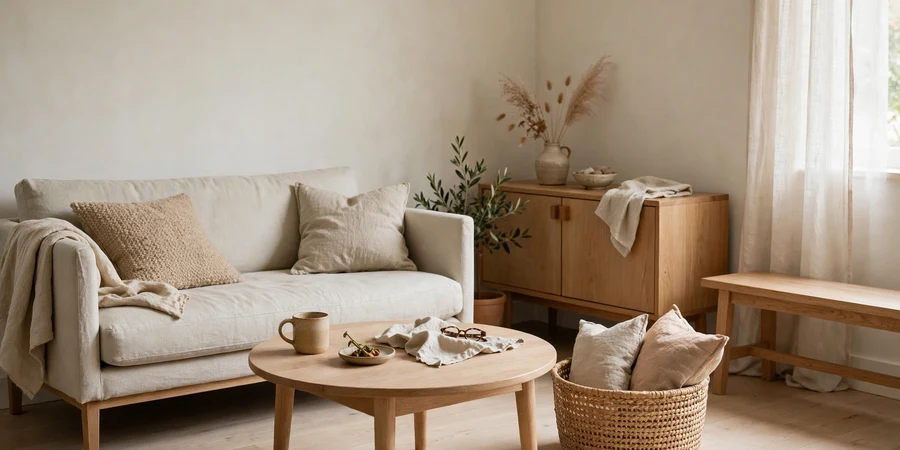
Coffee tables matter more than people think, so pick light wood with clean, simple lines. Round shapes soften the look, help the room flow. Leave clear space around each piece, so your eye can travel freely across the room.
Floor cushions help too, one or two cover movie nights, kids who refuse chairs. They tuck back into a basket afterwards, leaving fewer chairs and more floor.
Now comes the hard part, the bookcase wall you know so well. Tall, heavy and full of things you never look at, it honestly deserves a simpler replacement. Swap it for one low sideboard, which gives storage without that looming feeling overhead. Walkways stay wide and corners stay mostly empty.
Wood tone is what ties everything together, so stick to one or two light finishes at the very most, no more. Mixed dark woods fight, shrink the space, trust me. A dark piece can be sanded back or painted pale, like I did to my old mahogany side table. The room changed overnight, which proves how much one small change matters.
Low storage helps as well, and our clever storage ideas for tiny homes show baskets and low cabinets doing the job. They hide clutter without looming, exactly the point.
Soft Colours and Textures That Slow Everything Down
Japandi colour stays quiet and warm, feeling natural throughout. Walls take warm white, cream, pale greige, they bounce light around the room nicely. Small spaces feel open under them, cold blue-greys feel flat.
Build the palette in layers, starting with the walls as your base, then add from there. Give the room one dark anchor, charcoal or walnut-deep, to ground everything properly. Without that anchor, pale colours drift, the room loses grip. Then add one soft accent, clay, sage or sand, and choose the colour before you shop.
If you prefer classic, romantic rooms, our guide to french provincial style in modern homes takes a softer, gentler, more romantic path. Japandi stays simpler, though both love warm wood, calm neutrals. Pick the mood that suits your evenings best, and most japandi living room ideas honestly start right here.
Test paint before committing, big swatches on two walls, because small chips lie, please don’t skip this. Check them morning and evening, warm neutrals shift daily. The right shade feels calm at every hour, the wrong one nags, and you’ll know.
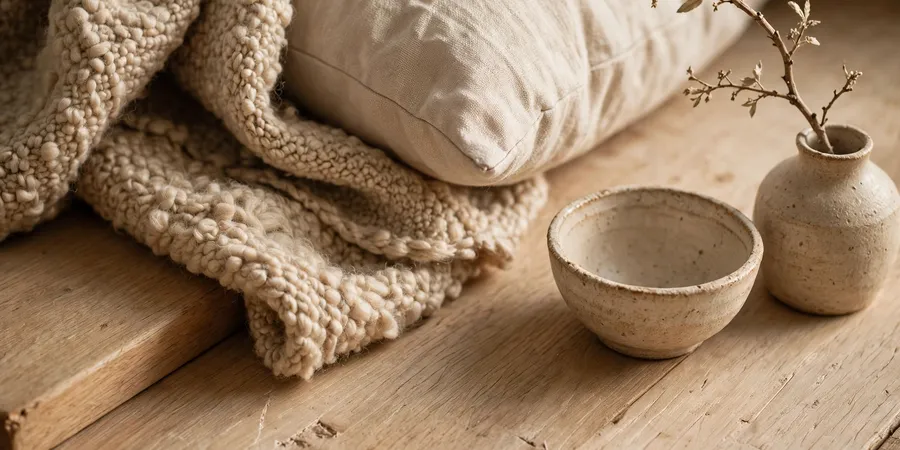
Texture does the heavy lifting here, honestly, so layer natural materials instead of bold patterns that shout for attention. A nubby wool throw, linen sofa, jute rug, warmth without noise. Plants count as texture too, and one tall plant beats five tiny ones every time. A single branch in a ceramic vase finishes the job off nicely.
Touch matters as much as looks, run your hand across cushions, throws, chair arms sometime. Rough linen, smooth wood, balanced, that’s the trick. Contrast in touch keeps quiet colours alive and interesting.
Light That Feels Like Late Afternoon
Harsh ceiling light ruins calm rooms fast, so Japandi lighting stays low and indirect. Paper lanterns and fabric shades soften everything, lamps stay low. Glow should pool gently, like late afternoon sun on demand, and that’s the whole trick.
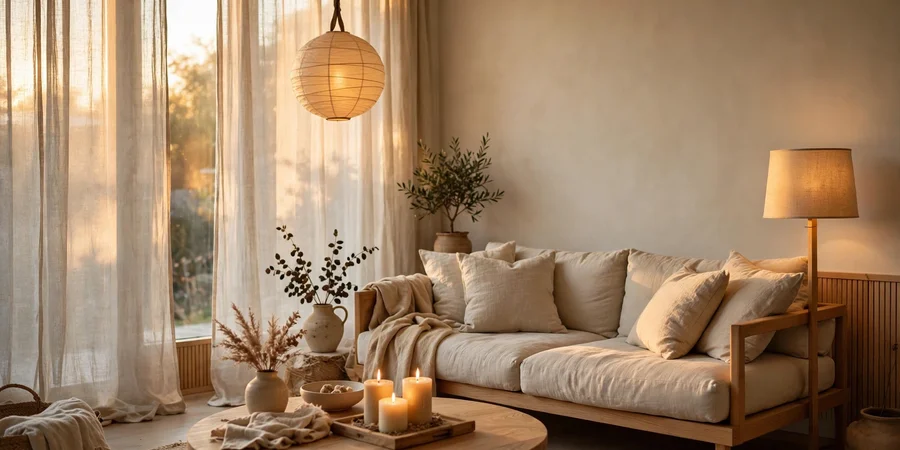
- One floor lamp in a corner, a proper reading spot, no glare.
- A small table lamp warms the other side softly, without harsh glare.
- Candles bring the Scandi half, and battery candles work just as well.
Honestly, the flicker fools everyone, and daytime means protecting the soft light you have. Swap heavy curtains for sheer linen, clear sills, simple mirrors. In Japandi rooms light acts like a material, so treat it just like wood or wool.
Bulb colour is the cheapest mood fix, warm white around 2700 Kelvin, nothing beats it. Cool bulbs grey the walls, warm bulbs keep wood golden. One bulb swap changed my living room, and it cost just £4.
Dimmers beat extra lamps every time, so fit them or use smart bulbs, your call. Lower light hides clutter and softens hard edges, which flatters everything in sight. Rooms feel bigger, bright light feels like a shop. Choose glow over glare, and group three candles on a low tray.
Their flicker makes plain walls feel alive and warm, even at night. Real flames stay away from curtains and cushions always, or go battery with no shame.
Small Room? These Tricks Double the Space
Small rooms suit Japandi best, since the style was born in compact Japanese homes. It already knows your flat, and it works with small spaces, that’s the beauty of it.
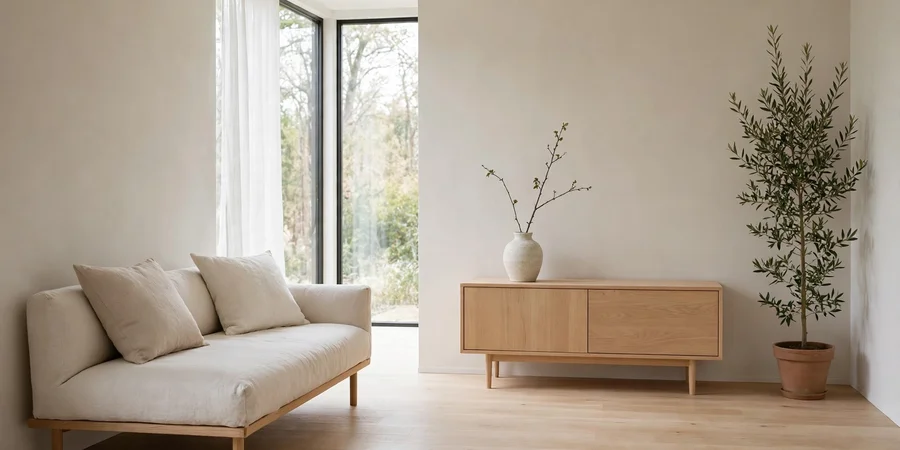
Step one is removing one piece of furniture, starting with less, not more. Most small rooms hold one item too many, and the gap feels like new square footage.
Next, lift what stays, since legs on sofas and cabinets show more flooring underneath. Visible floor tricks the eye into seeing space, and our small living room ideas has more tricks. Use them with the Japandi rules above for the best effect, and you’ll feel it.
Storage keeps the look honest, since calm rooms need homes for remotes, blankets and charger cables. Closed baskets and low cabinets do that job in flats and houses alike. Surfaces stay clear that way, and even tiny rooms breathe properly again.
Keep the floor plan simple, big pieces pushed against the walls, nothing floating oddly. Leave one wall almost bare, blank walls breathe. Guests feel the calm before they can name it, which tells you everything.
Big Calm on a Small Budget
Japandi rewards patience over spending, since fewer things matter, not pricier ones, and that’s the point. Start with free fixes this weekend, clear surfaces, open curtains. Why spend anything when so many rooms feel calmer before a single coin?
- Clear the surfaces, shift the furniture, let daylight flood in, spend nothing.
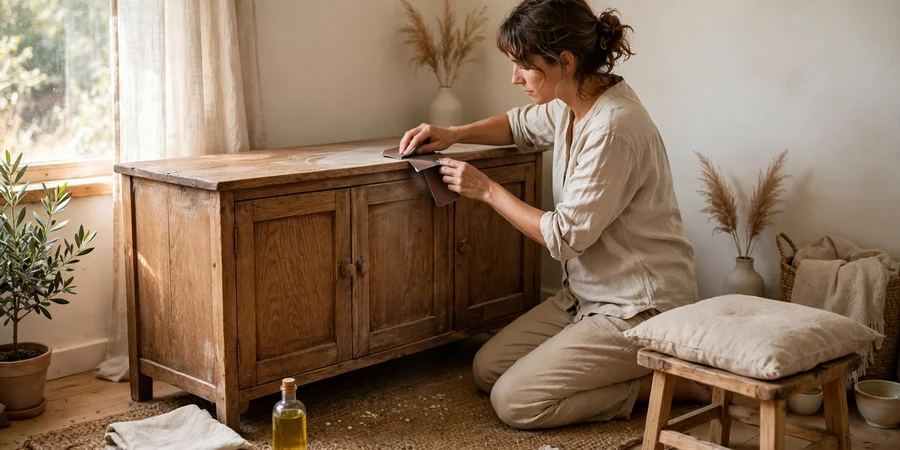
- Buy second-hand solid wood, old oak scrubs up beautifully with sanding.
- One upgrade at a time, a linen throw for this month only.
Light sand and natural oil suit most second-hand finds. Charity shops, auctions and local selling groups all reward patience, week after week, if you keep looking. Well-made old furniture beats flat-pack on price, and carries a story too. Flat-pack, by contrast, only has an Allen key, and we all know it.
Slow buying matters, so live with each change before adding the next. Your room grows calmer that way, your budget stays calm too. Raid your own house first, moving a plant, rug or lamp from another room. Fresh eyes make old things feel new, trade pieces between rooms first.
Three mistakes undo this look fastest, I see all three constantly. Crowded furniture kills calm, bare neutrals turn bland, impulse buys let clutter creep back. Half the look is placement, half is restraint, and that’s the secret.
A full room makeover can stay under $150 or £120, which maximalism could never manage. Try getting that from maximalism, and you’ll see why restraint wins here.
Questions Everyone Asks About Japandi Rooms
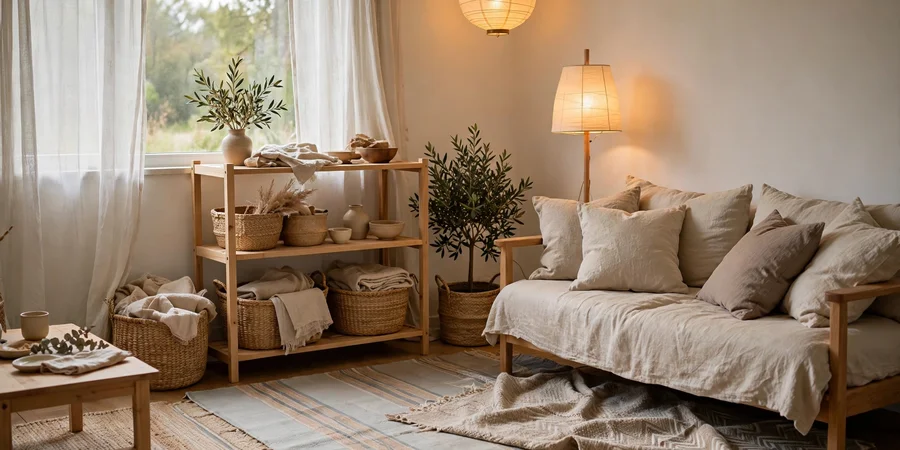
What exactly is Japandi style?
Japanese minimalism meets Scandinavian comfort, with low furniture, light wood and neutral colours running all the way through the whole room, honestly. Both value nature, craft, daily rituals, that’s the heart. Calm and uncluttered sums up the whole pitch, basically, that’s it.
Which colours suit a Japandi living room?
Warm white, cream, beige, stone grey carry the room, no shouting colours, not even one. Clay, sage, taupe, pick whichever feels like home. Skip bright primaries and cold blue-greys, and your walls will thank you.
Can Japandi work in a rental home?
Yes, brilliantly for renters, since the look needs no paint, no drilling, no deposit drama at all. Rugs, cushions, lamps and light curtains carry the whole effect, and honestly that’s all it ever takes in a rental home, really. The calm moves with you, honestly the best part.
Is Japandi expensive to copy?
It starts free, decluttering and rearranging cost absolutely nothing. After that, one piece at a time, small changes matter. A full room makeover can stay under $150 or £120, which keeps the whole project honest and grounded for anyone trying it.
How do I keep it warm, not cold?
This is the fear everyone has, and it’s a fair one, because I had it too. Minimal can read cold, but texture and warm light together fix that. Wool, linen, wood, candles, one soft accent colour do the job. Warm bulbs matter more than people expect, even more than furniture.
Your Calmest Room Is One Weekend Away
No designer needed, so start with space, then colour, then texture. The last of our japandi living room ideas is simplest: keep only what you love. A room with fewer, better things feels rich, not empty, and honestly that’s the whole point of it all for me.
Work one section at a time, make tea, enjoy the quiet. For more gentle styles and room guides, browse our home decor ideas, and pick your next project from there. Calm homes are built slowly, one kind choice at a time, and honestly that’s more than enough for anyone starting out.


2 Responses