My feet told me before my brain did. I stepped out of bed one January morning onto tiles that felt like an ice rink, and I thought: there has to be a better way to heat a room than a hot box bolted to the wall. That is the whole promise of underfloor heating pros and cons debates in one cold morning: warmth from the floor itself, no radiators, no cold patches.
But most brochures skip the awkward half. It costs real money, it is slow to warm up, and it can be a nightmare to fix under a tiled floor. I dug through installer quotes and owner complaints so you do not learn the expensive lessons firsthand.
Short version first. Then the detail.
Underfloor Heating Pros and Cons in 60 Seconds
Even heat, no cold spots: warmth rises across the whole floor, so the room feels the same everywhere.
No radiators hogging walls: you get your wall space back for furniture and art.
Lovely under bare feet: tiled bathrooms stop feeling like punishment in winter.
Slow to warm up: a water system can take 2 to 3 hours to reach full temperature, so timers matter.
Not cheap to fit: roughly £50 to £200 per square metre installed, depending on system and floor build-up.
Running costs split hard: electric mats are pricey in big rooms, while water systems with a heat pump are among the cheapest heat you can buy.
Repairs can mean lifting the floor: rare, but real, and the reason good fitting matters more than a cheap quote.
If you only remember one line, make it this one. Underfloor heating is brilliant as a comfort upgrade and a smart whole-house system, and a poor choice as a quick fix for one cold room you barely use. For more floor ideas, browse our flooring guides.
Why Your Feet Notice Before Your Thermostat Does
Radiators heat the air next to them. That hot air rises, drifts across the ceiling, cools, and sinks again by the far wall. Your feet sit in the coldest part of it. Underfloor heating flips the whole thing over. The floor itself becomes the heater, so warmth starts at your toes and rises evenly.
Sounds like a small difference. It is not.
Ask anyone who has lived with it and they say the same thing in different words. The room feels warm at a lower thermostat setting, often 1 to 2 degrees lower than with radiators, because no cold floor drags the average down.

Electric Mats vs Water Pipes: The Only Choice That Actually Matters
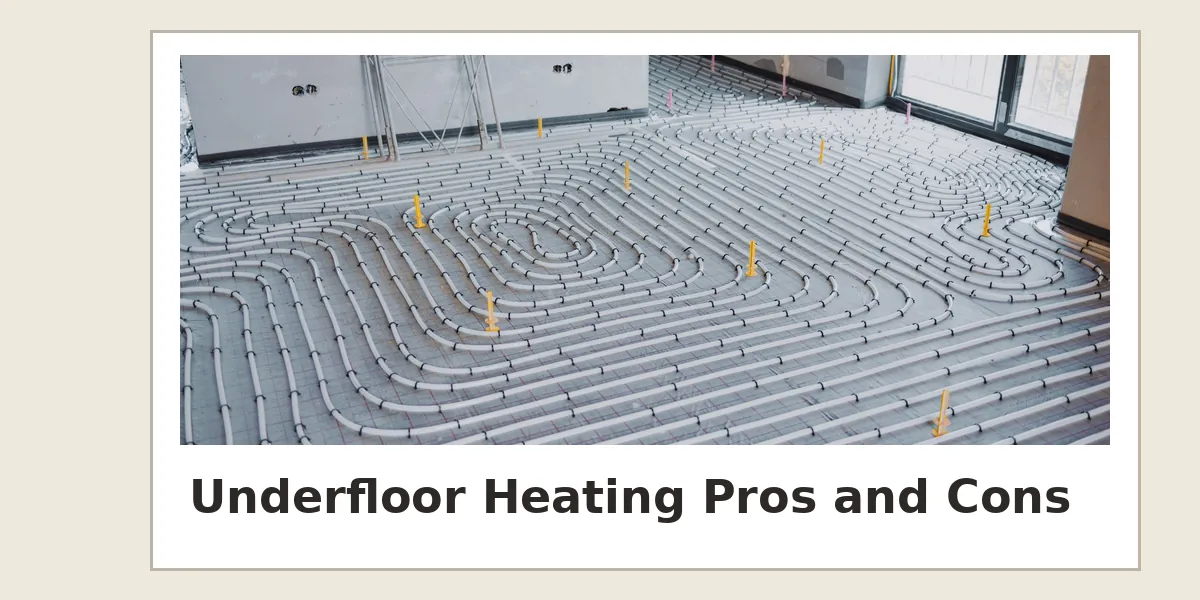
Forget brand names for a minute. There are two systems, and picking the wrong one is the single most expensive mistake in this project. Electric mats are thin heating cables, usually sold as ready-made rolls, laid under tile or laminate and wired to a thermostat. Water systems pump warm water through plastic pipes set into screed or panels, fed by your boiler or heat pump.
Electric wins on easy fitting. A competent electrician can lay a bathroom mat in a day, with no pipes and no boiler work. That is why it rules small retrofits. But electricity at the current UK price cap rate of 26.32p per kWh (October to December 2026) is expensive heat, so running it across a big open-plan floor all winter stings. This is the sharpest edge of underfloor heating pros and cons for flat owners: water wins on running costs, especially with a heat pump, but fitting it means real building work, and in an existing home that often means floors coming up.
| Electric mat system | Water (wet) system | |
|---|---|---|
| Best for | Bathrooms, kitchens, single rooms | Whole house, new builds, big renovations |
| Fit difficulty | Low, often one day per room | High, screed or panel work plus boiler link |
| Warm-up time | 30 to 60 minutes | 2 to 3 hours |
| Typical lifespan | 25 to 30 years | 50 years plus for the pipework |
| Running cost feel | High in large rooms | Low, especially with a heat pump |
My rule of thumb: if the room is under 15 square metres and you just want warm tiles, go electric. If you are heating most of the house or renovating anyway, water pays you back over the years. One popular floor finish over either system is vinyl plank, and our vinyl plank flooring pros and cons guide covers which types handle gentle floor heat.
What It Costs in 2026, Room by Room
Any installer who quotes you a single number without seeing your floor is guessing. Still, current UK trade guides agree on the broad ranges. When people ask me about underfloor heating pros and cons, costs come first, so here are the honest figures. Checkatrade puts electric systems at £50 to £75 per square metre in new builds and £60 to £85 in retrofits, with wet systems at £85 to £100 new build and £95 to £110 retrofit. Other 2026 guides run higher for full wet retrofits with new screed, up to £130 to £200 per square metre, so treat the top end as the honest figure for older homes.
| Project | Electric, roughly | Water, roughly |
|---|---|---|
| Small bathroom, 5 sq m | £300 to £450 | £500 to £750 |
| Kitchen, 15 sq m | £900 to £1,300 | £1,400 to £1,700 |
| Kitchen-diner, 25 sq m | £1,500 to £2,250 | £2,100 to £3,100 |

Three costs hide outside those per-metre numbers. Floor height: wet systems can raise your floor by 50mm or more unless you choose low-profile panels, so doors and thresholds may need adjusting. Controls: a decent smart thermostat per zone runs £150 to £250, and a five-zone house needs five. Heat source: an old boiler near the end of its life may need replacing. For a full breakdown, the Checkatrade underfloor heating cost guide is the most thorough trade source I found.
The Running Bill Nobody Warns You About
Here is the uncomfortable maths. An electric mat in a 4 square metre bathroom, run 4 hours a day, costs roughly £11 a month at current electricity prices. Scale it to a 25 square metre kitchen-diner running all evening and you are looking at several times that, every month, all winter.
That is the trap.
Water systems tell a different story. Connected to a modern condensing boiler they run at lower flow temperatures than radiators. Connected to a heat pump they are arguably the best pairing in home heating, because heat pumps are most efficient exactly at the low water temperatures underfloor circuits use. Owners with that pairing often report the lowest heating bills in their street. Owners with electric mats across a draughty Victorian ground floor report the opposite. Same technology family. Wildly different bills.
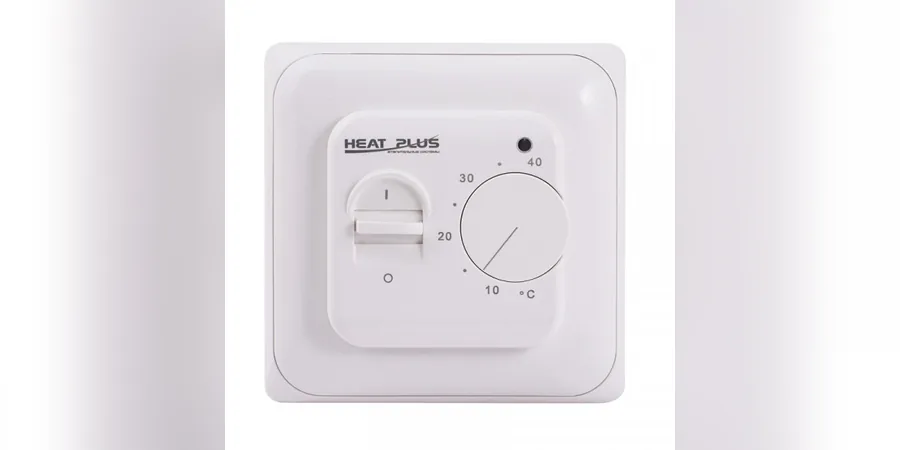
Controls decide which camp you land in, and this is where underfloor heating pros and cons get personal. A single thermostat for the whole house wastes money heating empty rooms. Zone controls, one per room, plus a timer that starts the slow water system before you get home, change the maths completely. Insulation matters more than the system itself. Fix draughts first, and our energy efficiency solutions roundup covers the cheap fixes before the big spend.
Floors That Love It, Floors That Fight It
Tile and stone are the dream partners. They conduct heat beautifully and feel amazing warm underfoot.
Wood is a maybe. Engineered wood handles underfloor heat far better than solid planks, which can shrink and gap as they dry out. Keep floor surface temperatures under about 27 degrees. Our hardwood or engineered wood floors guide explains the difference.
Thick carpet is the awkward one. It insulates against the very heat you are paying for, so the system works harder for less warmth. Low-tog carpet and underlay can work, but deep pile will strangle the output. Laminate is fine if it is rated for underfloor heating.
The Slow Warm-Up Problem, Plus Other Honest Downsides
Let us be blunt about the cons, because this is where buyer remorse lives. Warm-up time is the big one. A water system in screed is a giant thermal battery: wonderful once warm, slow to get there. If you come home at random hours and want instant heat, radiators beat it every time.
Then there is the retrofit mess. Lifting floors, dust, days without a kitchen, skirting boards off, doors trimmed. As a standalone project in a finished home it is disruptive in a way a radiator swap never is.
Repairs deserve one honest paragraph. Modern pipework rarely leaks and electric mats rarely fail, but when something does go wrong it sits under your finished floor. Finding the fault needs thermal imaging, and fixing it can mean lifting tiles. Good installers pressure-test circuits before screeding and photograph the pipe layout before it disappears. Ask for those photos. If an installer shrugs, find another installer.
Warm-Floor Questions I Keep Hearing
Can underfloor heating replace radiators completely?
Yes, in a well-insulated home with the system sized properly. In a draughty older home it often works best alongside one or two radiators in the coldest rooms.
Is it worth it in just one bathroom?
For comfort, absolutely, and electric mats make it affordable. For saving money, no. A bathroom mat pays you back in warm feet, not lower bills, and that is the comfort side of underfloor heating pros and cons.
Does it work with a heat pump?
Beautifully. Heat pumps run most efficiently at low water temperatures, and underfloor circuits are designed for exactly that. It is one of the strongest pairings in modern home heating.
Will it raise my floor too much?
Water systems in new screed can add 50mm or more. Low-profile retrofit panels add as little as 15 to 18mm. Electric mats add almost nothing. Measure your doors and thresholds before you sign anything.
How long does it last?
Electric mats typically last 25 to 30 years, and most carry long warranties on the cable itself. Water pipework can last 50 years or more. Thermostats and manifolds are the parts you will replace first, and they are accessible.
Should You Bother? My Honest Take
Here is where I land after all the quotes and complaints. If you are renovating, building, or replacing a failed boiler anyway, put water underfloor heating in the rooms you live in most. It is comfortable, it frees your walls, and with a heat pump it is genuinely cheap to run. If you have one cold bathroom and a tight budget, an electric mat is a lovely upgrade for winter mornings.
Skip it if your home leaks heat like a sieve, if you want instant warmth at unpredictable hours, or if the only quote you have comes from someone who never measured a room. Underfloor heating pros and cons really come down to one question: are you buying comfort you will use daily, or a feature you hope will fix a house that needs insulation first?
One last thing. Get three quotes, ask for the pipe photos, and read the thermostat manual before the installer leaves. Warm floors are wonderful. Surprise bills are not.