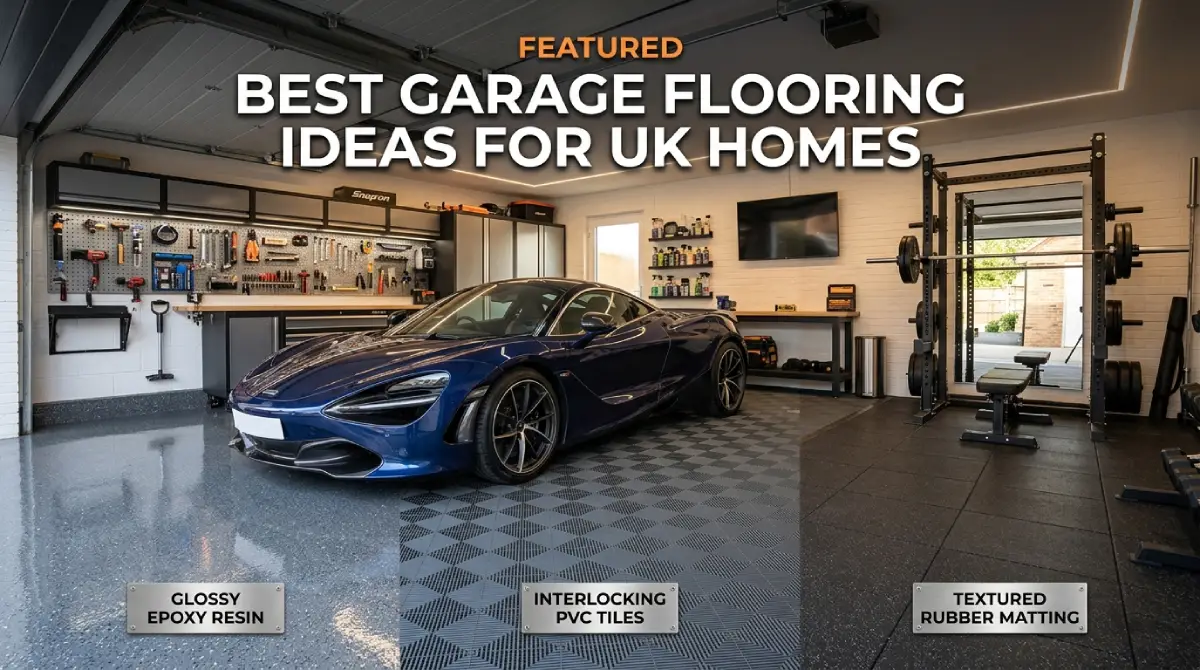
If you want to upgrade your garage, the floor is the best place to start. The right surface protects concrete, improves safety, and adds real value to your home. This guide covers the best garage flooring ideas for UK homes, comparing interlocking tiles, epoxy coatings, and rubber matting by cost, durability, installation difficulty, and long-term performance. Whether you use your garage for parking, a workshop, or a home gym, there is a flooring solution here that fits.
Why Garage Flooring Matters More Than You Think
Most UK homeowners treat garage floors as an afterthought. That is a mistake. Bare concrete is porous, prone to damp, and difficult to clean. Over time, oil stains, dust, and moisture break down the surface and make the space feel unusable.
Upgrading your garage floor does several things at once. It seals the concrete against moisture, makes cleaning faster, reduces dust, and creates a safer walking surface. In homes where the garage doubles as a workshop or hobby room, the right flooring also reduces fatigue and protects tools and equipment from ground-level damp.
The three most popular options in the UK market today are interlocking floor tiles, epoxy resin coatings, and rubber matting. Each one works differently, costs differently, and suits different types of garages.
UK Garage Flooring at a Glance
| Flooring Type | Average UK Cost (per m²) | DIY Friendly | Best Use Case |
|---|---|---|---|
| Interlocking PVC Tiles | £8 to £20 | Yes | Multi-use garage |
| Epoxy Resin Coating | £15 to £40 | Moderate | Car storage, clean rooms |
| Rubber Matting | £5 to £18 | Yes | Workshop, gym, utility |
| Polished Concrete | £30 to £60 | No | Showroom, premium finish |
| Vinyl Flooring | £10 to £25 | Yes | Light use, rental properties |
Interlocking Garage Tiles: Pros, Costs, and Tips
Interlocking PVC tiles are the most popular garage flooring choice for UK homeowners doing a self-install. They click together without adhesive, sit directly over existing concrete, and can be removed and reinstalled if you move house.
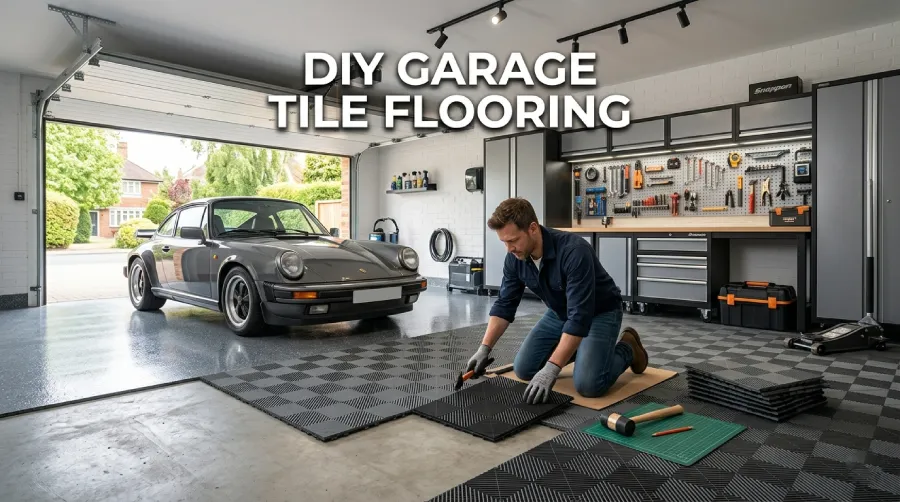
Standard tile sizes are 30cm x 30cm or 40cm x 40cm. Most tiles are between 7mm and 12mm thick, which is enough to cover minor surface imperfections in the concrete below. Popular UK brands include Taskmaster, Race Deck, and G-Floor.
Key benefits of interlocking tiles include:
- No adhesive or special tools required for fitting
- Can be walked on immediately after installation
- Available in a wide range of colours and finishes, including coin-top and diamond-top textures
- Easy to replace individual damaged tiles without redoing the whole floor
- Resistant to oil, chemicals, and UV fading in most quality ranges
- Raised design allows air circulation beneath, which reduces damp build-up
For a standard single UK garage measuring roughly 15 to 18 square metres, expect to pay between £120 and £360 for materials alone. Budget an extra weekend afternoon for fitting.
The main limitation is that tiles can shift slightly over time under heavy vehicle use unless perimeter trim strips are used. Always buy 10 percent extra tiles to allow for edge cutting and future replacements.
Epoxy Resin Flooring: Is It Worth the Work?
Epoxy resin coating is the premium option for UK garages used primarily for car storage or workshop spaces that demand a clean, professional look. It bonds directly to the concrete substrate, creating a hard, seamless surface that resists oil, petrol, and chemical spills.
A standard two-part epoxy kit for a single garage costs between £80 and £200 depending on brand and coverage. Professional installation adds £400 to £900 on top of materials, but DIY is entirely possible with the right preparation.
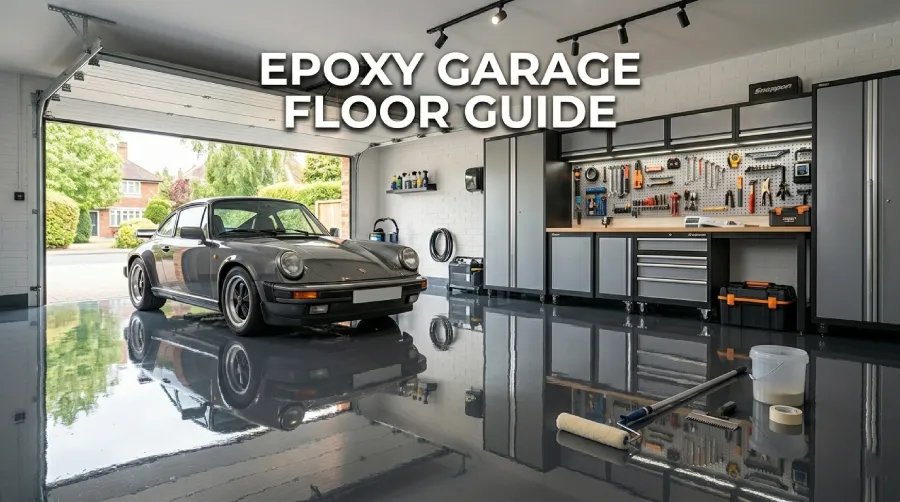
The critical step is surface preparation. Epoxy will fail if the concrete is damp, dusty, or contaminated. Follow this process:
- Test the concrete for moisture using a plastic sheet taped down for 24 hours.
- Clean the floor thoroughly with a degreaser and stiff brush.
- Etch the surface using a diluted hydrochloric acid solution or mechanical grinder to open the pores.
- Allow the floor to dry completely for at least 48 hours before application.
- Apply the primer coat and allow to cure according to the manufacturer’s instructions.
- Apply the base epoxy coat using a roller with an extension handle.
- Add decorative colour flakes if desired while the coat is still wet.
- Finish with a clear topcoat sealer for maximum durability.
Full cure time is typically 72 hours before light foot traffic and up to 7 days before driving on it.
Epoxy is not ideal for garages with ongoing damp problems. If water rises through the slab, the coating will bubble and peel within months. Resolve any damp issues before investing in epoxy.
Rubber Matting: The Practical Workshop Solution
Rubber garage matting is the most affordable and fastest flooring option available. Rolls and interlocking rubber tiles are widely available from UK suppliers such as Greatmats, Rubber Flooring Experts, and Fitness Superstore.
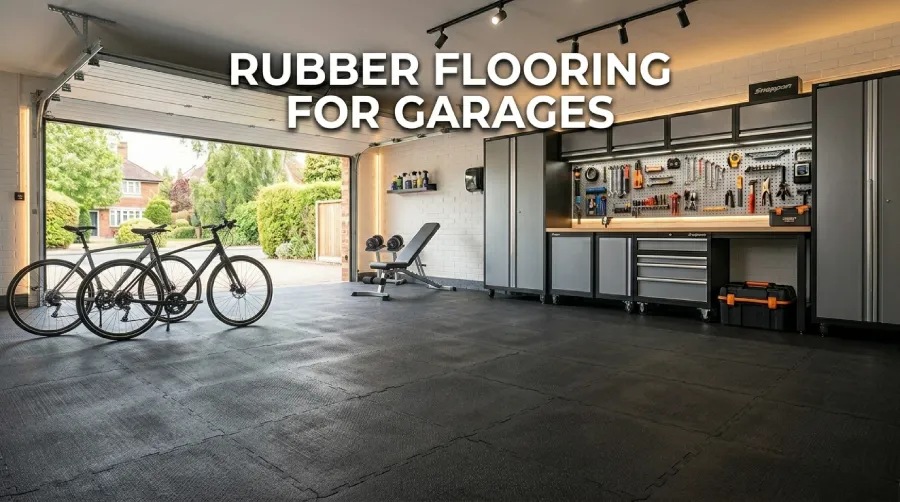
Rubber matting is particularly suited to:
- Home gym setups within a converted garage space
- Workshop areas where standing for long periods causes fatigue
- Areas around workbenches and tool storage where spill resistance is needed
- Garages used by cyclists, skaters, or hobbyists who need a cushioned surface
- Rental properties or temporary setups where permanent installation is not practical
Standard 8mm thick rubber tiles or rolls offer excellent anti-fatigue performance and are slip-resistant even when wet. Prices start from as little as £5 per square metre for basic roll rubber, rising to £18 per square metre for premium interlocking rubber tiles with bevelled edges.
The downsides are mainly aesthetic. Rubber surfaces can retain odours, especially in enclosed spaces with limited ventilation. They are also not as rigid as tiles under heavy vehicle weight, which can cause indentations from car tyres over time. For purely pedestrian or gym use, rubber is hard to beat on value.
Polished Concrete and Vinyl: Honourable Mentions
Two other options deserve attention depending on your garage goals.
Polished concrete creates a showroom-quality finish and is fully sealed against moisture. It requires professional grinding and sealing equipment, with costs ranging from £30 to £60 per square metre. It suits premium garage conversions and is increasingly popular in architect-designed homes.
Vinyl sheet or tile flooring sits in the mid-range. It is warmer underfoot than concrete or epoxy, cuts easily with a craft knife, and costs from £10 to £25 per square metre. It works well in light-use garages but is not recommended for heavy vehicle parking as it can tear or dent under sustained weight.
How to Choose the Right Garage Floor for Your Home
Matching the flooring to your actual use is more important than choosing the most expensive option. Consider these points before buying:
- If you park a vehicle daily, choose epoxy resin or interlocking PVC tiles for hardwearing performance
- If you run a home gym or workshop, rubber matting gives the best fatigue resistance and value
- If you want a DIY weekend project with no mess, interlocking tiles are the safest choice
- If you rent your home or plan to move, choose a flooring that can be removed without damage
- If your garage has a damp problem, always fix the source before laying any covering
Think about the size of your garage too. Larger double garages benefit from epoxy or polished concrete as the seamless finish looks proportionally better. Smaller single garages can look great with tiles in a contrasting two-tone layout.
Avoiding Common Garage Flooring Mistakes
Many UK homeowners waste money by rushing the planning stage. These are the most common errors to avoid:
- Laying tiles or epoxy over a damp or cracked concrete floor without repairs
- Underestimating material quantities and running short mid-project
- Choosing a purely decorative finish for a space that also gets heavy mechanical use
- Skipping the concrete etching step before applying epoxy, which causes peeling within weeks
- Buying cheap rubber matting that is too thin to provide meaningful anti-fatigue protection
- Failing to account for door clearance when adding thick tiles or raised matting near the garage entrance
FAQs About Best Garage Flooring Ideas for UK Homes
What is the cheapest garage flooring option in the UK?
Rubber matting is the most affordable choice, starting from around £5 per square metre. It is quick to lay and requires no adhesive or special tools, making it ideal for tight budgets.
Can I lay garage floor tiles myself?
Yes. Interlocking PVC tiles are designed for DIY installation. No adhesive, cutting tools, or special skills are needed for most layouts. Edge tiles require a jigsaw or sharp utility knife for trimming.
How long does epoxy garage flooring last in the UK?
A properly applied epoxy coating lasts between 10 and 20 years with regular cleaning and occasional topcoat refreshing. Garages with damp issues or heavy chemical exposure may see shorter lifespans.
Is rubber matting safe for parking cars on?
Standard rubber matting is not recommended for full vehicle parking as it can indent under sustained tyre pressure. For parking areas, use interlocking PVC tiles or epoxy resin instead.
Do I need planning permission for garage flooring in the UK?
No planning permission is required to change the internal floor covering of a domestic garage. It is classified as an internal improvement and does not affect the building’s external footprint.
What thickness of tile is best for a UK garage floor?
For vehicle use, choose tiles at least 10mm to 12mm thick. For pedestrian or gym use, 7mm to 8mm is sufficient. Thicker tiles handle vehicle weight and wheel loads more reliably.
Which garage flooring is easiest to clean?
Epoxy resin is the easiest surface to clean. Its seamless, non-porous finish means oil and dirt wipe away with a damp mop. PVC tiles with coin or diamond textures also clean well but require attention in the grooves between tiles.
Make the Right Choice and Transform Your Garage
The best garage flooring ideas for UK homes all come down to matching the right material to your actual use, budget, and installation skills. Epoxy resin wins on durability and finish for serious car storage. Interlocking PVC tiles offer the best balance of practicality, looks, and DIY ease. Rubber matting delivers unbeatable value for workshops and gym spaces.
Do not overlook surface preparation. Every flooring type performs better over a clean, dry, well-repaired concrete base. Spend time on the prep work and your new garage floor will reward you for years.
Pick your flooring type, measure your space, add 10 percent for wastage, and get started. A transformed garage is closer than you think.