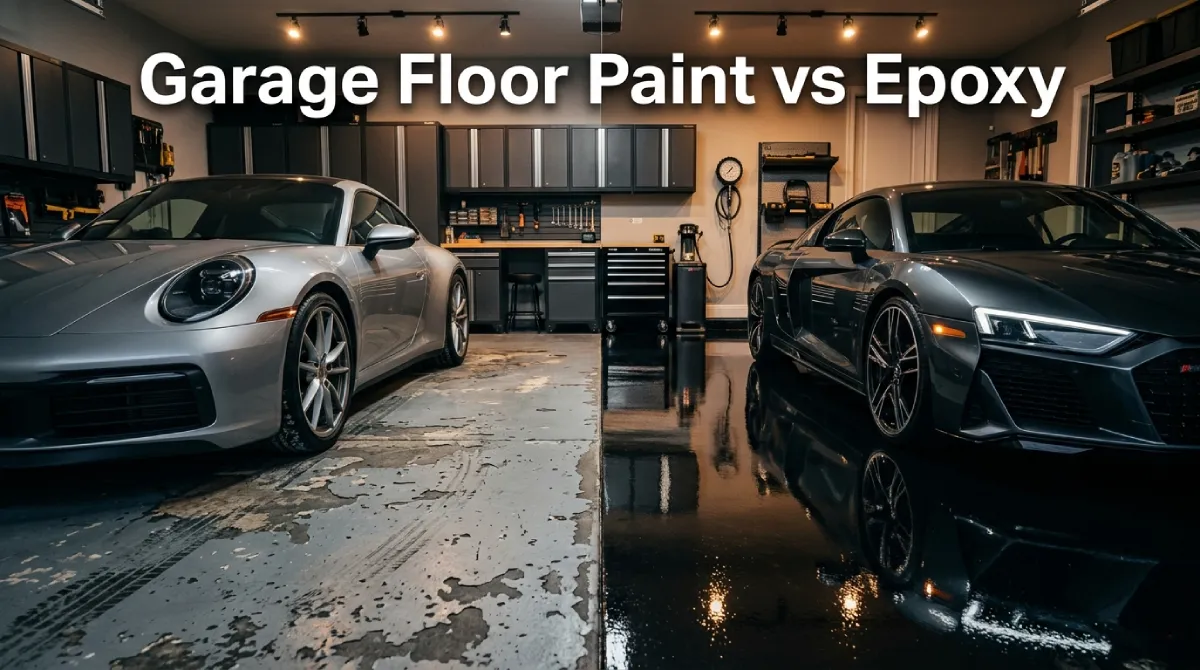
Deciding between garage floor paint vs epoxy is one of the most practical choices a homeowner can make before upgrading a concrete floor. Both options improve the look of your garage, but they perform very differently under real conditions. This guide covers cost, durability, application, lifespan, and which option suits your needs based on how you use your garage every day.
What Is Garage Floor Paint?
Garage floor paint is a specially formulated coating designed to bond to concrete surfaces. It typically comes in two forms: water-based latex acrylic and one-part epoxy paint. These are not the same as a true two-part epoxy coating, despite the similar name.
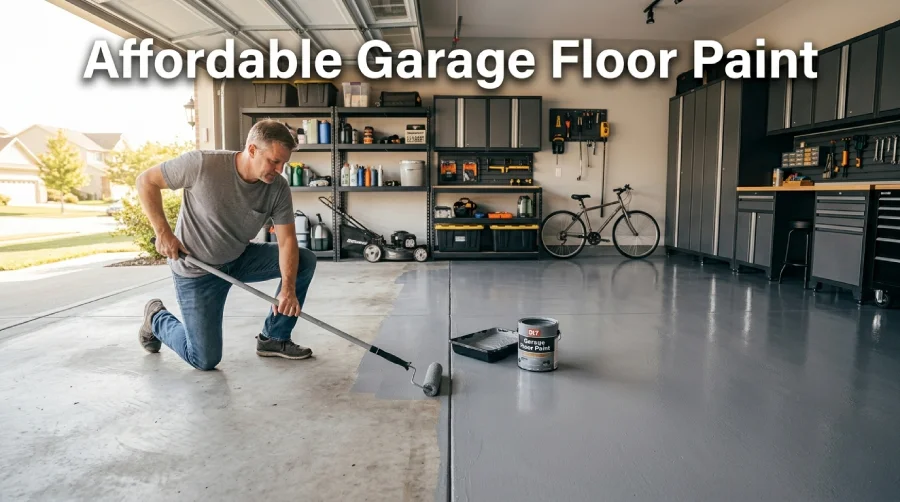
Latex acrylic paint is the most affordable option. A single gallon costs around £25 to £40, and it applies easily with a standard paint roller. It dries within 12 hours for foot traffic and is ready for vehicles after about 5 days.
The drawback is that garage floor paint sits on top of the concrete rather than bonding into it. It forms a thin film that can peel under the weight of vehicles, crack from temperature changes, and stain from oil or brake fluid within months of application.
Key features of garage floor paint:
- Easy to apply with a standard roller and no mixing required
- Dries quickly and requires no special preparation tools
- Available in a wide range of colours and finishes
- Budget-friendly upfront, with most DIY kits costing under £80
- Suitable for light-use garages with foot traffic and minimal vehicle activity
- Requires reapplication every 1 to 3 years in most cases
What Is Epoxy Coating?
True epoxy coating is a two-part system made from epoxy resin and a polyamine hardener. When mixed together, these two components trigger a chemical reaction called curing. This process creates a hard, dense, and incredibly strong surface layer that bonds at a molecular level with the concrete beneath it.
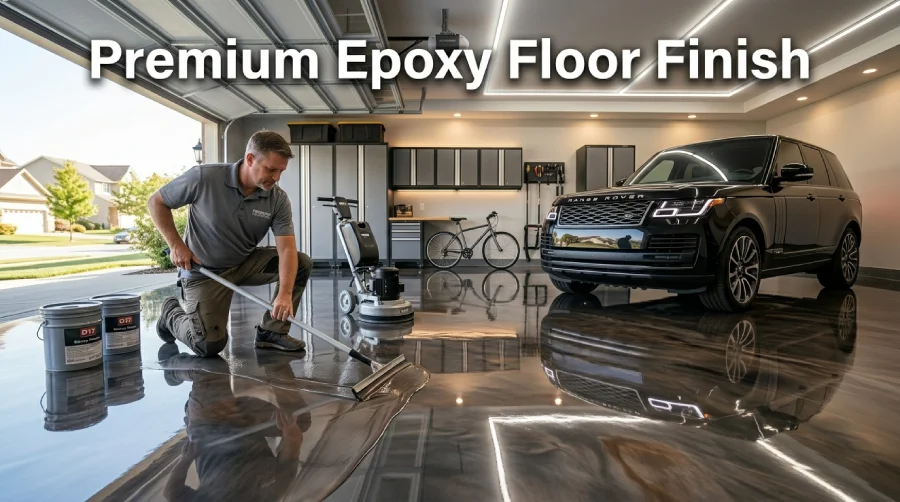
Unlike paint, epoxy does not simply dry. It cures. That distinction matters because cured epoxy becomes structurally part of the floor. It does not peel, chip, or wear down the way paint does under vehicle weight, chemical spills, or hot tyres.
Key features of epoxy coating:
- Chemically bonds to concrete for a permanent, structural finish
- Resistant to oil, grease, brake fluid, and chemical spills
- Available in high-gloss, satin, anti-slip, and metallic finishes
- Can be customised with colour flakes, quartz chips, or metallic effects
- Handles heavy vehicle traffic, rolling equipment, and dropped tools
- Lifespan of 10 to 20 years with proper surface preparation and maintenance
Garage Floor Paint vs Epoxy: Side-by-Side Comparison
| Feature | Garage Floor Paint | Epoxy Coating |
|---|---|---|
| Type | Latex acrylic or one-part epoxy paint | Two-part resin and hardener system |
| Bond Type | Surface adhesion only | Chemical bond with concrete |
| Lifespan | 1 to 3 years | 10 to 20 years |
| Cost (DIY) | £25 to £80 | £150 to £400 |
| Cost (Professional) | £100 to £250 | £400 to £1,200+ |
| Chemical Resistance | Low to moderate | Very high |
| Hot Tyre Resistance | Poor | Excellent |
| Finish Options | Limited | Extensive |
| Prep Required | Minimal | Grinding or acid etching needed |
| Skill Level | Beginner | Intermediate to advanced |
How Long Each Option Actually Lasts
Lifespan is where the gap between these two options becomes the most obvious. Garage floor paint typically lasts between 1 and 3 years in a working garage. In high-traffic areas where vehicles are parked regularly, paint can begin peeling within months. Hot tyres are a particularly damaging factor, as the heat causes the thin film to lift off the concrete surface.
Epoxy coatings, when properly installed, can last 15 to 20 years. Professional systems that include a primer coat, broadcast layer, and topcoat can extend that lifespan even further with minimal maintenance. The difference is not minor. Over a ten-year period, a homeowner who repeatedly repaints their floor may spend significantly more than someone who invested in epoxy once.
The Real Cost Comparison Over Time
Many homeowners choose garage floor paint because it looks cheaper at the checkout. But the total cost over time tells a very different story.
Garage floor paint over 10 years:
- Initial cost: approximately £60 to £80 per application
- Reapplication needed every 1 to 2 years
- Total material cost over 10 years: approximately £300 to £500
- Plus the time and labour of three to five reapplication weekends
Epoxy coating over 10 years:
- DIY kit cost: approximately £150 to £400 for a one-car garage
- Professional installation: £400 to £1,200 depending on garage size
- No reapplication required for a decade with proper care
- Annual cost when spread across 15 years: roughly £30 to £80 per year
The long-term savings with epoxy are substantial. When you account for the labour, materials, and disruption of repeated paint jobs, epoxy often becomes the more economical choice within the first five years.
Surface Preparation: What Each Option Requires
This is one area where paint and epoxy differ significantly in terms of effort. Garage floor paint requires minimal preparation. You clean the surface, allow it to dry fully, and apply at least two coats. Some products are self-priming, which makes the process even faster.
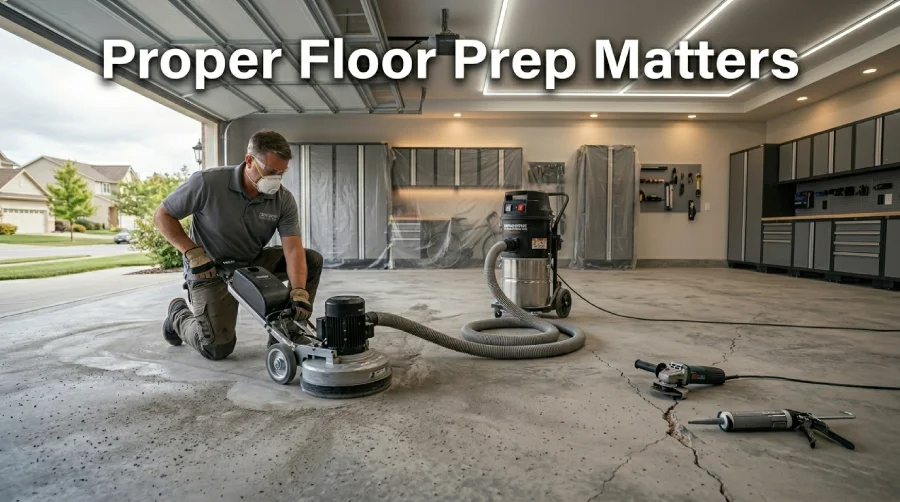
Epoxy coating requires several steps:
- Clean the concrete thoroughly and remove all oil stains
- Repair any cracks or damaged areas with a concrete filler
- Etch the surface using muriatic acid or mechanically grind it
- Vacuum all dust and debris completely before mixing
- Mix the resin and hardener strictly according to the product ratio
- Apply the base coat and allow it to cure fully before adding decorative layers
- Seal with a topcoat rated for vehicle traffic and chemical resistance
Skipping any of these steps is the most common reason epoxy fails prematurely. The surface must be fully prepared for the coating to form its chemical bond with the concrete.
Which Finish Looks Better in a Garage?
For homeowners who care about appearance, epoxy coating offers a far wider range of finish options. You can choose a mirror-like high-gloss finish, a textured anti-slip surface, metallic effects with depth and movement, or a broadcast finish using coloured flakes for a showroom look.
Garage floor paint is generally limited to flat or semi-gloss finishes in standard colours like grey, beige, and tan. It provides a clean, refreshed look but lacks the visual depth and customisation that epoxy delivers.
If your goal is a polished, professional-looking garage that adds character to your home, epoxy is the clear winner on aesthetics.
When Garage Floor Paint Is the Right Choice
Epoxy is not the best option for every situation. There are specific cases where garage floor paint is the more sensible choice.
Choose paint when:
- The garage is used only for light storage and occasional foot traffic
- You are renting the property and cannot make permanent changes
- You need a quick refresh before selling the home
- Your budget is under £100 and long-term durability is not the priority
- The concrete floor has moisture issues that prevent epoxy bonding
- You simply want a temporary solution while planning a larger renovation
Paint provides a cost-effective, low-commitment option for these situations. It still improves the look of the space and offers basic protection from surface-level dust and minor staining.
Common Mistakes to Avoid With Either Option
Whether you choose paint or epoxy, certain mistakes consistently lead to poor results. Avoiding these will save you time and money regardless of which product you select.
- Skipping surface cleaning before any application causes poor adhesion and early peeling
- Applying epoxy to damp concrete prevents the chemical bond from forming correctly
- Not mixing the two epoxy parts thoroughly results in soft, uncured patches on the floor
- Applying paint in cold temperatures below 10 degrees Celsius leads to poor curing and flaking
- Using only one coat of paint leaves the concrete unprotected and shortens the finish lifespan
- Ignoring oil stains before painting or coating causes immediate adhesion failure
- Rushing the drying time between coats weakens the final finish significantly
FAQs About Garage Floor Paint vs Epoxy
Is epoxy better than paint for a garage floor?
In most cases, yes. Epoxy chemically bonds to concrete, resists chemicals and vehicle weight, and lasts up to 20 years. Paint sits on the surface, peels under heavy use, and typically needs reapplication every 1 to 3 years.
How much does epoxy floor coating cost in the UK?
A DIY epoxy kit for a one-car garage costs roughly £150 to £400. Professional installation ranges from £400 to over £1,200 depending on garage size, surface condition, and finish type chosen.
Can I apply epoxy coating myself as a DIY project?
Yes, with proper preparation. You must clean the floor, etch or grind the surface, mix the components correctly, and apply in the right temperature range. Many homeowners complete the job over a weekend successfully.
How long does garage floor paint take to dry before driving on it?
Most garage floor paints allow foot traffic after 12 hours and are ready for vehicle traffic after approximately 5 days. Epoxy coatings typically need 72 hours before light vehicle use after the final coat.
What are the steps to prepare concrete before painting or coating?
- Sweep and vacuum all debris thoroughly
- Degrease the surface with a concrete cleaner
- Fill all cracks with a concrete repair compound
- Etch the surface with acid or grind mechanically for epoxy
- Allow the concrete to dry completely before applying any product
Does garage floor paint peel easily?
Yes, latex-based paint and one-part epoxy paint are prone to peeling, especially in areas with regular vehicle traffic, hot tyres, or exposure to oils and chemicals. True two-part epoxy coating resists peeling far more effectively.
Can epoxy be applied over painted concrete?
Generally no. Existing paint must be stripped or ground away before epoxy is applied. Epoxy applied over paint bonds to the paint layer rather than the concrete, leading to early failure and delamination.
Make the Right Choice Before You Coat Your Floor
Both garage floor paint and epoxy serve real purposes, but they are designed for very different situations. If your garage sees regular vehicle use, chemical exposure, or heavy foot traffic, epoxy coating is the smarter investment. Its 15 to 20 year lifespan, superior chemical resistance, and permanent bond with the concrete make it worth every penny over time.
If your garage is used lightly or you need a fast, affordable refresh, paint is a practical short-term solution. Just go in knowing you will need to redo it in a year or two.
Measure your garage, assess how you actually use the space, and match the product to your real daily needs. A well-prepared epoxy floor will serve you for decades, while the right paint job will give you a clean look quickly without breaking the budget.