


How to clean a dishwasher well comes down to three moves: scrub the filter, run a hot vinegar cycle, and finish with baking soda if the smell lingers. Do it once a month and the machine stays fresh, the glasses come out clear, and the smell never settles in. Most people start with the cycle and wonder why the smell comes back. The filter is where the food sits, so the filter is where the cleaning starts. This guide takes you through the seven steps in order, then shows you how to read the smell, clear a slow drain, and keep the glasses clear.
How to Clean a Dishwasher: Start With the Filter, Not the Cycle
Every dishwasher has the same weak spot, and it is not the cycle. It is the filter at the bottom, where food, grease and grit collect every time you run a load. When that filter is dirty, the water that reaches your plates is dirty too, and no amount of vinegar in the tub will fix it. So the order matters. Filter first, then the cycle, then the smell. Get that order right and the rest of the job is easy.
You need a soft brush or an old toothbrush, a bowl, white vinegar, baking soda, and a dry cloth. That is the whole kit. If your machine has a manual, keep it nearby, because the filter and the spray arms differ by brand, and the manual settles any doubt. The oven takes the same kind of deep clean, and the guide to deep-clean an oven without harsh chemicals covers it step by step.
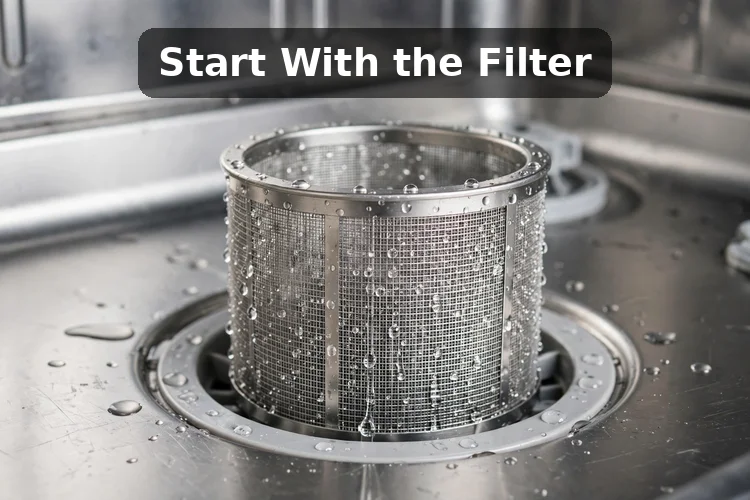
Step 1: Empty It and Pull the Racks Out
Take everything out, plates, cutlery, the lot, and pull both racks out onto the counter. A dishwasher cleans best when it is empty, and you need the room to reach the filter and the spray arms. While the racks are out, give them a quick look. If food is stuck to the tines, rinse it off in the sink. A rack that is caked in old food puts that food straight back into the wash.

Step 2: Twist the Filter Out and Scrub It Clean
The filter sits at the bottom of the tub, usually a round mesh cylinder with a handle on top. Twist it anticlockwise and lift it out. Rinse it under hot running water, then scrub it with a soft brush and a little dish soap. Never use a wire brush, because it widens the mesh and lets food through. If the filter is greasy, soak it for ten minutes in hot water with a spoonful of baking soda. Some makers say clean it weekly, others say monthly, so check your manual. Whatever the interval, never run the machine without the filter in place.
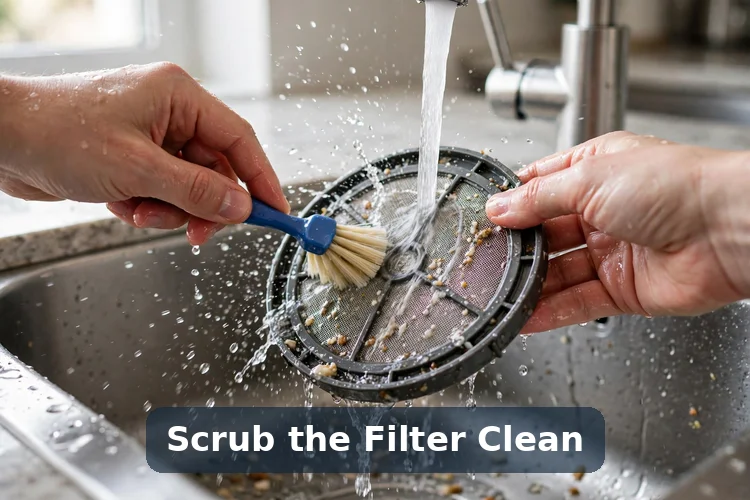
Step 3: Clear the Spray Arms So They Spin Again
The spray arms are the two or three bars that spin and throw water at your dishes. When their holes clog, the water pressure drops and the dishes come out dirty. Pull each arm off if it comes off, or leave it in place and work around it. Poke each hole clear with a cocktail stick or a pin, and rinse the arm under hot water. Never use a metal tool, because it enlarges the holes and weakens the spray. The arms spin because the jets at the corners are angled, so if the outer holes are blocked, the arm loses its push. Once the holes are clear, spin each arm by hand. It should turn freely.
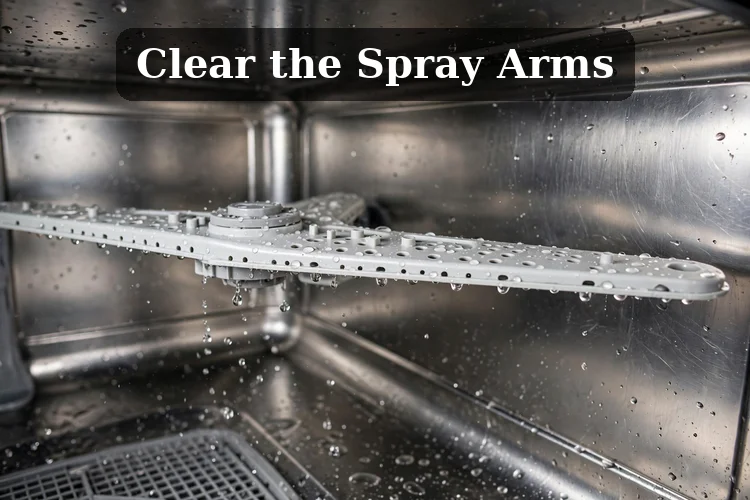
Step 4: Wipe Every Fold of the Door Seal
The rubber door seal around the door is where mould loves to live, because it stays damp and warm. Pull the seal gently open and wipe every fold with a cloth dipped in hot water and a little vinegar. For stubborn black spots, mix half a cup of vinegar with three cups of hot water and wipe again. This is a weekly job, not a monthly one, because the seal is the first place a musty smell starts. Dry it with a clean cloth when you finish, and leave the door open for a few minutes so the seal can air out.

Step 5: Run the Hot Vinegar Cycle
Put one to two cups of white vinegar in a bowl or measuring cup and set it on the top rack. Run the hottest, longest empty cycle with no detergent and no dishes. Do not pour the vinegar into the detergent dispenser, because the dispenser releases it too early and the acid sits in the wrong place. The vinegar cuts grease and loosens limescale. Some makers warn against vinegar. Miele says it can lead to rust and leaks, and KitchenAid warns that too frequent use can damage the machine, so check your manual first. Once a month is the safe rhythm for most machines. If you want the maker’s own method, Whirlpool’s own guide to cleaning a dishwasher sets out its vinegar cycle step by step.

Step 6: Run the Baking Soda Cycle for Leftover Smell
If a smell hangs around after the vinegar cycle, sprinkle one cup of baking soda across the bottom of the tub and run a second hot empty cycle. This is a separate cycle, never the same one as the vinegar. Vinegar is an acid and baking soda is a base, so mixing them makes salty water, not a stronger cleaner. The fizz looks like it is working, but the chemistry says otherwise. Baking soda on its own is a deodoriser, and it lifts the last of the smell without any acid touching your seals.
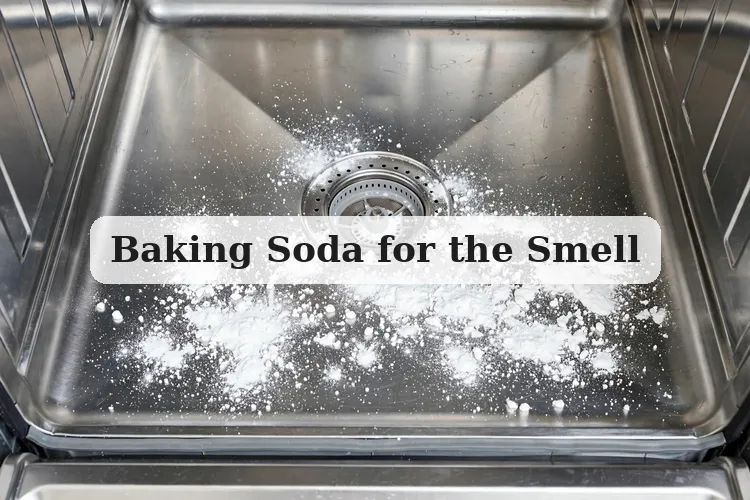
Step 7: Air It Out and Wipe the Front
When the cycle finishes, leave the door open for a few minutes so the inside can dry. A dishwasher that stays shut stays damp, and damp is where the musty smell comes from. While it airs, wipe the front panel and the handle with a damp cloth, and clean the edges of the door where drips collect. If you want the rest of your kitchen to feel as fresh, the smart safe home cleaning guide covers the routines that keep the whole room clean.

The Monthly Routine, by Part
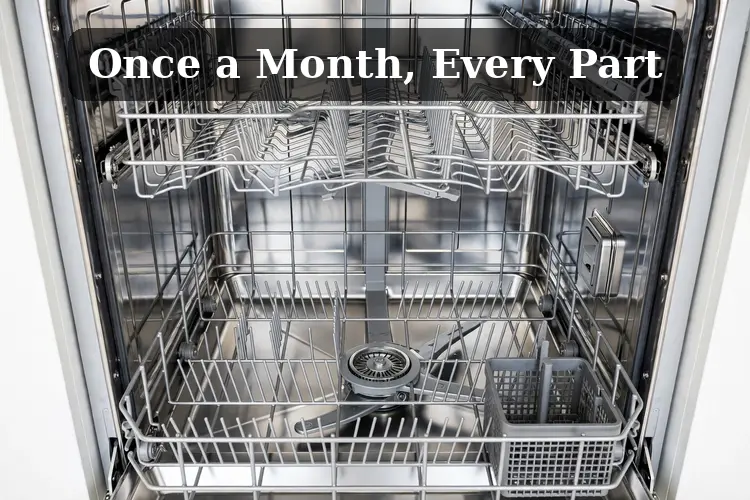
One blanket rule does not fit every part of the machine, so here is the routine broken down by part. The filter interval is the one that varies most. Miele says weekly, KitchenAid and Whirlpool say monthly, and Maytag says every three to six months. Pick the rhythm that matches your machine and how often you run it. Daily use means clean it more often.
| Part | How often | What to do |
|---|---|---|
| Door seal | Weekly | Wipe the folds with hot water and vinegar, then dry it |
| Filter | Monthly, weekly for Miele, every 3 to 6 months for light use | Twist it out, rinse it, scrub it with a soft brush |
| Vinegar cycle | Monthly | 1 to 2 cups in a bowl on the top rack, hottest empty cycle |
| Baking soda cycle | Monthly, only if the smell lingers | 1 cup on the bottom, hot empty cycle, separate from vinegar |
| Spray arms | Every 3 months | Poke the holes clear, rinse, spin by hand |
| Walls and racks | Every 6 months | Wipe the tub walls and the racks, check the sump |
| Descaler | Every 3 months in hard water areas | Use a descaler on top of the monthly vinegar cycle |
Smell Back Again? Match the Smell to the Source
Not every smell wants the same fix. The smell itself tells you where to look, and a table is faster than guessing. Find your smell in the left column, then follow the fix.
| Smell | Likely source | What to do |
|---|---|---|
| Sour or rotting food | Filter or sump | Scrub the filter and clean the sump |
| Musty or wet dog | Door gasket or damp tub | Wipe the seal and leave the door open to dry |
| Sewage or rotten eggs | Sink drain, disposal, or no high loop | Check the drain hose and the high loop, see the plumbing section below |
| Burning plastic | Plastic on the heating element | Stop the machine, remove the plastic, call a repairer if the smell stays |

The Rotten Egg Smell Is Usually Not a Cleaning Problem
A rotten egg or sewage smell is usually not a cleaning problem. It is a plumbing problem, and no amount of vinegar will fix it. The smell comes from hydrogen sulfide gas, and it has three sources: trapped residue in the machine, the water supply, or sewer gas backing up through the drain. Check the drain hose first. It should rise to a high loop under the sink, as high as it will go, so dirty water cannot flow back into the machine. The exact height varies by maker. KitchenAid says at least 20 inches and other guides say up to 30 inches, so the rule is to get it as high as the cabinet allows. If you have a garbage disposal, make sure the knockout plug was removed when the dishwasher was installed. If the machine is new and it smells of sewage, the cause is almost always an installation error, not a faulty machine. A P-trap that has dried out because the machine sat unused can also let sewer gas through, so run a cycle to refill it. If the smell stays after you have checked the hose and the trap, call a plumber.

Standing Water? Check the Drain Path
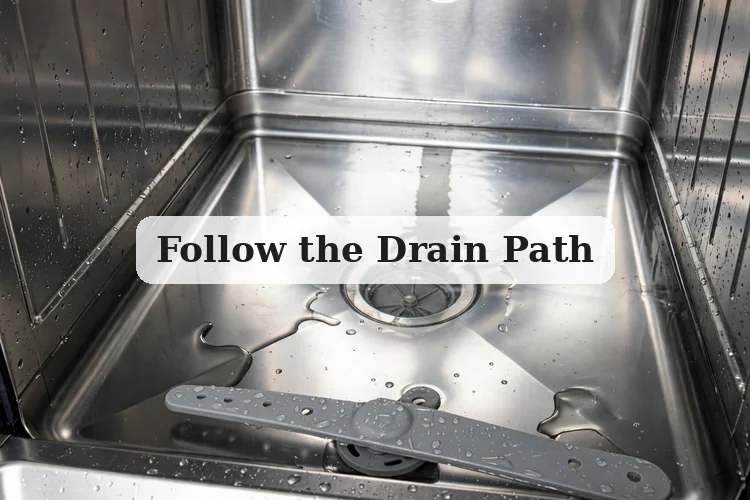
If water sits in the bottom of the tub after a cycle, the drain path is blocked somewhere. The path runs from the filter to the sump, then the pump, the drain hose, and finally the sink drain or the air gap. Work through it in order. First, clean the filter. Then check the drain hose for kinks. Then look at the air gap on the sink, if you have one, and clear it. If your machine has a cancel or drain button, hold it for about three seconds to force a drain. Before you reach into the drain area, switch the power off at the breaker. Never pour chemical drain cleaner into a dishwasher, because it damages the seals and the hoses. Never put your hand where you cannot see, because a blade sits before the drain. If the water still does not clear, or you smell burning, stop and book a repair.
Vinegar, Baking Soda, Citric Acid or a Tablet?
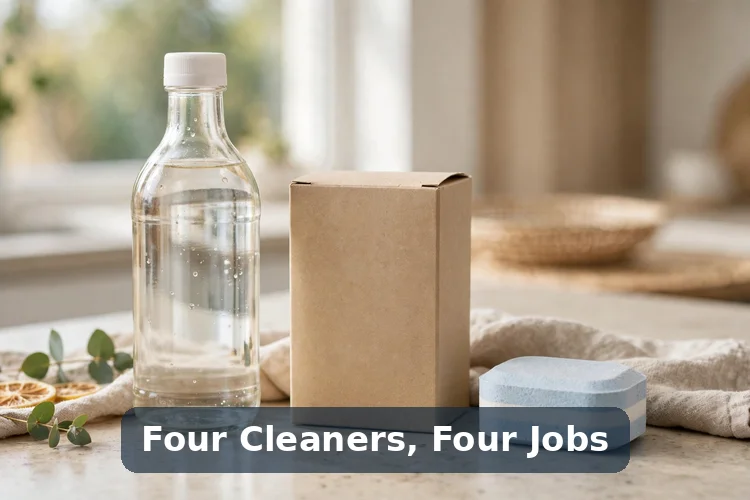
Four cleaners do this job, and each one does a different part of it. The table below is the honest comparison, and the note after it covers the one cleaner most guides skip.
| Cleaner | What it does | What it cannot do | Effort |
|---|---|---|---|
| White vinegar | Cuts grease, loosens limescale | Does not scrub the filter or clear the arms on its own, acid can wear seals if overused | Pour it in a bowl, run a hot cycle |
| Baking soda | Deodorises, mild abrasive for stains | Does not descale, does not cut grease | Sprinkle it on the bottom, run a hot cycle |
| Citric acid | Best on hard water stains, cheap, natural | Needs the detergent cup, not a bowl | 3 to 4 tablespoons in the detergent cup, normal cycle |
| Affresh or Finish tablet | Easiest, strongest on mineral buildup, maker approved | Costs more than vinegar or soda | One tablet in the detergent compartment, normal cycle |
Citric acid deserves a closer look. In a head-to-head test it cleared hard water stains in a single cycle, and it costs very little. If your glasses come out cloudy and the vinegar cycle has not fixed them, citric acid is the next thing to try. The Tang drink mix trick you may have seen online works for the same reason, because Tang contains citric acid, but it also contains sugar and dyes, so it can stain and it is not a regular cleaner. Plain citric acid is the better choice. Baking soda is also sold as bicarbonate of soda in the UK, and the two names mean the same powder.
Still Cloudy After a Deep Clean?
Cloudy glasses after a deep clean usually mean one of four things. The rinse aid is empty, the water is hard, the spray arms are blocked, or the filter needs a clean. Check the filter first, then top up the rinse aid. If you live in a hard water area, top up the dishwasher salt too, which matters most in UK and EU machines. Run a citric acid cycle for the limescale. If the cloudiness stays after all of that, the glasses may be etched, and no cleaning cycle will reverse etching.

Four Habits That Quietly Wreck the Wash
Four small habits quietly make a dishwasher dirtier. The first is using washing-up liquid in the machine, which foams up and can flood the kitchen. Only dishwasher detergent belongs in there. The second is overloading the racks so the spray arms cannot spin. Leave space between the plates. The third is skipping the filter, which is the fastest way to a bad smell. The fourth is shutting the door straight after a cycle, which traps the damp inside. If you want a longer list of the mistakes that trip people up, the guide to common house cleaning mistakes to avoid covers the ones that show up most often.

Questions People Ask About Dishwasher Cleaning
How often should I clean my dishwasher, honestly?
Once a month for the deep clean, and the filter and the seal more often than that. The seal is a weekly wipe. The filter is monthly for most machines, weekly if you run the machine daily or your maker says so. If you only run it two or three times a week, every two to three months is enough for the deep clean.
Can I use bleach inside a dishwasher?
No. Bleach corrodes stainless steel and it damages the seals. Never mix it with vinegar either, because the two together make a harmful gas. If you need to disinfect, a hot cycle with a dishwasher cleaner tablet does the job.
No vinegar left, what swaps in?
Citric acid is the best swap. Three to four tablespoons in the detergent cup, normal cycle, no dishes. It clears limescale as well as vinegar and it does not leave a sour smell. A dishwasher cleaner tablet is the easiest swap if you have one.
Can I mix vinegar and baking soda?
No, not in the same cycle. Vinegar is an acid and baking soda is a base, so together they make salty water and carbon dioxide, not a stronger cleaner. Run them as two separate cycles, vinegar first, then baking soda.
Why does my dishwasher smell like rotten eggs?
That smell is usually a plumbing fault, not a cleaning problem. Check the drain hose high loop and the disposal knockout plug first. If the machine is new, it is almost always an installation error. If the smell stays, call a plumber.
Should I leave the door ajar after a wash?
Yes. Leave it open for a few minutes after every cycle so the inside can dry. A dishwasher that stays shut stays damp, and damp is where the musty smell starts.
A Machine That Smells Like Nothing at All
A clean dishwasher smells like nothing at all. No sourness, no mustiness, no chemical tang. Just a dry tub and clear glasses. That is the whole point of the routine. Filter first, then the cycle, then the smell, once a month, and the machine takes care of the rest. If you want the same routine for the rest of the house, the cleaning collection has the guides for every room.



One Response