

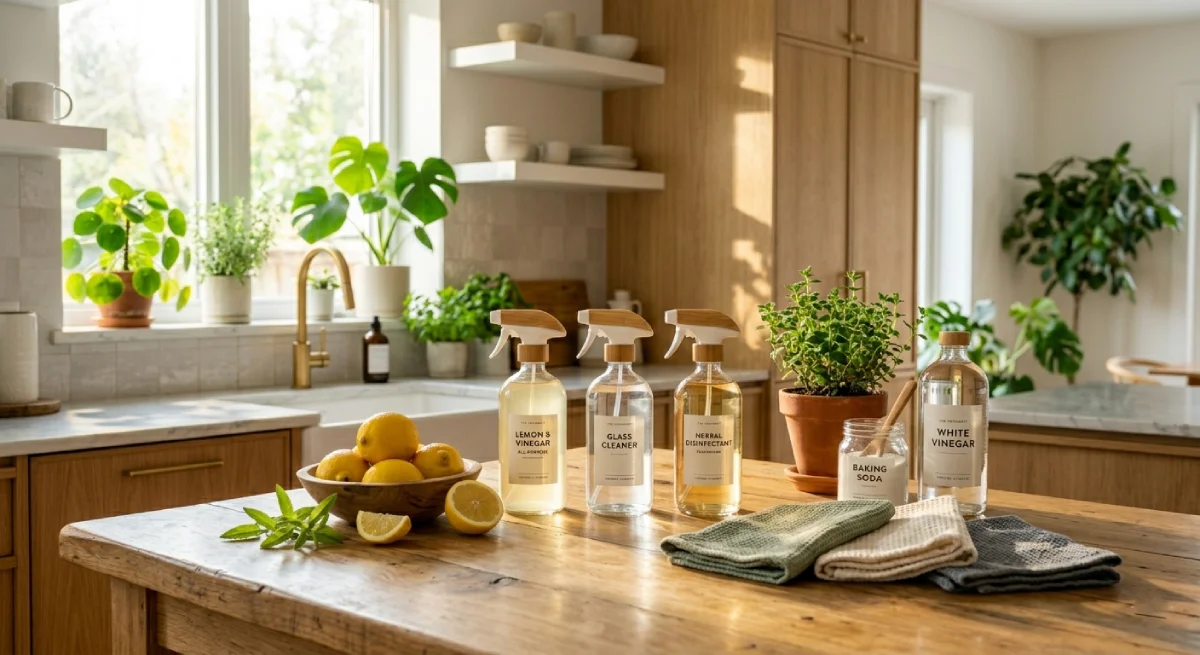
Why Eco-Friendly Cleaning Matters More Than Ever
The way we clean our homes has a direct impact on both our personal health and the health of the planet. Traditional household cleaners are filled with volatile organic compounds (VOCs), synthetic fragrances, and aggressive surfactants that linger in our indoor air long after you’ve finished scrubbing. In fact, according to the U.S. Environmental Protection Agency (EPA), indoor air pollution ranks among the top environmental dangers — and a significant portion of it originates from everyday cleaning products.
The good news? There’s a powerful, affordable, and sustainable alternative. The global natural household cleaners market was valued at USD 6.97 billion in 2024 and is projected to nearly double to USD 13.28 billion by 2030, growing at a CAGR of 11.3%. Consumers worldwide are voting with their wallets for safer, greener cleaning solutions.
This comprehensive guide covers the best eco-friendly cleaning hacks for every room in your home, backed by science and decades of practical wisdom. From baking soda to lemon juice, you’ll learn how to swap out toxic products for natural powerhouses that genuinely work.
The Science Behind Natural Cleaning Ingredients
Before diving into the hacks, it helps to understand why these natural ingredients are effective. Each one works through a distinct chemical mechanism:
| Ingredient | Chemical Property | Primary Cleaning Action |
|---|---|---|
| Baking Soda | Alkaline (sodium bicarbonate) | Deodorizes, gently abrades, neutralizes acids |
| White Vinegar | Acidic (acetic acid) | Dissolves mineral deposits, cuts grease, kills bacteria |
| Lemon Juice | Citric acid + D-limonene | Breaks down grease, removes stains, antibacterial |
| Castile Soap | Plant-based surfactant | Lifts dirt and grime from surfaces |
| Hydrogen Peroxide | Oxidizing agent (H₂O₂) | Disinfects, whitens, breaks down into harmless water + oxygen |
| Tea Tree Oil | Terpinen-4-ol compound | Antibacterial, antifungal |
| Salt | Abrasive mineral | Scrubs surfaces, enhances other cleaners |
| Olive Oil | Natural oil | Polishes wood, conditions surfaces |
Baking soda is an alkaline substance that neutralizes acidic compounds, making it effective at cleaning and deodorizing a wide range of surfaces. When mixed with water, it creates a mildly abrasive paste that scrubs away dirt and grime. Vinegar, as a weak acid, dissolves mineral deposits, grease, and soap scum — and functions as a natural disinfectant capable of killing germs and bacteria on surfaces. Lemon juice’s citric acid and natural D-limonene compound can significantly limit bacterial growth, making it especially useful on cutting boards, counters, and appliance handles.
Many essential oils contain bioactive compounds that disrupt the cell membranes of bacteria or interfere with their metabolism. For example, thymol in thyme oil and carvacrol in oregano oil are known to rupture bacterial cell walls — providing a multi-faceted approach that can even reduce the chance of germs developing resistance.
Essential Starter Kit: What to Stock in Your Eco-Cleaning Cabinet
Building a natural cleaning arsenal doesn’t require a huge investment. Here are the core ingredients that will replace dozens of conventional products:
- White distilled vinegar — the most versatile eco-cleaner available
- Baking soda (sodium bicarbonate) — odor absorber and gentle scrubber
- Castile soap (liquid and bar) — plant-based, biodegradable surfactant
- Lemon juice (fresh or bottled) — natural antibacterial and degreaser
- Hydrogen peroxide (3%) — eco-friendly bleach alternative
- Essential oils — tea tree, lavender, lemon, eucalyptus for antibacterial and scent
- Salt — natural abrasive and enhancer
- Olive or coconut oil — natural polisher for wood and metal
- Microfiber cloths — reusable, pick up dirt with fewer chemicals
- Glass spray bottles — essential when using essential oils (which can permeate plastic)
Pro Tip: Store your natural cleaners in amber glass bottles. Essential oils are sensitive to light and can degrade in clear plastic. A dark glass container will preserve their effectiveness significantly longer.
Room-by-Room Eco-Friendly Cleaning Hacks
🍋 Kitchen: The Grease-Busting Zone
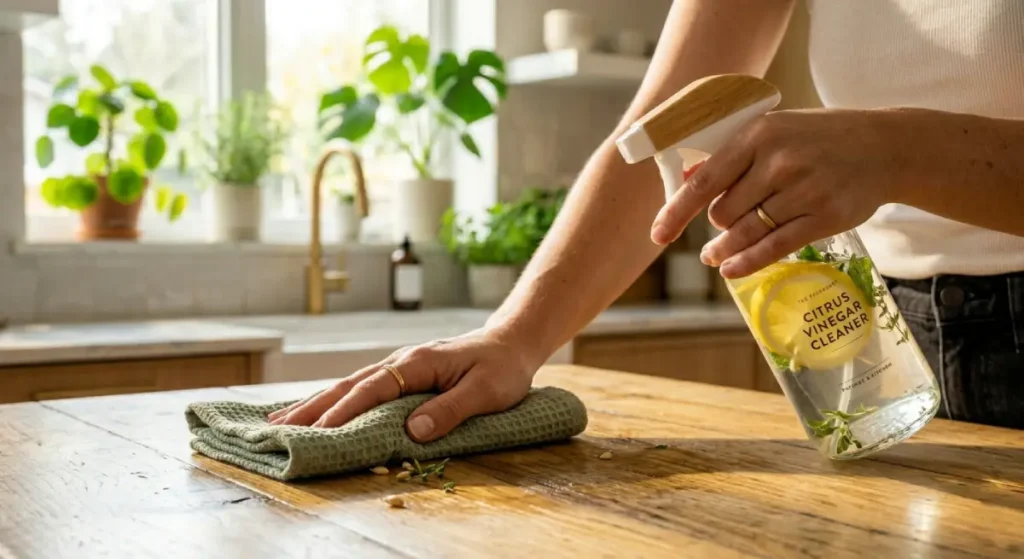
The kitchen is where natural cleaners truly shine. Grease, food residue, and bacteria are no match for the right combination of natural acids and abrasives.
All-Purpose Kitchen Spray
Mix the following in a glass spray bottle:
- ¼ cup white vinegar
- 1¾ cups water
- 15 drops lemon essential oil
- 15 drops tea tree oil
This versatile spray works on countertops, appliances, cabinet fronts, and stovetops. The vinegar dissolves grease; the lemon oil enhances degreasing power while softening vinegar’s sharp smell; the tea tree oil adds antibacterial protection.
Top Kitchen Eco-Hacks:
- Microwave steam clean: Mix lemon juice and water in a microwave-safe bowl. Heat on high for 3–5 minutes. The steam loosens splattered food, which wipes away effortlessly — no scrubbing required.
- Oven degreaser: Sprinkle baking soda generously over the oven floor, spritz with water, and let sit overnight. In the morning, wipe away loosened grime with a damp cloth. For stubborn spots, add a drop of castile soap on your rag.
- Garbage disposal refresh: Drop in a few lemon or lime peels with ice cubes. The citrus deodorizes naturally while the ice helps clean and sharpen the blades.
- Greasy pan rescue: Pour a small amount of lemon juice over baking sheets and pans, then scrub for clean, shiny results.
- Coffee maker descaler: Run a cycle with half white vinegar and half water to remove mineral buildup. Follow with two cycles of plain water to rinse.
- Cutting board sanitizer: Sprinkle salt on the board, rub with a halved lemon, let sit 5 minutes, then rinse. The salt abrades while the lemon’s citric acid kills bacteria.
🛁 Bathroom: Tackling Soap Scum and Mildew Naturally
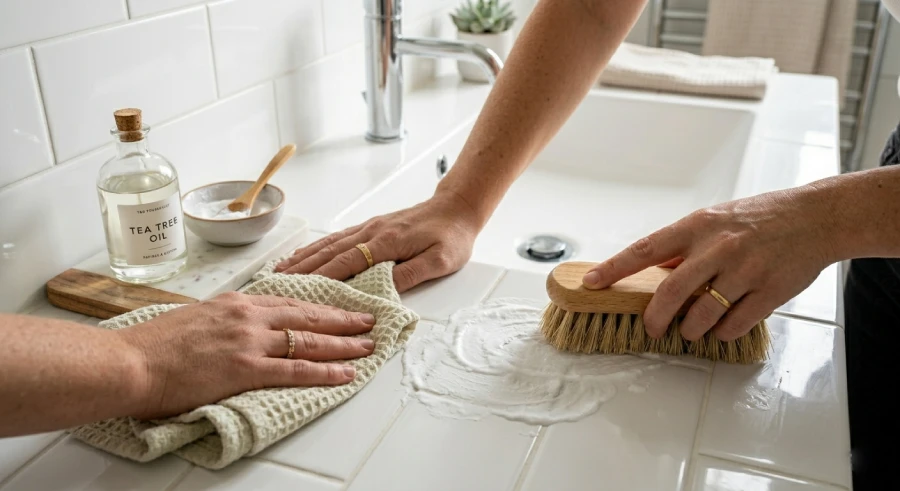
The bathroom was the leading application segment in the natural cleaners market in 2024 — and for good reason. Soap scum, hard water stains, mildew, and germs require targeted solutions.
| Bathroom Problem | Eco-Friendly Solution | How to Use |
|---|---|---|
| Soap scum on tiles | Baking soda paste + castile soap | Apply, scrub with a brush, rinse |
| Toilet bowl stains | Baking soda + lemon essential oil | Sprinkle in bowl, scrub, let sit 10 min |
| Mold/mildew | Tea tree oil + water spray | Spray, let sit 30 min, scrub |
| Hard water spots | Undiluted white vinegar | Soak a cloth, apply to faucet, leave 30 min |
| Grout brightening | Lemon juice spray | Apply, wait 10 min, scrub with old toothbrush |
| Mirror streaks | Vinegar + water (50/50) | Spray and wipe with microfiber cloth |
Bathroom Eco-Hacks:
- Toilet bombs: Mix 1 cup baking soda, ¼ cup citric acid, and 15 drops lemon essential oil. Form into small balls, let dry overnight. Drop one in the bowl, let it fizz, then scrub — naturally antibacterial and deodorizing.
- Shower head descaler: Fill a ziplock bag with undiluted white vinegar and secure it around the showerhead with a rubber band. Leave for at least an hour (or overnight for heavy buildup). Remove and run hot water to flush.
- Mildew fighter: Tea tree oil is a powerful natural antifungal. Mix 2 teaspoons with 2 cups of water in a spray bottle. Spray on problem areas, leave on (no rinsing needed), and mildew won’t return as quickly.
- Grout brightener: Spray lemon juice on tiles, let it sit for 10 minutes, and scrub away yellowing grout to restore brightness.
🛋️ Living Room & Upholstery: Fresh Air Without Chemicals
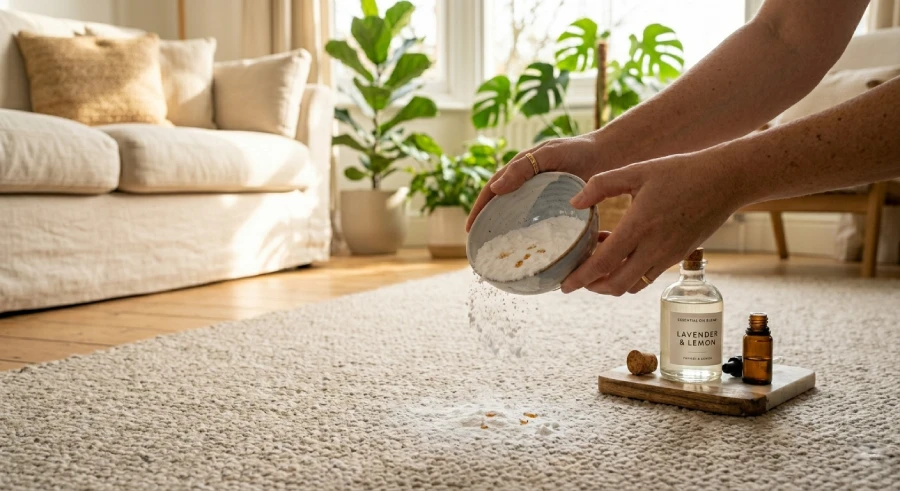
Many commercial air fresheners and fabric sprays contain phthalates — chemicals that can hide under the vague label of “fragrance” and have been linked to hormonal disruption.
Eco-Friendly Living Room Hacks:
- Carpet deodorizer: Combine 1 cup baking soda with 10 drops of your favorite essential oil (lavender is calming; eucalyptus is refreshing). Stir well and pour into a mason jar with holes punched in the lid. Sprinkle over carpets, let sit for at least 30 minutes, then vacuum. This works equally well on mattresses and area rugs.
- Fabric/linen spray: Fill a spray bottle with 1 cup distilled water, 2 tablespoons rubbing alcohol, and 15–20 drops lavender essential oil. Mist sheets, curtains, and upholstery for a naturally calming, fresh scent.
- Wood furniture polish: Combine ½ cup white vinegar, ¼ cup olive oil, 1 tablespoon lemon juice, and 20 drops lavender essential oil. Mist onto wood furniture and wipe with a microfiber cloth. The olive oil conditions; the vinegar cuts through grime; the lemon restores shine.
- DIY room freshener: Place an open bowl of baking soda with a few drops of essential oil in any room to absorb odors passively throughout the day.
- Dust magnet: Dampen a microfiber cloth very lightly with water or your all-purpose spray. Microfiber cloths pick up dust and require far fewer chemicals than disposable alternatives.
🧺 Laundry: Greener Washing Without Compromise
Conventional fabric softeners and laundry detergents can build up residue over time, actually increasing the flammability of clothing and irritating sensitive skin. Natural alternatives are gentler and just as effective.
Eco-Friendly Laundry Hacks:
- Fabric softener substitute: Add ½ to 1 cup of white vinegar to your rinse cycle. Vinegar strips residue from clothing and linens, naturally creating softer fabrics without any synthetic coating.
- Stain pre-treatment paste: Mix 2 tablespoons baking soda and 1 tablespoon water until a paste forms. Apply to stains with a toothbrush before washing. For protein stains (blood, sweat), use cold water with hydrogen peroxide.
- Bright whites naturally: Add ½ cup baking soda to your regular detergent to boost whitening and deodorizing power.
- Wool dryer balls + essential oils: Replace plastic dryer sheets with wool dryer balls. Add a few drops of your favorite essential oil to each ball for a natural laundry scent that doesn’t linger chemically.
- Natural laundry scent booster: Mix ½ cup salt with 10–15 drops of essential oil. Add to the drum before washing for a gentle, long-lasting scent.
- Disinfect the washing machine: Run an empty hot water cycle with 2 cups of white vinegar and ½ cup baking soda monthly to remove mildew, soap scum, and bacteria buildup inside the drum.
🪟 Windows & Glass: Streak-Free the Natural Way
Many commercial window cleaners contain ammonia, which can trigger respiratory irritation. A simple vinegar solution outperforms most store-bought options.
Window Cleaning Recipe:
Mix equal parts white vinegar and distilled water in a spray bottle. Add 5 drops of lemon essential oil to cut through grease and leave a pleasant scent. Spray on windows and wipe with a microfiber cloth or crumpled newspaper for a streak-free shine.
🪵 Floors: Safe for Kids, Pets, and the Planet
| Floor Type | Eco-Friendly Recipe |
|---|---|
| Hardwood | 1 cup vinegar per bucket of warm water |
| Linoleum/No-wax | ¼ cup washing soda + 1 tbsp castile soap + ¼ cup vinegar + 2 gallons hot water |
| Tile | All-purpose vinegar spray + microfiber mop |
| Wood (polish) | 2 tbsp olive oil + 2 tbsp white vinegar + ¼ cup lemon juice, mop and buff |
⚠️ Caution: Avoid using undiluted vinegar on marble, granite, stone countertops, waxed wood, cast iron, or aluminum, as the acidity can cause permanent damage to these surfaces.
🔧 Metal Polish: Restoring Shine Without Toxins
- Stainless steel: Apply a small amount of olive oil on a cloth and rub in the direction of the grain. Buff with a dry cloth for a streak-free shine.
- Brass polish: Mix equal parts salt, cornstarch, and a little vinegar or lemon juice. Apply with a soft rag, rinse with warm water, and dry.
- Copper cookware: Apply lemon juice combined with a generous pinch of salt. The acid lifts tarnish; the salt gently abrades without scratching.
- Silver: Line a bowl with aluminum foil, add 1 quart warm water, 1 tsp baking soda, and 1 tsp salt. Submerge silver and cover with boiling water. Soak until tarnish transfers to the foil via an electrochemical reaction.
10 Eco-Friendly Habits That Amplify Your Cleaning Results
Great eco-cleaning isn’t just about the ingredients — it’s about the habits and tools you use as well.
- Switch to microfiber cloths. Microfiber picks up dirt and bacteria more effectively than cotton, requiring far fewer chemicals. Choose ones made from recycled plastics for even lower environmental impact.
- Use compostable sponges. Look for sponges made from cellulose, loofah, or coconut fiber. They clean effectively and break down in home compost bins.
- Ventilate while cleaning. Even natural products can concentrate in closed spaces. Open windows and run fans to maintain good indoor air quality.
- Adopt reusable packaging. Look for glass or aluminum containers that you buy once and refill, rather than buying new plastic bottles each time.
- Clean with cold or warm water. Hot water is not always necessary and uses significantly more energy. Most natural cleaners work effectively at room temperature.
- Concentrate your cleaners. Concentrated solutions reduce packaging waste and lower your cost per clean. Dilute at home with water as needed.
- Batch-make your cleaners. Set aside 15 minutes on a Sunday to mix a week’s worth of sprays. This saves time and reduces the temptation to reach for a chemical alternative.
- Label your bottles clearly. Use waterproof labels so you never confuse cleaners — especially important if children are in the home.
- Dispose of chemical products properly. Never pour leftover conventional cleaners down the drain. Check your local municipality for hazardous waste disposal events.
- Look for certified products. When buying commercial eco-cleaners, look for third-party certifications like EPA Safer Choice or Green Seal to avoid greenwashing.
DIY Eco-Friendly Cleaning Recipes at a Glance
| Cleaner | Ingredients | Best Used For |
|---|---|---|
| All-Purpose Spray | ¼ cup vinegar + 1¾ cup water + 15 drops lemon oil | Counters, appliances, sinks |
| Glass Cleaner | Equal parts vinegar + distilled water | Windows, mirrors |
| Scrubbing Paste | Baking soda + castile soap | Sinks, tubs, grout |
| Toilet Bombs | Baking soda + citric acid + lemon oil | Toilet bowl |
| Carpet Deodorizer | Baking soda + 10 drops essential oil | Carpets, rugs, mattresses |
| Wood Polish | Olive oil + vinegar + lemon juice | Hardwood floors, furniture |
| Fabric Softener | ½–1 cup white vinegar | Laundry rinse cycle |
| Drain Cleaner | ¼ cup baking soda + ½ cup vinegar + boiling water | Clogged drains |
| Mold Spray | 2 tsp tea tree oil + 2 cups water | Bathroom mold/mildew |
| Metal Polish | Lemon juice + salt | Copper, brass, silver |
Common Mistakes to Avoid With Natural Cleaners
- Never mix baking soda and vinegar in a sealed spray bottle. They neutralize each other through a chemical reaction, releasing CO₂ gas. Mix and use immediately, or use them sequentially on surfaces.
- Don’t use vinegar on natural stone. The acidity can etch marble, granite, and travertine permanently.
- Avoid using lemon juice long-term on surfaces. Fresh lemon juice can go rancid. White vinegar is a more stable and longer-lasting alternative for regular use.
- Don’t skip the dilution step for essential oils. Undiluted essential oils can irritate skin and damage certain surfaces. Always dilute in water, carrier oil, or vinegar.
- Don’t assume “natural” means “safe to mix.” Never mix bleach with vinegar or any other acid — it creates toxic chlorine gas.
The Environmental & Financial Case for Green Cleaning
Switching to eco-friendly cleaning isn’t just better for the planet — it’s significantly better for your wallet. Consider this comparison:
| Product | Conventional Cost (Annual) | DIY Eco Alternative | Annual Savings |
|---|---|---|---|
| All-purpose spray | ~$40–60 | ~$5–8 (vinegar + oils) | ~$35–52 |
| Fabric softener | ~$30–50 | ~$3 (vinegar) | ~$27–47 |
| Glass cleaner | ~$20–30 | ~$2 (vinegar + water) | ~$18–28 |
| Drain cleaner | ~$25–40 | ~$2 (baking soda + vinegar) | ~$23–38 |
| Total | ~$115–180 | ~$12–20 | ~$100–160 |
Beyond savings, the environmental math is compelling. Every plastic spray bottle replaced with a refillable glass container reduces plastic waste. Every chemical cleaner swapped for a vinegar solution reduces the number of VOCs released into your indoor air and the number of synthetic chemicals entering waterways.
Conclusion: Your Green Cleaning Journey Starts Today
Eco-friendly cleaning is not a sacrifice — it’s an upgrade. Natural ingredients like baking soda, white vinegar, lemon juice, castile soap, and essential oils have been used for cleaning purposes for hundreds of years, and they remain just as effective as modern conventional products. They cost less, create less waste, protect indoor air quality, and keep harmful chemicals away from children, pets, and the environment.
Start small: replace one commercial product this week with a DIY alternative from this guide. Swap your window cleaner for vinegar water, or your carpet deodorizer for baking soda and essential oils. Within a month, you’ll likely find that your home is just as clean — if not cleaner — and your cleaning cabinet is simpler, safer, and more sustainable.
A spotless home and a healthier planet are not mutually exclusive. With the right eco-friendly cleaning hacks, you can have both.

One Response