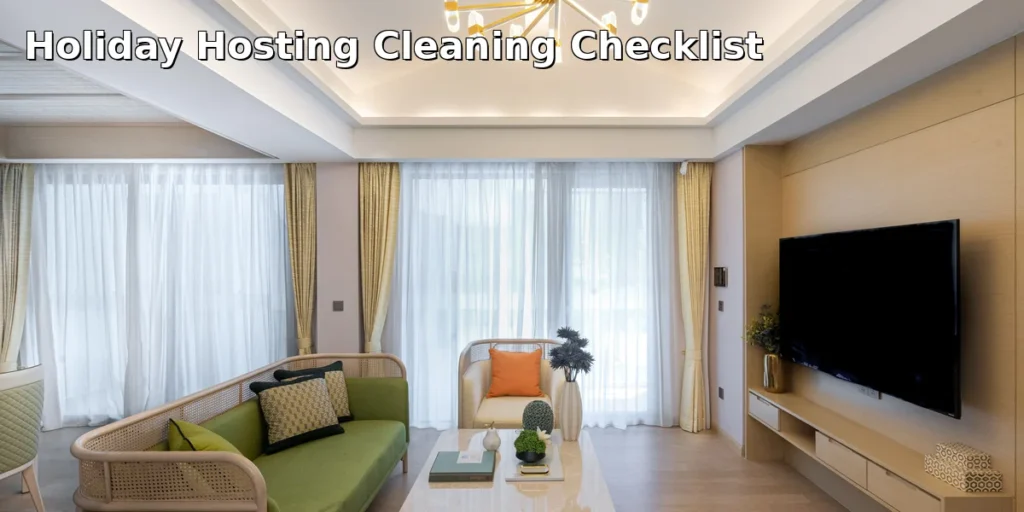
Holiday Hosting Cleaning Checklist: The Whole Plan on One Page
A holiday hosting cleaning checklist that works is not a whole-house deep clean. It is a timed plan for the rooms guests actually use, done in guest path order, with the heavy jobs spread over the days before and a short refresh on the day itself.
Here is the honest total, so you can see the shape of it before you start. The deep work across the week before comes to about four to five hours, broken into short sessions, never one long day. The day before takes about 90 minutes.
The morning of the party takes 45 minutes, timed to the clock in the morning sprint below. That is the whole job. Anything beyond it is optional, and the skip list near the end says so plainly.
Start by deciding which kind of hosting this is, because the room list changes. Dinner-only guests need the entry, the living room, the dining table, the kitchen and one bathroom. Overnight guests need all of that plus a bedroom and a shower they can use without asking.
If you clean for overnight guests when nobody is staying over, you will waste the best hour of your week. You can find more room-by-room guides in the Cleaning section when you want to go deeper on one room.
Walk the Guest Path Before You Touch a Cloth
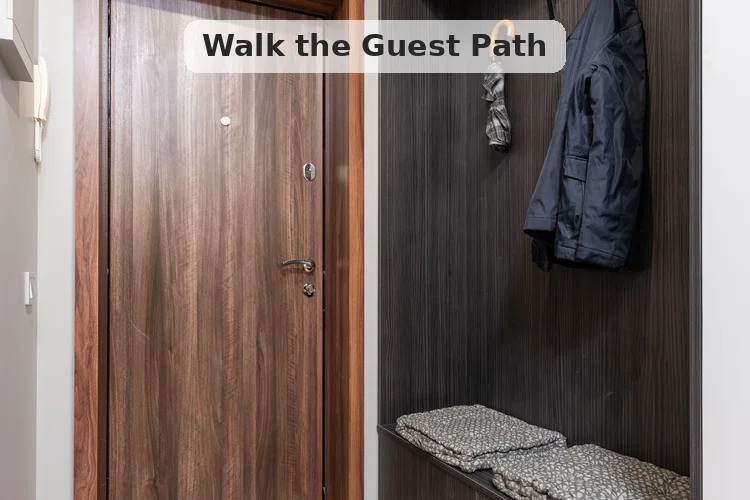
Stand at your front door, then walk the way a guest will walk. Front door, hallway, living room, dining table, bathroom, kitchen. That walk is your real checklist, and it takes about three minutes.
I do it with a phone in hand and I note only what I can actually see, not what I know is behind a closed door.
Guests notice a small set of things, and they notice them in this order. A clear place to put a coat. A bathroom with a clean hand towel and a full soap dispenser.
A kitchen sink that is not full. A seat that does not need clearing first. Floors that do not stick to shoes.
If those five things are right, the house reads as clean, even if a bedroom door stays shut all evening.
Put your supplies in one caddy before you start any room. A spray bottle of all-purpose cleaner, a bathroom cleaner, two microfibre cloths, a duster, a bin bag and a laundry basket for stray items. The basket matters more than any spray.
Most hosting mess is not dirt, it is things in the wrong room, and a basket moves them faster than cleaning around them.
How the week breaks down
Three days out, or spread over the week if you prefer, do the jobs that take real time and do not look any better for being done last minute. The oven interior, the fridge clear-out, grout in the guest bathroom, the guest bed linen, and any floor that needs a proper mop.
None of these improves by waiting until the day before, and all of them make the day before calmer.
The day before is for surfaces, floors and the guest bathroom from top to bottom, about 90 minutes in total: bathroom refresh 15 minutes, kitchen 25, living room and dining table 20, entry and hallway 10, floors 20. That adds up to 90, and it is the last long session.
After it, you are only refreshing, not cleaning.
The Kitchen in the Order Nobody Sees
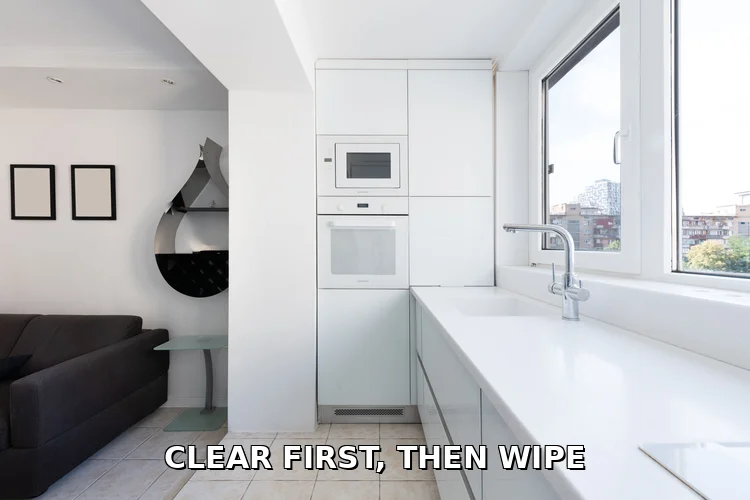
The kitchen eats time because it holds three jobs at once: cooking space, serving space and the room guests drift into with a glass in hand. Do it in this order and it stays done. Clear first, then wipe, then floors.
If you mop before you clear, you will mop again after the crumbs fall.
Clear the counters completely, including the small appliances you will not use. Put them in a cupboard, not on the dining table, because the dining table is next. Wipe the counters, the backsplash, the sink and the faucet, then the cabinet fronts where fingerprints gather around the handles.
Empty the bin and put in a fresh liner, because a full bin smells like a dirty kitchen even when the counters shine.
Inside the fridge, make room before you shop, not after. Take out anything past its date, wipe one shelf, and leave a clear space for platters and drinks. A fridge that is full to the door makes the whole evening harder, and nobody thanks you for it at 6 pm.
While you are in the kitchen, check the cooker hood grease filter too. A greasy filter lets cooking smells hang around the house for hours, and the guide to the hidden cost of dirty filters explains why a filter left too long costs more than a quick wash.
The Bathroom Guests Judge in Thirty Seconds
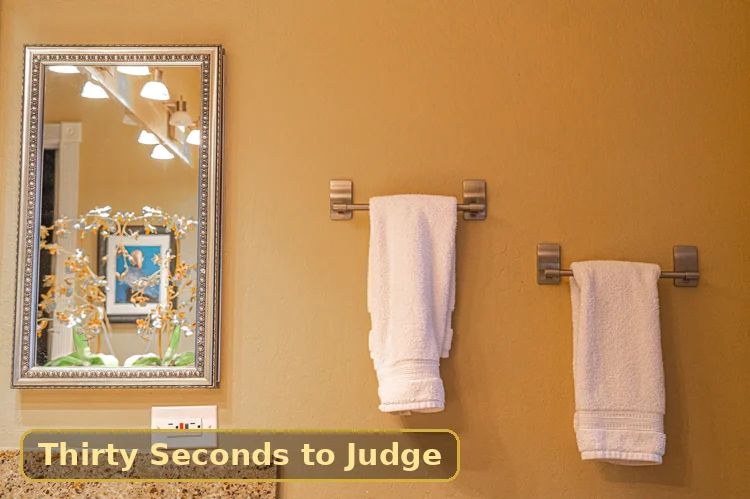
A guest decides what they think of your bathroom in about thirty seconds, and they decide it on four things. The mirror, the hand towel, the toilet seat and the smell. Everything else is background.
That is good news, because those four things take about fifteen minutes on the day, once the deep clean is done earlier in the week.
For the deep clean, work top to bottom so dust and drips fall to the floor before you mop it. Mirror first, then sink and faucet, then toilet, then shower or tub if overnight guests will use it, then the floor. Scrub the grout lines only if they are visibly dark.
If they are not, leave them, because grout scrubbing is the job most likely to eat an hour without any guest noticing.
Then stock it like a small hotel room, without the fuss. A clean hand towel, a full soap dispenser, a spare toilet roll where guests can see it, and an empty lined bin. Put personal items in a drawer or a basket under the sink.
Guests do not mind your things, but they do mind having nowhere to put theirs. If you prefer gentler products, the eco-friendly cleaning guide has bathroom mixes based on baking soda and vinegar that handle soap scum without harsh fumes.
Living Room and Dining Table, Plus the Air

The living room is the easiest room to over-clean and the easiest to under-clean, both at the same time. People dust shelves nobody looks at, then leave the sofa covered in the throw from last weekend. Flip that.
Dust only what is at eye level, straighten the cushions, vacuum the floor and under the cushions if you have pets, and stop.
Set the dining table the night before, not on the day. Plates, glasses, cutlery and a jug of water, all of it done while the kitchen is still calm. On the day, the table only needs a final wipe and the food.
That one habit saves the most frantic half hour of the whole party, because setting a table while guests are arriving is how glasses get knocked over.
Then check the air, which is the part most checklists forget. Open a window for ten minutes, even in winter, and let the rooms change air. If the house smells of cooking or cleaning products, guests notice it before they notice anything you cleaned.
If you are dressing the room for the season as well, the Christmas living room ideas show how a calm room can still feel festive without adding clutter to clean around.
If People Are Staying the Night
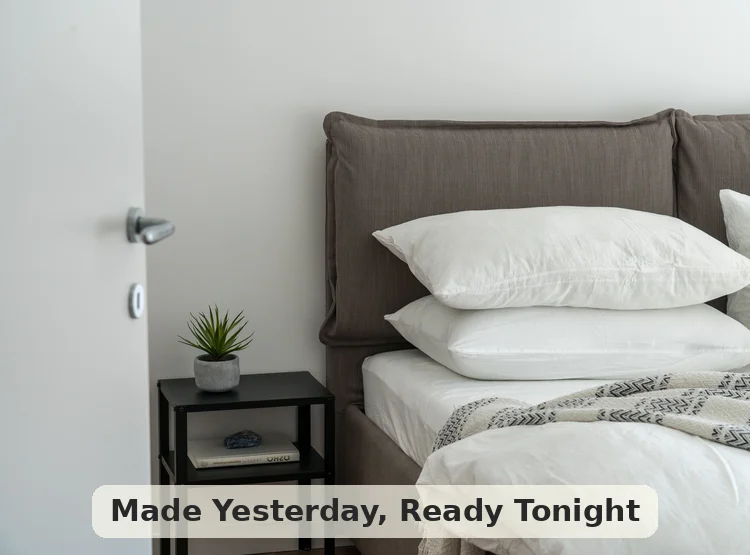
Overnight guests add two rooms and one habit to the plan. The bedroom and the shower, and the habit of showing people where things are. A guest who has to ask for a towel at midnight feels like a bother, and a host who has to get up feels the same.
Put the answers where guests can find them.
Make the bed the day before so the sheets have time to settle, and leave a clear surface for a phone and a charger, plus floor space for a bag. Clear one drawer or a section of the wardrobe and add a few hangers.
Dust the reachable surfaces and vacuum the floor, about 25 minutes in total. Nobody expects a showroom, but everybody notices a bed that smells fresh and a room they can move around in.
If there is no spare room, say so in the plan and use the sofa bed properly. Make it up fully, with a real pillow and a blanket, not a cushion and a throw found at the last minute. Put a small stack of towels at the end of it.
A sofa bed made like a bed feels like hospitality. A sofa bed left as a sofa feels like an afterthought.
Small home, one bathroom, no guest room
A small home does not need a smaller standard, it needs a shorter list. One bathroom means the bathroom refresh happens twice: once the day before, and once in the morning sprint, because the household uses it in between.
No guest room means the living room does double duty, so the sofa bed gets made the night before and the living room tidy happens after that, not before. The rest of the plan stays the same, and the total time drops, because there are fewer rooms to walk through.
The Morning of the Party, Timed to the Clock
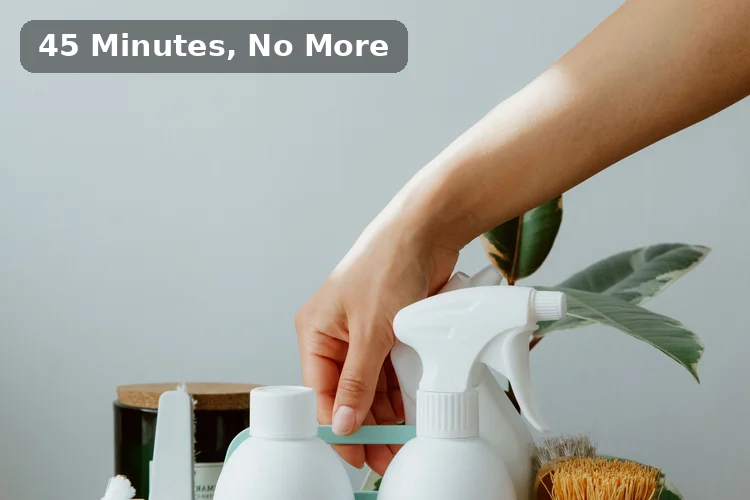
This is the part most plans wave at and never time, so here it is timed. Guests arrive at 6 pm. Start at 5 pm.
Forty five minutes, no more, and every block below adds up to it.
From 5:00 to 5:10, the bathroom. New hand towel, wipe the sink and mirror, clean the toilet seat, empty the bin if the household has used it. From 5:10 to 5:22, the kitchen.
Clear the counters, wipe spills, empty the sink, start the dishwasher if it is full, take out the bin. From 5:22 to 5:32, the living room and dining table. Straighten cushions, clear seats, final wipe of the table, put out glasses and water.
From 5:32 to 5:37, the entry. Shake the doormat, wipe the door handle, clear coats and shoes to one place, put out a space for guest coats. From 5:37 to 5:45, the floors.
A quick vacuum or sweep of the hallway and the rooms guests will walk through, nothing else. At 5:45, stop. Put the caddy away, change, and open a window for the last few minutes.
If something is still dirty at 5:45, close the door on that room. Guests will not open it, and you will enjoy the evening more for not trying.
What to Skip, and What Not to Skip
Skipping is not laziness, it is the plan working. Skip the inside of the oven if you are not cooking in it. Skip the spare room nobody will enter.
Skip the windows unless they are visibly smeared at eye level. Skip organising the inside of cupboards, because no guest opens them. Skip ironing table linen that will be covered with plates in ten minutes.
Do not skip the five things from the guest path. A clear coat space, a clean hand towel and full soap, an empty kitchen sink, a seat that is ready, and floors that do not stick. Do not skip the bin, because a full bin undoes a clean room.
Do not skip the morning bathroom refresh, because the household uses that bathroom between the day-before clean and the party, and guests can tell.
The mistake I see most often is cleaning the rooms guests will not see first, because those rooms feel private and therefore urgent. They are not urgent. Close the door, put a laundry basket in front of nothing, and spend that hour on the bathroom and the kitchen instead.
Your guests will never know what is behind the closed door, and that is the point.
After Everyone Leaves, and the Food Question
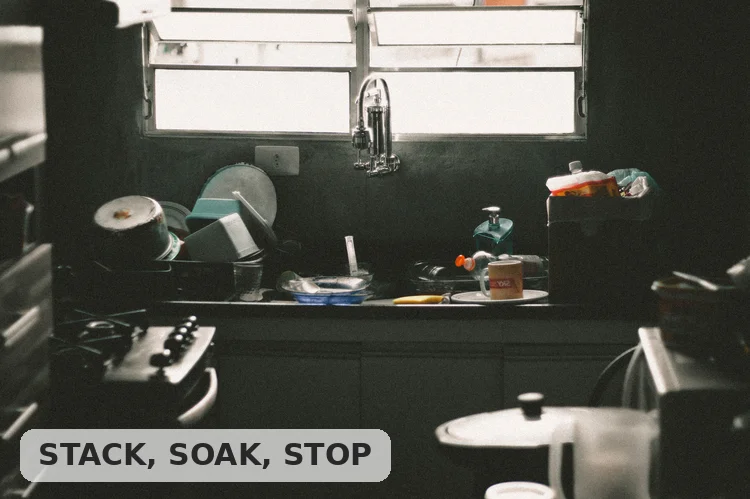
After the party, do the smallest job that stops tomorrow being worse. Stack the dishes by the sink, run the dishwasher if it is full, put perishable food away, take out the bin, and wipe the dining table. That is about fifteen minutes, and then stop.
Do not mop the floor tonight. The floor will be dirty again in the morning when people walk through it, and mopping twice is exactly the waste this plan avoids.
The food question matters more than the floor question. The USDA guidance on leftovers is plain: refrigerate perishable food within 2 hours of cooking, or within 1 hour if it has been sitting somewhere above 90 degrees F.
Most refrigerated leftovers keep for 3 to 4 days in a fridge at 40 degrees F (4 degrees C) or below, and reheating should reach 165 degrees F. Put leftovers in small shallow containers so they cool faster, and do not trust smell alone.
You can read the full guidance in the USDA leftovers advice if you want the exact wording.
In the morning, do the reset in one pass. Launder the table linen, wipe the fingerprints off the light switches and door handles, vacuum the gathering rooms, and mop the floors once. Put the guest towels in the wash and remake the guest bed only if someone is coming again soon.
Otherwise leave the bed made and move on. The house is back to normal by lunch, and you have not cleaned anything twice.
Questions People Keep Asking
When should I start cleaning before guests arrive?
Start the heavy jobs three days out, or spread them over the week before if that suits your evenings better. The day before is for surfaces and floors, about 90 minutes. The morning of the party is a 45 minute refresh, not a clean.
If you only have one evening, spend it on the bathroom, the kitchen and the entry, in that order.
Which rooms matter most to guests?
The rooms on the guest path matter most: entry, living room, dining table, bathroom and kitchen, plus a bedroom and shower for overnight guests. Rooms guests will not enter do not need cleaning for the party. Close the door and spend the time where guests will actually be.
Can I skip deep cleaning the whole house?
Yes, and you should. A hosting clean is a guest-path clean, not a whole-house deep clean. Deep clean the guest bathroom and the kitchen surfaces that matter, refresh everything else, and skip the rest without guilt.
The skip list above names the jobs that can wait.
How do I keep the house clean while I am cooking?
Clean as you cook, in the gaps, not after everything is done. Put used bowls in the sink, wipe a spill when it happens, and keep one clear counter for serving. Set the table the night before so the day of the party has no table job left.
The kitchen stays usable because it never gets a chance to pile up.
What should I do with leftovers after the party?
Refrigerate perishable leftovers within 2 hours of cooking, in small shallow containers, in a fridge at 40 degrees F (4 degrees C) or below. Eat them within 3 to 4 days, and reheat to 165 degrees F. If food sat out longer than 2 hours, throw it away rather than risking it.
Clean Enough, Then Stop

The test of a good hosting clean is not whether every room is perfect. It is whether you are sitting down when the doorbell rings, instead of still holding a cloth. If the coat space is clear, the bathroom is fresh, the sink is empty and the seats are ready, the house is ready.
Put the caddy away, pour yourself a drink, and let the evening be the point of all that work.