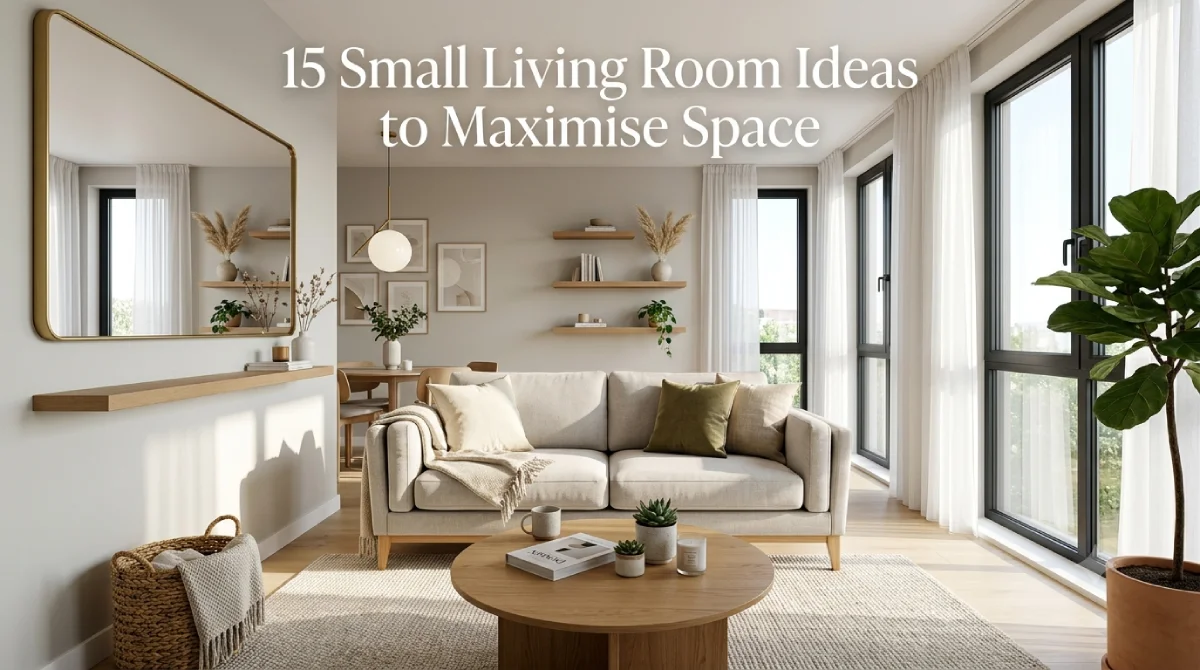
A small living room does not have to feel cramped or compromised. With the right layout, colour choices and furniture proportions, even the tightest reception room can feel open, comfortable and genuinely liveable. The key is working with the space you have rather than against it, using scale, light and smart storage to do the heavy lifting.
This guide walks through fifteen practical, designer-backed ideas for making a small living room feel bigger, brighter and more functional, along with common mistakes to avoid and a maintenance-minded approach to keeping the room working long term.
Why Small Living Rooms Need a Different Design Approach
Small rooms amplify every design decision. A piece of furniture that looks modest in a showroom can dominate a compact living room, and a colour that reads as neutral in a large space can feel heavy in a small one. Rather than shrinking everything down, the better strategy is to be selective: fewer, better-chosen pieces, clear sightlines, and deliberate use of light and colour to create the illusion of extra square footage.
1. Choose Furniture That Matches the Scale of the Room
Oversized sofas and bulky armchairs are the most common reason small living rooms feel overcrowded. Look for furniture with slimmer arms, exposed legs and a lower profile. Raised legs in particular let light travel underneath a piece, which visually opens up the floor.
Practical tip: A two-seater sofa (roughly 160–180cm wide) paired with a single accent chair is often more comfortable in a small room than a three-seater plus two armchairs.
2. Use a Light, Cohesive Colour Palette
Light, warm neutrals such as off-white, soft grey or pale sand reflect available light and make walls feel like they recede rather than close in. If you want colour, apply it consistently across walls, trim and even the ceiling to avoid choppy sightlines that make the room read as smaller.
3. Prioritise Multi-Functional Furniture
In a small living room, every piece should ideally do more than one job:
- A storage ottoman doubles as a coffee table and extra seating
- A console table behind the sofa adds surface space without a bulky side table
- Nesting tables provide flexible surface area that tucks away when not needed
4. Float the Sofa Instead of Pushing It Against the Wall
It feels counterintuitive, but pulling the sofa a small distance from the wall and adding a slim console or shelf behind it can create a sense of depth and flow, rather than one flat wall of furniture.
5. Maximise Vertical Storage
Floor space is precious, so let the walls do the storing. Tall, narrow bookshelves, wall-mounted cabinets and floating shelves keep clutter off the floor while drawing the eye upward, which makes ceilings feel higher.
6. Use Mirrors Strategically
A well-placed mirror opposite a window bounces natural light back into the room and creates the illusion of an additional window or doorway. Oversized statement mirrors work particularly well as a focal point in a small living room.
7. Layer Lighting Rather Than Relying on One Source
A single overhead light creates flat, harsh shadows that make a small room feel smaller. Layering ambient, task and accent lighting (a floor lamp, a table lamp and soft overhead lighting) adds warmth and depth.
8. Keep Window Treatments Simple
Heavy curtains or fussy blinds can visually cut a room’s height and width. Hang curtains close to the ceiling and slightly wider than the window frame so they frame the glass rather than obscure it, making the window (and therefore the wall) appear larger.
9. Define Zones Without Walls
In open-plan or multi-purpose small living rooms, use a rug, a change in lighting, or the back of a sofa to signal a distinct seating area without needing a physical partition, which would only shrink the room further.
10. Choose a Rug That Fits the Furniture, Not Just the Floor
A rug that’s too small is one of the most common styling mistakes in small living rooms. Ideally, at least the front legs of each seating piece should rest on the rug to visually anchor the layout.
11. Limit the Colour and Material Count
A tight, disciplined palette (two or three main colours plus one accent) keeps a small room feeling calm rather than busy. Repeating a material, such as the same wood tone across shelving and a coffee table, adds cohesion.
12. Bring in Greenery to Add Life Without Clutter
A few well-placed plants add texture and colour without taking up meaningful floor space, especially trailing plants on a shelf or a tall, narrow plant in a corner.
13. Use Glass and Acrylic for Certain Pieces
A glass-topped coffee table or an acrylic side chair takes up physical space but doesn’t register visually, which is particularly useful when floor space is genuinely tight.
14. Keep the Television Proportional
An oversized television can overwhelm a small living room both physically and visually. As a general guide, the screen’s diagonal size should suit the seating distance; a screen that’s too large will dominate every other design decision in the room.
15. Edit Ruthlessly and Reassess Seasonally
Small rooms show clutter quickly. A seasonal review of what’s on shelves, surfaces and the floor keeps the space feeling intentional rather than accumulated.
Common Mistakes in Small Living Rooms (and How to Fix Them)
| Mistake | Why It Hurts the Space | Fix |
|---|---|---|
| Oversized sofa or sectional | Blocks sightlines, dominates floor space | Choose a slimmer profile with raised legs |
| Too many small rugs | Chops the floor into disconnected zones | One larger rug anchoring the seating area |
| Heavy, dark curtains | Visually shortens walls and windows | Lighter fabric hung close to the ceiling |
| Overhead lighting only | Creates flat, harsh shadows | Layer floor, table and ambient lighting |
| Furniture pushed flush to every wall | Creates a boxed-in feel | Float key pieces slightly for depth |
| Mismatched wood tones | Visually busy, disjointed | Repeat one or two finishes throughout |
Long-Term Maintenance and Layout Upkeep
A small living room’s design only works if it’s maintained with the same discipline it was created with:
- Reassess furniture placement every six to twelve months, particularly if new pieces have been added
- Keep vertical storage tidy; cluttered shelves undo the visual benefit of using wall space
- Clean mirrors and glass surfaces regularly, since smudges are more noticeable in a light-reflecting small room
- Rotate décor seasonally rather than adding to it permanently, to avoid slow clutter creep
Frequently Asked Questions
What is the best sofa size for a small living room?
A two-seater sofa around 160–180cm wide is typically the most comfortable option for a small living room, leaving enough clearance for walking space and other furniture.
Do dark colours always make a small living room look smaller?
Not necessarily. A dark, warm colour used consistently and paired with good lighting can create a cosy, intentional feel, whereas the same colour applied inconsistently can make the room feel chopped up and smaller.
Should I use one large rug or multiple small rugs in a small living room?
One larger rug that anchors the seating area is almost always better than multiple small rugs, which tend to fragment the floor space visually.
How can I make a small living room feel bigger without renovating?
Mirrors, layered lighting, a light colour palette, and furniture with raised legs are the most effective non-structural changes for making a small living room feel larger.
What TV size is appropriate for a small living room?
The right size depends on seating distance, but as a general rule, a screen between 40 and 50 inches suits most small living rooms without overwhelming the space.
Is open shelving better than closed storage in a small living room?
A mix works best. Open shelving keeps the room feeling airy, while some closed storage prevents visual clutter from everyday items.
How do I zone a small living room that’s also part of an open-plan space?
Use a rug, a distinct lighting layer, or furniture placement (such as the back of a sofa) to define the seating area without adding a physical wall.
Conclusion
A small living room works best when every choice serves the space rather than fighting it. Scale, light and a disciplined colour palette do more for a compact room than any single statement piece ever could. Whether it’s floating the sofa a few inches from the wall, layering lighting instead of relying on one overhead fixture, or choosing furniture with raised legs to let light pass underneath, small adjustments compound into a room that feels genuinely open and considered. The most successful small living rooms are rarely the ones with the most furniture or the boldest décor; they’re the ones where every piece earns its place.
Stay Updated with Arteriors Home
Enjoyed these small living room ideas? Subscribe to the Arteriors Home newsletter for fresh interior design inspiration, practical renovation guides and expert-backed tips delivered straight to your inbox. From clever space-saving solutions to the latest trends in home styling, we help you turn every room into a space you love, no matter its size.