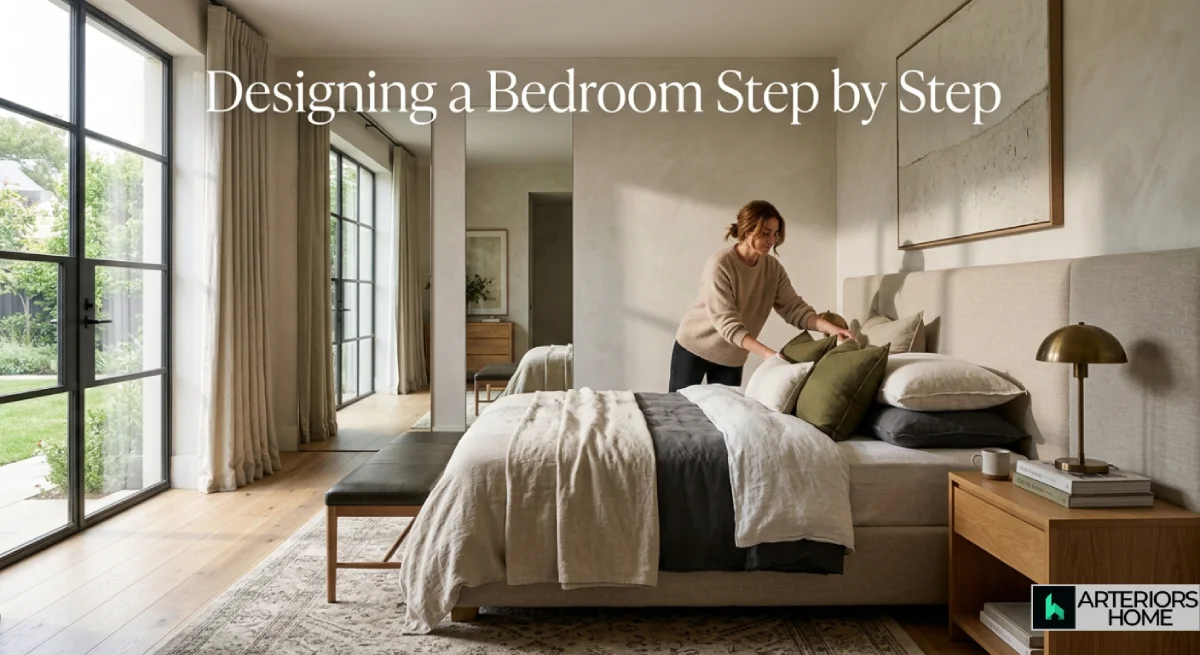
Designing a bedroom from scratch feels overwhelming, but breaking it into clear steps makes the whole process simple and enjoyable. This guide walks you through layout planning, colour selection, lighting, furniture, and finishing touches to help you create a room that is both beautiful and restful.
Designing a bedroom the right way transforms more than just a room. It shapes how you sleep, rest, and recharge. This guide is for homeowners, renters, and first-time decorators who want a clear, step-by-step process. From measuring your space to picking the final accessories, every stage covered here helps you avoid costly mistakes and build a room you will genuinely love.
Step 1: Measure Your Room First
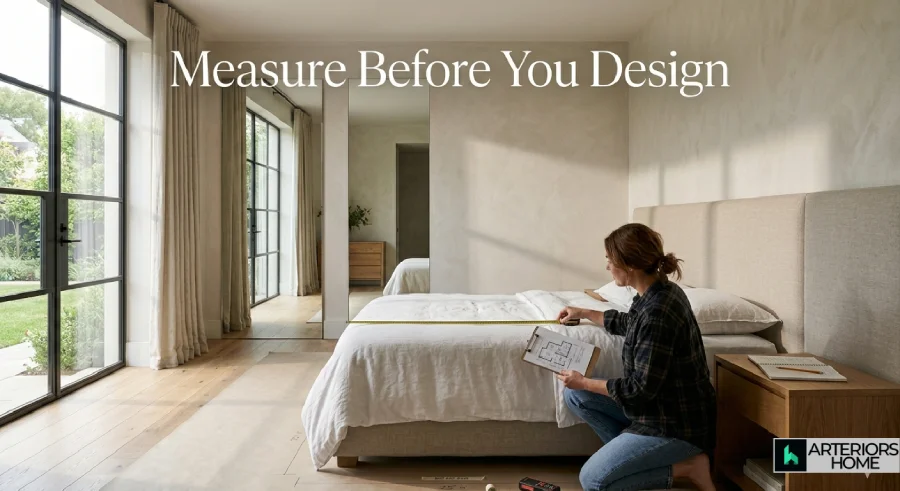
Before you buy a single item, measure your bedroom accurately. Knowing your exact dimensions saves money and avoids frustrating returns.
- Measure length, width, and ceiling height in metres or feet.
- Note the position of doors, windows, radiators, and plug sockets.
- Record alcoves, chimney breasts, and awkward corners.
- Sketch a rough floor plan on paper or use a free app like Planner 5D.
- Mark a minimum 60 cm clearance around the bed for comfortable movement.
Accurate measurements form the foundation of every good bedroom design decision.
Step 2: Set Your Budget Before You Shop
Setting a realistic budget prevents overspending and helps you prioritise the right elements.
| Item | Estimated Budget Range |
|---|---|
| Bed frame and mattress | £300 to £1,500 |
| Wardrobe or storage | £150 to £900 |
| Flooring | £10 to £50 per sq metre |
| Lighting | £50 to £300 |
| Paint or wallpaper | £30 to £200 |
| Soft furnishings | £80 to £400 |
Allocate the biggest portion of your budget to the bed and mattress. You spend roughly one third of your life in bed, so quality here pays back in health and comfort.
Step 3: Choose a Layout That Flows
Good layout planning is the backbone of designing a bedroom that feels spacious and organised.
- Place the bed on the largest wall as the focal point.
- Leave at least 70 cm on each side of the bed if the room allows.
- Position the wardrobe near the door for easy access.
- Keep the dressing area away from window glare for comfortable use.
- Avoid blocking radiators or air vents with large furniture.
- Leave a clear path from the door to the bed for safety at night.
In smaller rooms, a fitted wardrobe running the full width of one wall saves floor space and creates a sleek, built-in look.
Step 4: Pick the Right Colour Scheme
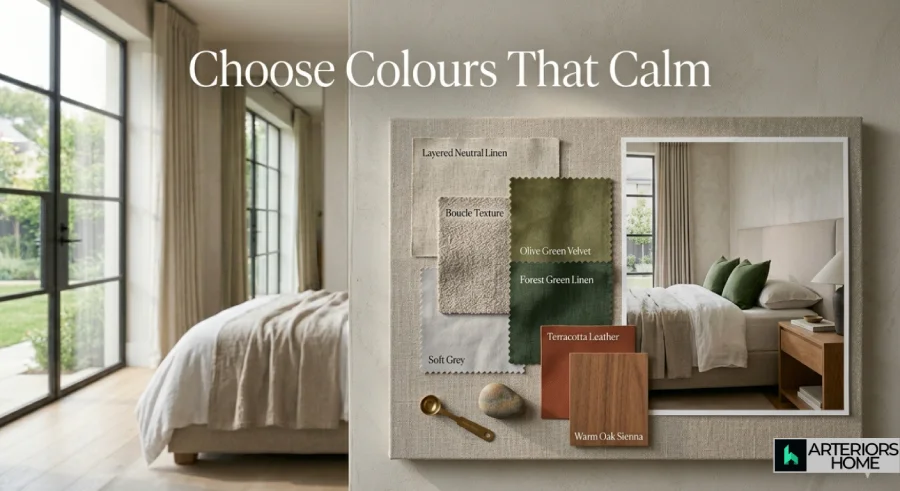
Colour sets the mood of a bedroom more than any other single element.
- Soft neutrals like warm white, stone, and greige create a calm, timeless feel.
- Deep tones like navy, forest green, and charcoal add drama and cocoon-like warmth.
- Dusty pastels like sage, blush, and muted lilac work well in natural light.
- Warm earth tones like terracotta, rust, and ochre suit boho and Mediterranean styles.
- Monochrome palettes in grey or white feel modern and clean with the right textures.
Use the 60-30-10 colour rule: 60% dominant wall colour, 30% secondary colour in soft furnishings, and 10% accent in accessories.
Step 5: Layer Your Bedroom Lighting
Poor lighting is one of the most common mistakes in bedroom design. A well-lit bedroom needs three layers.
Ambient lighting provides the main overhead source. Choose a pendant light or flush ceiling fitting suited to your ceiling height.
Task lighting sits beside or above the bed. Bedside wall lights or table lamps are ideal for reading without disturbing a partner.
Accent lighting adds depth and mood. Try LED strip lights behind a headboard, a floor lamp in a corner, or warm-toned Edison bulbs in a reading nook.
Always fit a dimmer switch so you can adjust the mood from bright morning light to a soft evening glow.
Step 6: Choose Flooring That Fits the Room

Flooring affects how a bedroom looks, feels underfoot, and sounds.
- Carpet is the most popular bedroom choice. It is warm, soft, quiet, and available in every tone. Choose a mid-pile twist carpet in neutral tones for durability and style.
- Engineered wood adds warmth and a premium feel. It works well with underfloor heating.
- Luxury vinyl tile (LVT) is waterproof, easy to clean, and ideal for those with allergies.
- Laminate is a budget option but can feel cold and sound hollow underfoot.
- Natural stone tiles suit warm climates or rooms with underfloor heating installed.
Add a large bedroom rug under the bed to anchor the space and add softness underfoot on cold mornings.
Step 7: Plan Smart Storage Solutions
Clutter destroys the calm atmosphere every bedroom needs. Smart storage keeps the room tidy without sacrificing style.
- Built-in wardrobes maximise every centimetre of wall space from floor to ceiling.
- Under-bed storage drawers or divan bases use hidden space for bedding and seasonal items.
- Floating shelves beside the bed replace bulky bedside tables in tight rooms.
- Ottoman storage benches at the foot of the bed add seating and hidden storage in one.
- Modular drawer units inside wardrobes help organise clothing more efficiently.
- Hooks behind doors handle everyday items like dressing gowns, bags, and belts.
Avoid storing items you rarely use on visible surfaces. Keep countertops and shelves curated to three to five meaningful objects maximum.
Step 8: Select Furniture With Purpose

Every piece of furniture in a bedroom should earn its place. Overcrowding a room makes it feel smaller and harder to relax in.
Choose a bed frame style that anchors the room. Upholstered headboards in velvet or boucle fabric add softness. Wooden frames in oak or walnut suit Scandi and natural styles. Metal frames work well in industrial or minimalist designs.
For a double room, include:
- Bed frame and quality mattress (minimum 20 cm depth)
- One or two bedside tables or floating shelves
- A wardrobe or fitted storage solution
- A chest of drawers if the wardrobe lacks internal drawers
- A mirror to reflect light and add the sense of space
Avoid adding a desk unless the room is large enough to give it a dedicated zone.
Step 9: Finish With Textiles and Accessories
Textiles and accessories are where personality enters the room. They are also the easiest elements to change as trends evolve.
- Layer two to four cushions on the bed for a styled, hotel-like look.
- Use curtains that reach the floor to elongate walls and frame windows elegantly.
- Choose linen, cotton, or bamboo bedding for breathability and comfort.
- Add a throw blanket at the foot of the bed in a contrasting texture.
- Include one large piece of wall art above the headboard or on a feature wall.
- Use plants like a snake plant or peace lily to add life and improve air quality.
- Keep bedside accessories to a lamp, one book, and one small decorative object for a clean look.
Avoid over-accessorising. A few well-chosen pieces always outperform a crowded collection of smaller items.
FAQs About Designing a Bedroom
What is the best layout for designing a bedroom?
Place the bed on the largest wall as the focal point. Leave at least 60 cm on each side for movement. Position storage near the door. Keep natural light unobstructed.
What colours work best in a bedroom?
Soft neutrals, muted pastels, and deep tones all work well depending on your style. Avoid very bright colours on all four walls as they can disturb sleep quality.
How much does it cost to redesign a bedroom?
A basic bedroom refresh costs around £500 to £1,500. A full redesign including new flooring, furniture, and fitted storage can range from £3,000 to £8,000 or more.
What flooring is best for a bedroom?
Carpet is the most popular choice for warmth and comfort. Engineered wood and LVT are good alternatives for allergy sufferers or those wanting a modern look.
How do I make a small bedroom look bigger?
Use light wall colours. Choose furniture with slim legs. Fit floor-to-ceiling mirrors or fitted wardrobes. Use under-bed storage to reduce freestanding furniture. Keep surfaces clear.
What lighting should I use in a bedroom?
Use three layers: ambient ceiling lighting for general use, bedside task lighting for reading, and accent lighting for mood and atmosphere. Always fit a dimmer switch.
How do I choose the right bed size for my room?
A king-size bed needs a minimum room size of roughly 4 m x 4 m. A double bed suits rooms from 3 m x 3.5 m. Measure your floor plan before buying.
Start Designing Your Bedroom With Confidence
Designing a bedroom is a layered process, but each step builds on the last. Start with measurements and a clear budget. Plan your layout before you buy anything. Then layer in colour, lighting, flooring, storage, and furniture with purpose.
The final accessories and textiles bring the whole design together. Keep your choices intentional and your surfaces uncluttered.
A well-designed bedroom does not need to be expensive. It needs to be thoughtful. Take one step at a time, and you will end up with a room that looks beautiful and feels genuinely restful every day.
Explore more home improvement guides at arteriorshome, covering interior design, flooring, lighting, room decor, and home renovation tips to inspire every room in your home.