

The Warm Homes Plan 2026 has changed how UK homeowners fund heating upgrades. It launched in January 2026 as the government’s flagship energy efficiency programme. The headline goal is upgrading 5 million UK homes by 2030.
Funding for the plan is reported differently across sources. Some cite £13.2 billion, while others cite £15 billion. We’re flagging that gap rather than picking one figure, since neither is confirmed as more authoritative.
This guide breaks the plan down into what actually matters for homeowners. That means grant amounts, eligibility, and whether switching makes financial sense right now. It also covers what changed this year.
What the Warm Homes Plan Actually Covers

The plan isn’t one single scheme. It’s an umbrella covering several existing and new programmes. Each one targets a different type of household or upgrade.
| Scheme | Who It’s For | Coverage |
|---|---|---|
| Boiler Upgrade Scheme (BUS) | Any homeowner, no income test | England and Wales |
| Warm Homes: Local Grant | Low-income households | England only |
| ECO4 | Low-income households | Great Britain |
| Warm Homes Fund | Homeowners who don’t qualify for grants | UK-wide, low-interest loans |
For most readers researching this, the Boiler Upgrade Scheme is the relevant one. It’s open now, has no income requirement, and applies directly at the point of installation. The sections below break it down in detail.
The Boiler Upgrade Scheme: What’s Actually On Offer
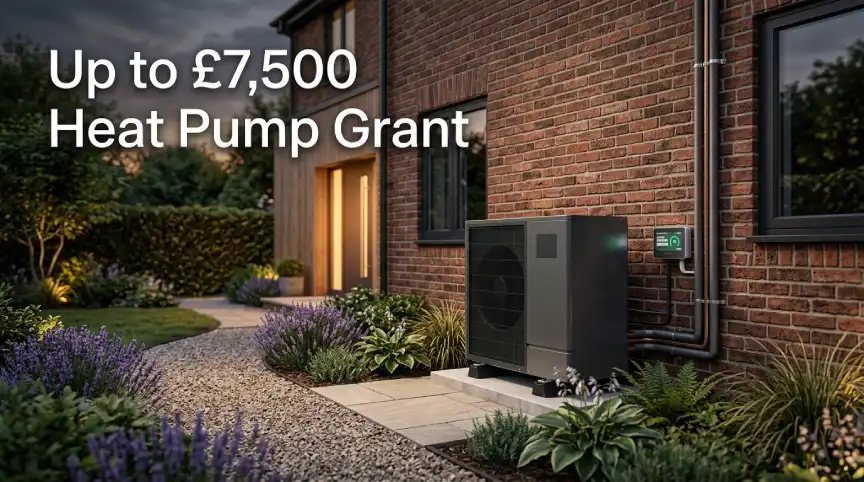
The BUS grant covers a meaningful chunk of a heat pump’s upfront cost. It pays out directly to your installer, not to you. That keeps the paperwork simple for homeowners.
- Air or ground source heat pump: up to £7,500 grant
- Oil or LPG boiler replacement: increased grant of around £9,000, effective from 21 July 2026
- Heat batteries: new £2,500 grant, introduced for 2026/27
- Air-to-air heat pumps: now also eligible for a £2,500 grant
The scheme is confirmed to run until March 2030. Its total budget sits at roughly £2.7 billion. That’s a meaningful runway for homeowners still weighing their options.
What Changed in April 2026
One major eligibility barrier disappeared this year. Previously, your home’s EPC certificate needed to recommend insulation improvements first. As of April 2026, that requirement has been removed entirely.
This change opened the scheme to a significantly wider group of homes. Older properties that couldn’t easily meet insulation criteria can now apply directly. It’s arguably the single biggest practical change to the scheme this year.
Other Routes: ECO4 and the Warm Homes Local Grant
Not every household qualifies for the Boiler Upgrade Scheme’s approach, and not everyone needs to. Two other routes exist specifically for lower-income homes. Both work differently from the BUS.
ECO4 has funded insulation and heating upgrades since 2013. It was originally due to end in March 2026. The government extended it by nine months, now running through December 2026.
The Warm Homes: Local Grant works through individual councils rather than a national application. It targets low-income households in England specifically. Funding covers heat pumps alongside broader energy efficiency upgrades.
Is a Heat Pump Worth It in 2026?
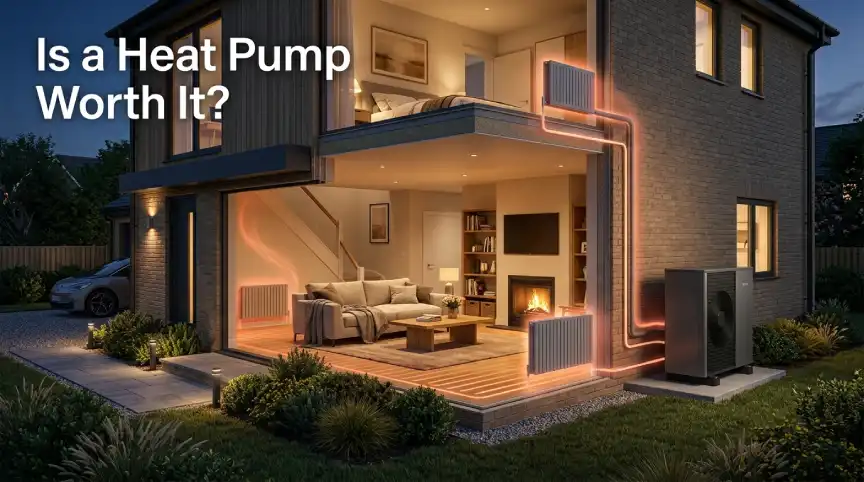
Cost is usually the first question homeowners ask. A typical air source heat pump installation runs between £10,000 and £13,000 before any grant. The £7,500 BUS grant can cover more than half that total for many households.
VAT adds another consideration worth knowing about. Energy efficiency improvements currently carry 0% VAT. That relief runs until March 2027. There’s a real time incentive to act sooner rather than later.
The efficiency argument matters just as much as the grant itself. A heat pump moves several units of heat into a home per unit of electricity used. A gas or oil boiler, by contrast, can only convert the fuel it burns directly.
None of this means every property should rush into a heat pump, though. A proper installation is a design project, not a simple swap. Room-by-room heat loss, radiator output, and pipework all need checking first.
Solar Panels and Battery Storage
The Warm Homes Plan extends beyond heating alone. Solar panel installations also qualify for 0% VAT under the current rules. That applies regardless of whether a household also installs a heat pump.
Battery storage is newly supported too. From 2026, a £2,500 grant is available for battery storage paired with solar panels. This is delivered either through the Boiler Upgrade Scheme or the Warm Homes Local Grant. Which route applies depends on your eligibility.
A separate consumer loan scheme for solar and batteries is still in development. It isn’t yet open for applications as of this writing. Full details and a launch timeline are expected later in 2026. Phased rollout will likely start in 2027.
How to Actually Apply
The Boiler Upgrade Scheme works differently from most home improvement grants. You don’t apply for it directly yourself. An MCS-certified installer handles the application and redeems the voucher on your behalf.
- Get quotes from MCS-accredited installers in your area
- Ask each one to confirm your property’s BUS eligibility upfront
- Compare not just price, but the quality of the heat loss survey offered
- Confirm the grant amount is applied before you pay the net cost
Choosing an installer on price or grant value alone is a common mistake. Good design matters just as much as the grant itself. A rushed survey now can mean a poorly performing system later.
Running Costs: Heat Pump vs Gas Boiler
Upfront cost is only half the equation. Ongoing running costs matter just as much for most households. This is where heat pumps tend to pull ahead over time.
A well-installed heat pump typically produces around three units of heat per unit of electricity used. A gas boiler, by comparison, converts roughly one unit of fuel into one unit of heat. That efficiency gap is the entire financial case for switching.
Electricity currently costs more per unit than gas in the UK. That narrows the running-cost advantage somewhat, depending on usage patterns. Well-insulated homes with a properly sized system tend to see the clearest savings.
Older, poorly insulated properties see smaller gains, at least initially. Pairing a heat pump with basic insulation upgrades first often makes the biggest difference. That’s part of why the Warm Homes Local Grant bundles both together for eligible households.
Scotland and Northern Ireland: Different Rules Apply
The Boiler Upgrade Scheme only covers England and Wales directly. Scotland and Northern Ireland run their own separate funding routes instead. Homeowners there shouldn’t assume the same figures apply.
Scotland’s Home Energy Scotland offers its own grant and loan combination for heat pumps. Northern Ireland has a comparable but distinct scheme through its own energy agency. Both are worth checking separately rather than assuming UK-wide consistency.
This regional split catches some homeowners out. Online guides often default to England-specific figures without flagging the difference. Always confirm which scheme applies to your actual location before budgeting.
Common Mistakes Homeowners Make
A few recurring mistakes show up across heat pump installations. Most are avoidable with the right questions upfront. Here’s what tends to go wrong.
- Choosing the cheapest quote without checking the survey quality: a rushed heat loss calculation leads to an undersized, inefficient system
- Assuming every installer is MCS-certified: only certified installers can process the BUS grant on your behalf
- Skipping radiator upgrades: heat pumps often run at lower flow temperatures, so existing radiators may need resizing
- Not asking about the outdoor unit’s location: poor placement can affect both efficiency and noise levels near windows
None of these mistakes are dealbreakers on their own. They’re avoidable with the right questions upfront. They’re simply the difference between a system that performs well and one that quietly underdelivers. A good installer will walk you through each of these before you sign anything.
Frequently Asked Questions
How much is the Boiler Upgrade Scheme grant worth in 2026?
It offers up to £7,500 for an air or ground source heat pump. No income test is required.
Do I need insulation upgrades to qualify for the grant?
No. As of April 2026, the EPC insulation recommendation requirement was removed from the scheme.
Does the Warm Homes Plan cover solar panels?
Yes, solar installations qualify for 0% VAT, and battery storage now has its own £2,500 grant.
When does the Boiler Upgrade Scheme end?
It’s confirmed to run until March 2030, with a total budget of roughly £2.7 billion.
Is the grant available across the whole UK?
The Boiler Upgrade Scheme covers England and Wales specifically. Scotland and Northern Ireland run separate schemes.
How much does a heat pump cost before the grant?
A typical air source heat pump installation costs between £10,000 and £13,000. That’s before any grant is applied.
The Bottom Line for UK Homeowners
The Warm Homes Plan has made 2026 a genuinely practical year to consider switching. Removing the insulation eligibility barrier widened access significantly. Combined with 0% VAT, the financial case has rarely looked stronger.
That said, a grant alone shouldn’t drive the decision. Get a proper heat loss survey done first. The right installer matters more than the size of the discount.
For homeowners still on the fence, the maths is at least worth running. Between the BUS grant and VAT relief, the upfront cost drops significantly. Add in long-term running cost savings too. Many households will find the numbers genuinely stack up this year.