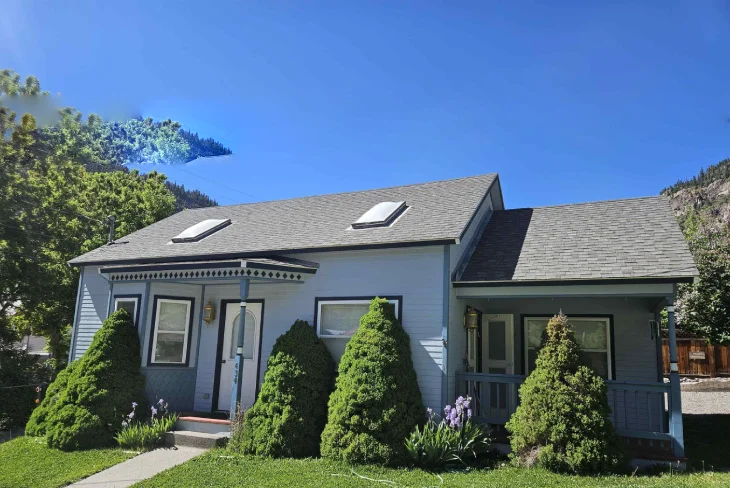
Gary Ridgway house, the man convicted as the Green River Killer, lived for years in a modest single-family home in Auburn, Washington — a property that became central to one of the most exhaustive criminal investigations in American history. Valued at approximately $180,000 at the time investigators searched it, the house at 21859 32nd Place South served as both a domestic residence and, according to prosecutors, a location connected to Ridgway’s decades-long killing spree. The property sits in a quiet suburban neighborhood south of Seattle, offering no outward sign of the horrors investigators would later uncover inside and on the surrounding grounds.
Who Is Gary Ridgway?
Gary Leon Ridgway is an American convicted serial killer, sentenced in 2003 after confessing to the murders of 49 women — though investigators believe the actual number may be significantly higher, potentially exceeding 70 victims. His crimes, which began in the early 1980s and continued for nearly two decades, primarily targeted vulnerable women along the Highway 99 corridor south of Seattle, particularly near the Green River in King County, Washington.
Ridgway evaded capture for more than 20 years despite being questioned by investigators multiple times. It was DNA evidence — preserved from the early 1980s — that ultimately led to his arrest in November 2001. He accepted a plea agreement in 2003, avoiding the death penalty in exchange for providing information about victim locations and the details of his crimes.
| Detail | Information |
|---|---|
| Full Name | Gary Leon Ridgway |
| Birth Date | February 18, 1949 |
| Age | 76 (as of 2025) |
| Birthplace | Salt Lake City, Utah |
| Raised In | McMicken Heights, Washington |
| Profession | Truck painter (Kenworth Truck Company) |
| Victims Confirmed | 49 (confessed to 71) |
| Active Years | Approximately 1982–2000 |
| Arrest Date | November 30, 2001 |
| Conviction | 2003 — 49 counts of aggravated murder |
| Sentence | Life imprisonment without parole |
| Current Location | Washington State Penitentiary, Walla Walla |
| Marital Status | Married three times; divorced |
| Nationality | American |
| Known As | The Green River Killer |
The Gary Ridgway House: Location and Property Overview
The Gary Ridgway house is located at 21859 32nd Place South in Auburn, Washington — a working-class suburb situated roughly 25 miles south of downtown Seattle in King County. The neighborhood is typical of the region: tree-lined streets, modest single-story homes, and the kind of unremarkable suburban setting that, in retrospect, investigators found deeply unsettling given what had occurred there.
The house itself is a single-family residential property — a one-story structure with a modest footprint consistent with homes built in that area during the 1970s and 1980s. Public records indicated the property was valued in the range of $150,000–$180,000 at the time of the investigation, reflecting the modest nature of the surrounding real estate market at the turn of the millennium.
Ridgway lived in the home with his third wife, Judith Lynch, whom he married in 1988. Neighbors consistently described him as quiet, unremarkable, and even friendly — the archetype of what criminologists would later characterize as a highly organized offender capable of maintaining a functional social exterior.
What Investigators Found at the Property
When law enforcement executed search warrants on the Auburn house following Ridgway’s 2001 arrest, the investigation extended well beyond the interior of the structure. Forensic teams:
- Collected soil samples from the yard and surrounding land
- Recovered physical evidence including paint materials consistent with Ridgway’s employment at Kenworth
- Examined the property for biological evidence linked to victims
- Documented the layout of the home as part of building the prosecutorial case
The property’s proximity to several of the Green River dumpsites made its geographic placement particularly significant to investigators reconstructing the timeline of Ridgway’s movements.
Where Does Gary Ridgway Live Now?
Gary Ridgway currently resides at the Washington State Penitentiary in Walla Walla, Washington, where he is serving 49 consecutive life sentences without the possibility of parole. Under the terms of his 2003 plea agreement, prosecutors took the death penalty off the table in exchange for Ridgway’s continued cooperation in locating victim remains and providing details that brought closure to surviving families.
He has no access to personal assets, receives no income, and has no legal claim to any real property. The Auburn house where he once lived passed through standard real estate channels following the conclusion of the criminal proceedings.
The Auburn House After Ridgway’s Conviction
Following Ridgway’s sentencing in December 2003, the Auburn property entered an interesting chapter in terms of real estate. Properties with significant criminal histories — often referred to in the industry as “stigmatized properties” — present unique challenges in the real estate market.
In Washington State, disclosure laws require sellers to inform buyers of known material defects, but the definition of “material” has historically been interpreted narrowly in terms of psychological stigma. This created a legal gray area around properties like the Ridgway house, where no structural defect exists but the psychological association with violent crime is undeniable.
“There’s always a market for these properties — whether that’s curious buyers, investors seeking a discount, or simply people who don’t know the history. The stigma fades faster than most people expect.” — A Pacific Northwest real estate agent speaking to regional media on stigmatized properties
Real estate analysts who track stigmatized properties note that homes connected to high-profile criminal cases typically sell at discounts ranging from 10% to 25% below comparable market value in the immediate years following the incident, with that gap narrowing significantly over a 10–15 year period as neighborhood turnover dilutes local awareness of the history.
Auburn, Washington: The Real Estate Context
Auburn sits within the greater Seattle metropolitan area, a region that experienced dramatic property value appreciation throughout the 2000s and 2010s. King County, where Auburn is located, saw median home values climb from approximately $200,000 in the early 2000s to well over $600,000 by the mid-2020s in many neighborhoods.
Homes comparable to Ridgway’s former residence — modest single-story, single-family structures in Auburn — now trade in the $400,000–$550,000 range depending on condition, lot size, and proximity to transit corridors. This represents a substantial appreciation curve from the property’s estimated value at the time of his arrest, mirroring broader King County market trends.
The Green River Investigation and Its Connection to the Property
The investigation that eventually led back to the Auburn house was, at the time of its conclusion, the largest serial murder investigation in American history. The task force dedicated to the Green River Killer case consumed millions of dollars in resources over nearly two decades and involved hundreds of detectives across multiple agencies.
Ridgway’s employment as a truck painter at the Kenworth facility in Renton was significant because forensic analysts were able to match paint particles found on several victims to the specific spray paints used at that factory. This evidence, combined with the preserved DNA sample from 1987, formed the backbone of the prosecution’s case.
The Auburn house, while not itself a confirmed crime scene for any specific murder, represented the domestic anchor of Ridgway’s double life — a place where he maintained the appearance of a working-class family man while investigators believe he continued his crimes against vulnerable women throughout the 1980s and 1990s.
“He was the kind of guy who’d wave to you in the driveway. You’d never know.” — Former neighbor, quoted in documentary coverage of the Green River case
Property Feature Overview
| Feature | Detail |
|---|---|
| Address | 21859 32nd Place South, Auburn, WA |
| Property Type | Single-family residential |
| Stories | One |
| Location | King County, Washington |
| Proximity to Seattle | Approximately 25 miles south |
| Estimated Value at Arrest (2001) | ~$150,000–$180,000 |
| Comparable Market Value (2024) | ~$400,000–$500,000 (estimated) |
| Stigma Classification | High-profile criminal history |
| Current Ownership | Private (post-conviction sale) |
| Neighborhood Character | Suburban, residential |
Criminological and Cultural Significance of the Property
The Gary Ridgway house occupies an unusual space in the broader cultural conversation around crime, place, and memory. True crime researchers, documentary filmmakers, and journalists have all referenced the Auburn address in the extensive body of media coverage the Green River case has generated.
Several notable documentaries and news investigations have included footage of or references to the property:
- “The Green River Killer: Mind of a Monster” — featured neighborhood context and investigative footage
- King County Sheriff’s Department case files — extensively documented the property during the 2001–2003 investigation
- Netflix and streaming true crime content — multiple productions have covered the Ridgway case with references to the Auburn residence
The property represents a broader sociological phenomenon: the way ordinary suburban architecture becomes freighted with meaning when associated with extraordinary criminal acts. Unlike the grand estates of wealth or architectural landmark homes that typically attract public fascination, the Ridgway house draws attention precisely because of its ordinariness.
Frequently Asked Questions
Where is Gary Ridgway’s house located?
The property associated with Gary Ridgway is located at 21859 32nd Place South in Auburn, Washington, approximately 25 miles south of Seattle in King County.
How much was Gary Ridgway’s house worth?
At the time of his 2001 arrest, the Auburn property was estimated to be worth approximately $150,000 to $180,000. Comparable homes in the Auburn area have appreciated substantially since then, with similar properties now valued in the $400,000–$500,000 range reflecting broader King County market trends.
Did investigators find evidence at Gary Ridgway’s house?
Yes. Following his November 2001 arrest, law enforcement executed search warrants on the property. Investigators collected soil samples, physical materials, and forensic evidence as part of building the prosecution’s case. Paint particles consistent with Ridgway’s work at the Kenworth factory were among the significant evidentiary findings connected to the investigation.
Where is Gary Ridgway now?
Gary Ridgway is currently incarcerated at the Washington State Penitentiary in Walla Walla, Washington. He is serving 49 consecutive life sentences without the possibility of parole under the terms of his 2003 plea agreement.
Who lived with Gary Ridgway in the Auburn house?
Ridgway lived in the Auburn house with his third wife, Judith Lynch, whom he married in 1988. Neighbors described the couple as unremarkable and quiet, consistent with the broader profile of Ridgway as someone who maintained a deliberately ordinary exterior.
Can you visit the Gary Ridgway house?
No. The property is privately owned and there is no public access. Attempting to visit would constitute trespassing. No historical markers or public designations exist at the site.
How many victims did Gary Ridgway confess to?
Ridgway confessed to 71 murders, though he was formally convicted on 49 counts of aggravated first-degree murder. He is considered the most prolific convicted serial killer in United States history.
Conclusion
The Gary Ridgway house in Auburn, Washington is more than a piece of suburban real estate — it is a physical address that became permanently entangled with one of the darkest chapters in American criminal history. What appeared to neighbors as a quiet residential property was, according to investigators and prosecutors, the domestic anchor of a man living a profoundly disturbing double life for nearly two decades.
From a real estate perspective, the property reflects both the stigmatized property phenomenon and the longer-term resilience of the Pacific Northwest housing market. From a criminological perspective, it represents the dissonance between ordinary suburban appearance and extraordinary criminal behavior that made the Green River case so deeply unsettling to the public and to investigators alike.
Ridgway himself will never return to Auburn. He remains confined at the Washington State Penitentiary, serving a sentence that reflects the magnitude of crimes that touched hundreds of families across King County and beyond. The house, meanwhile, continues to exist as private property — its current residents left to inhabit a structure most neighbors and researchers have not forgotten.
Transform your space with timeless home inspiration, luxury decor ideas, and expert design tips from Arteriors Home — subscribe now and elevate every corner of your home.