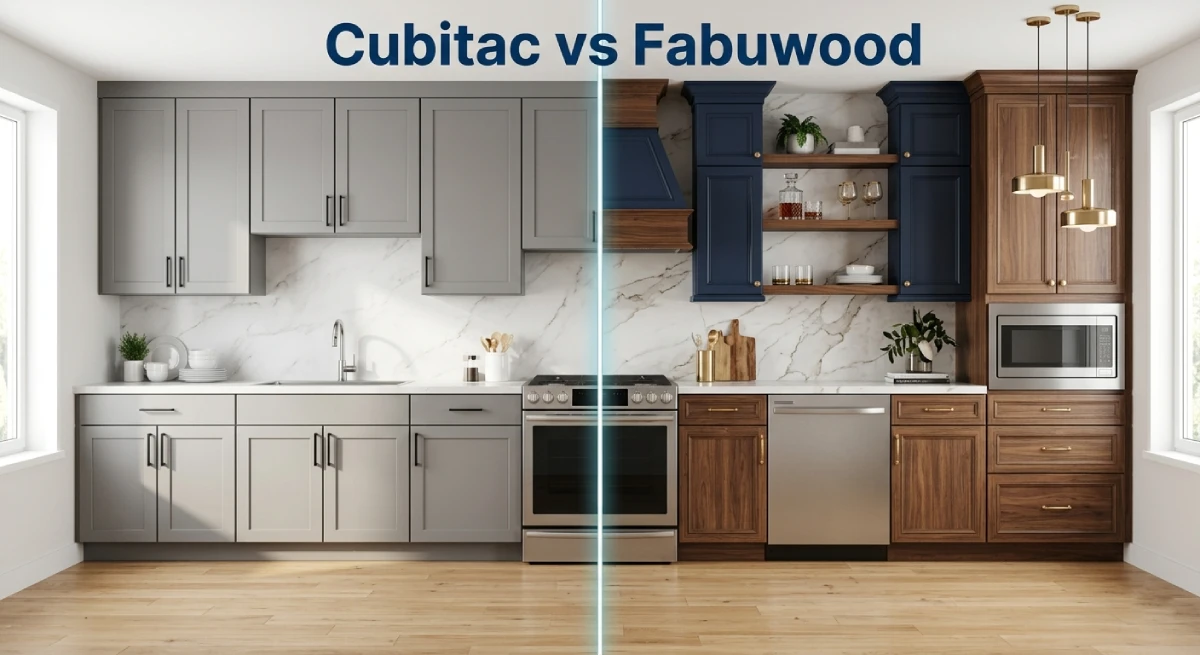
When homeowners start researching mid-range kitchen cabinets, the Cubitac vs Fabuwood debate almost always comes up. And for good reason. Both brands occupy a similar price range, both offer plywood-box construction that outperforms budget-tier competitors, and both have enough style variety to work in most kitchen layouts. So the question isn’t whether either brand is good — they both are. The real question is which one is the better fit for your specific kitchen, your budget, and your timeline.
Cubitac has been in the cabinetry business for over 30 years. Based in New Jersey, the brand has built its reputation on fast lead times, competitive pricing, and no-nonsense construction quality. It’s the kind of cabinet line that contractors reach for when a client wants solid, attractive cabinetry without a long wait or a premium price tag.
Fabuwood, founded around 2009, took a different approach — betting on style variety and a dealer-supported buying experience. In just over a decade, it grew into one of the more recognized names in the mid-tier cabinet market, with US-assembled boxes and a drawer construction standard (dovetail joints) that punches above its price point.
| Category | Cubitac | Fabuwood |
|---|---|---|
| Founded | 30+ years ago | ~2009 |
| Location | NJ-based | US-assembled |
| Cabinet Types | Stock & semi-custom | RTA & stock |
| Price Segment | Mid-range | Mid-range |
| Market Position | Similar tier | Similar tier |
| Rating | ~3.9 stars | — |
| Review Insight | Avg. online review score | — |
What makes the Cubitac vs Fabuwood comparison so common — and so genuinely useful — is that these brands are close enough in price and quality to make the decision feel difficult. But once you understand where each brand actually excels, the right choice becomes clear pretty quickly.
Here’s a quick look at what you’ll find in this comparison:
- How Cubitac and Fabuwood differ in cabinet box and drawer construction
- Which brand offers more color and style flexibility
- How pricing and lead times compare for real renovation projects
- What the warranty terms actually cover — and what they don’t
- Which brand makes more sense for high-humidity environments
- A plain-language verdict on who should buy which brand
Whether you’re working with a contractor, designing your own kitchen, or just trying to make sense of the options before your showroom visit — this guide gives you a clear, honest breakdown of two of the most-compared mid-range cabinet brands on the market today.
Who Are Cubitac and Fabuwood?
Cubitac Cabinetry
Cubitac is a New Jersey-based cabinet manufacturer with over 30 years of experience in the industry. The brand positions itself firmly in the value-oriented segment of stock and semi-custom cabinetry. Their focus is on delivering fast lead times, competitive pricing, and functional cabinet designs that work well in a wide range of kitchen layouts.
- Based in NJ with extensive US distribution
- Specializes in stock and semi-custom cabinet lines
- Carries an average online rating of approximately 3.9 stars
- Well-regarded among contractors for quick project timelines
Fabuwood Cabinetry
Fabuwood was founded around 2009 and has grown rapidly into one of the more recognized mid-tier cabinet brands in the US market. Their cabinets are assembled in the United States, and the brand has built a strong dealer network that supports homeowners and designers alike. Fabuwood is particularly popular for its wider variety of styles and finishes.
- Founded ~2009, US-assembled cabinetry
- Broad selection of RTA and stock cabinet lines
- Strong dealer network across the country
- High homeowner satisfaction scores in recent surveys
Materials and Construction Quality
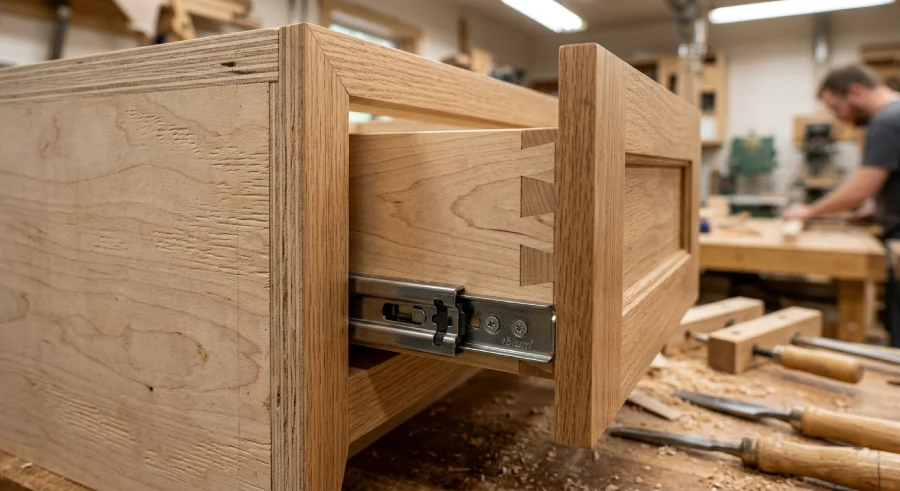
This is where the comparison gets interesting. Both Cubitac and Fabuwood use furniture-grade plywood for their cabinet boxes, steering clear of particleboard in the most structurally critical areas. That’s a meaningful quality choice that separates them from many budget-brand competitors.
Cubitac construction highlights
- Furniture-grade plywood cabinet boxes throughout
- Solid hardwood face frames on framed cabinet lines
- Engineered drawer systems with smooth-glide hardware
- Sturdy back panels designed to minimize flex and sag over time
Fabuwood construction highlights
- Plywood box construction with ½-inch thick back panels
- Dovetail drawer box joints — a hallmark of higher-end construction
- Soft-close drawers and doors standard across most lines
- Solid build quality praised by contractors and remodelers in real-world use
Finishes, Colors, and Style Options
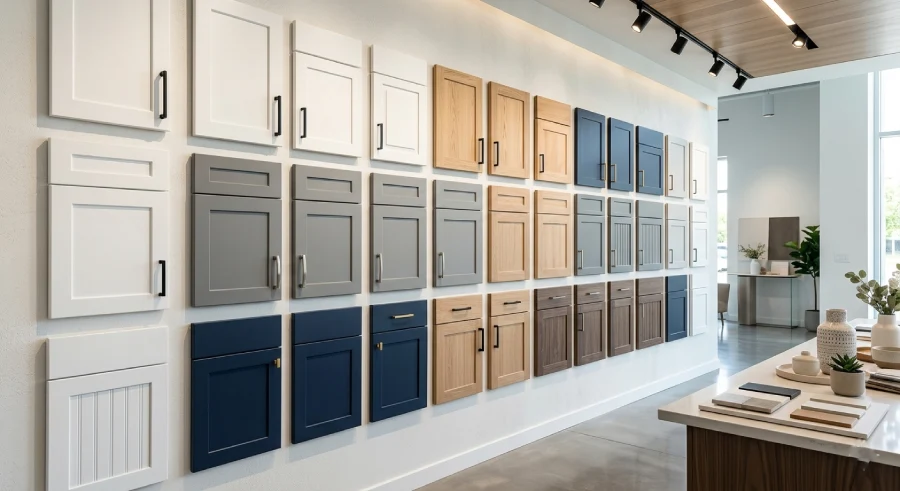
Whether you’re going for a sleek modern kitchen or a warm transitional look, finish options matter a lot. Here’s where the two brands differ meaningfully.
Cubitac finish options
- Offers both painted and stained door options
- Finishes are durable and perform well under everyday cooking conditions
- Style range is practical and modern — a bit more focused than Fabuwood
- MDF center panels used in painted doors to resist cracking in humid environments
Fabuwood finish options
- Much broader color and grain palette than Cubitac
- Popular styles include shaker, transitional, and contemporary modern
- Multiple white, gray, navy, and wood-tone options to match current trends
- Also uses MDF center panels in painted door styles for humidity resistance
Pricing, Value, and Availability
Both brands occupy a similar mid-range price position, but there is a small but consistent difference between them.
- Cubitac tends to come in slightly more affordable, making it attractive for budget-focused remodels
- Fabuwood offers strong value-for-quality, especially when you factor in features like dovetail drawers and soft-close hardware
- Both brands use value-engineering strategies — standard sizing, RTA options, and face-frame construction — to keep costs competitive
- Lead times for Cubitac are generally very fast due to streamlined production processes
- Fabuwood lead times are also competitive, though they can vary slightly by dealer and region
Warranty and Long-Term Durability
- Cubitac offers a 5-year limited warranty covering defects in materials and workmanship — a solid baseline for the mid-range segment
- Fabuwood provides standard mid-range warranty coverage, with real-world durability reports being generally positive — particularly for soft-close drawers and heavy-use pantry units
- Customer service responsiveness has been mixed for both brands, though Fabuwood’s dealer-centric model can provide a helpful local point of contact for issues
- Both brands have users who report years of trouble-free use when cabinets are properly installed and maintained
Installation, Hardware, and Functionality

How easy are these cabinets to install? What functional extras do they offer? These are key considerations for both DIYers and those hiring contractors.
Installation
- Both brands offer pre-assembled and RTA (ready-to-assemble) configurations
- Pre-assembled cabinets from either brand are straightforward for experienced installers
- RTA options can reduce shipping costs but require more on-site time
Hardware and functional features
- Fabuwood emphasizes smooth, whisper-quiet soft-close operation across its lineup
- Cubitac offers quality hardware options with reliable drawer slides and hinges
- Both brands support pull-out pantry configurations, deep drawers, and space-saving storage layouts
- Lazy Susan corner units, roll-out trays, and organizational inserts available on select lines
Cubitac vs Fabuwood: Side-by-Side Comparison
| Aspect | Cubitac | Fabuwood |
|---|---|---|
| Box construction | Furniture-grade plywood, solid hardwood | Plywood boxes, ½” back panels |
| Drawer joints | Engineered system, smooth-glide hardware | Dovetail joints — stronger long-term |
| Style range | Focused, practical modern designs | Very broad — shaker, transitional, modern |
| Price point | Slightly more affordable mid-range | Mid-range, strong value for quality |
| Lead time | Fast, streamlined shipping | Competitive, varies by dealer |
| Warranty | 5-year limited warranty | Standard mid-range coverage |
| Soft-close HW | Available across most lines | Standard across most lines |
| Dealer network | Wide US distribution | Strong dealer-centric model |
Who Should Choose Cubitac?
Cubitac is the smarter pick for a specific type of homeowner. You’ll get the most value from Cubitac if:
- You’re working within a strict budget and want to maximize square footage of cabinetry
- Your project has a tight timeline and fast delivery is non-negotiable
- You’re renovating a smaller kitchen where a focused style range is perfectly adequate
- You prioritize cost savings and practical functionality over maximum design customization
- You’re a contractor or investor flipping a property and need reliable, attractive cabinets quickly
Who Should Choose Fabuwood?
Fabuwood earns its reputation among homeowners who care about both style and long-term performance. Fabuwood is the better fit if:
- You want a broader selection of colors, grains, and door styles to match a specific design vision
- You’re outfitting a larger kitchen where drawer durability (dovetail joints) makes a real difference
- You’re working with a kitchen designer or contractor already familiar with Fabuwood’s dealer system
- Eco-friendly finishes and lower VOC options matter to you or your household
- You plan to stay in the home long-term and want cabinets built to handle heavy daily use
Climate and Usage Considerations
If you’re in a high-humidity environment — such as South Asian climates including cities like Lahore, Karachi, or Mumbai — cabinet material choices become even more important than usual.
- Both brands’ use of plywood over particleboard is a significant advantage in humid conditions — plywood resists warping and swelling far better
- MDF center panels in painted doors help prevent cracking caused by temperature and humidity fluctuations
- For kitchens exposed to heavy steam or moisture (open cooking, woks, pressure cookers), ensure cabinet doors are properly sealed and maintained
- Fabuwood’s dovetail drawers may hold up better under frequent heavy-load use typical of high-activity family kitchens
- Wipe spills and steam residue promptly from cabinet surfaces regardless of which brand you choose
Final Thoughts: Which Brand Wins?
There’s no single universal winner here — the right brand depends entirely on what you’re optimizing for. Here’s a plain-language breakdown to help you decide:
Budget is the primary driver, speed of delivery matters, and you’re fine with a more focused (but still solid) style selection. Great for smaller kitchens and investment properties.
You want more design flexibility, dovetail drawer durability, and you’re planning to stay in the home for years. Better suited for larger kitchens and design-forward renovations.
Before you finalize your decision, take these practical steps:
- Request door and finish samples from both brands before committing
- Read recent local dealer reviews — dealer quality significantly affects the buying experience
- Compare quotes from at least two suppliers for each brand in your area
- Ask your contractor which brand they’ve installed most and what issues (if any) they’ve encountered
- Consider how long you plan to stay in the home — longer occupancy justifies investing in better construction