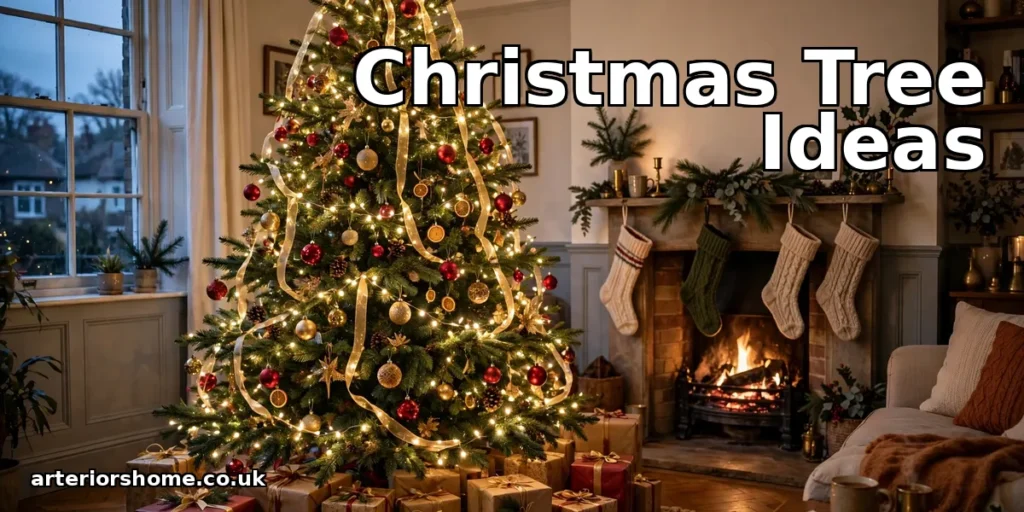
The short answer to christmas tree decorating ideas is to start with the tape measure, not the bauble box. A tree that fits the room, at a height you can reach and a width you can walk past, will look better than a bigger tree crammed into a corner, however much you spend on it.
This guide is built for UK homes, where the average living room ceiling sits around 2.4 metres and the tree has to share the room with a sofa, a television and a radiator. Every idea names its cost, from free to a full project, and it sits in our Home Decor guides, next to our Christmas decor ideas hub.
Christmas Tree Decorating Ideas for a Small Room
Small rooms are where most UK trees live, and they are also where most trees go wrong. The fix is not a smaller tree on its own. It is a tree shape that matches the room, with ornaments scaled down to suit it.
Pick a spot that does not block the way to the sofa, and the tree stops feeling like an obstacle. Our Christmas living room guide covers the room around the tree, and our small living room ideas show how the same corners work all year.
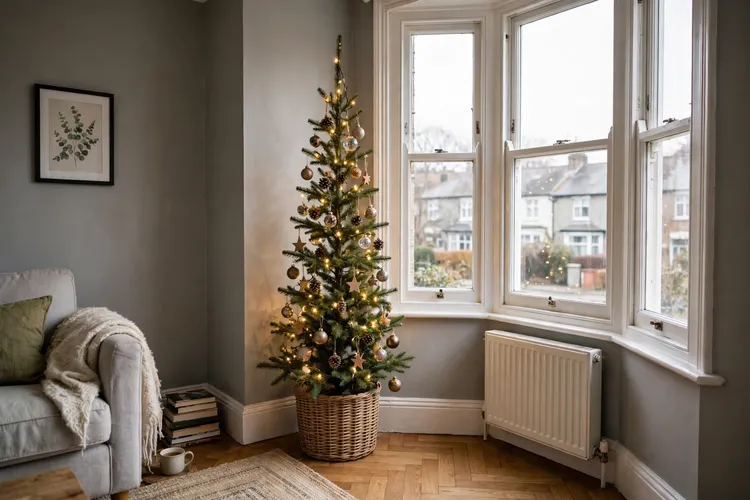
- The corner by the sofa: the dead space most rooms already have, and the tree becomes part of the seating area.
- A bay window: festive from the street as well as the sofa, and it keeps the floor clear.
- Beside the television: it fills the gap between the screen and the wall without blocking the view.
- The hallway: a slim tree by the door greets everyone who comes in.
- A sideboard or console: a tabletop tree needs no floor at all.
1. Measure the ceiling and the floor first
Measure the ceiling height, then take off 30 cm for the topper and the stand. A 2.4 metre ceiling takes a 6 to 7 ft tree, and a 2.7 metre ceiling takes a 7 to 8 ft one.
Then measure the floor space, and keep the tree at least 90 cm from a fire or radiator. A dry tree near heat is a fire risk, and it will drop needles faster too.
2. Pick a pencil or slim tree
A pencil tree gives you the height without the sprawl, and it suits hallways, bay windows and studio flats. A slim spruce feels fuller but still leaves the walkway clear. Scale the baubles down too, because full-size ornaments on a narrow tree look crowded and hide the shape.
3. Tuck the tree into a corner
The corner is the most underused spot in a small living room, and it is where a tree earns its keep. It frees the rest of the floor and keeps the main space open.
Decorate the sides you can see from the room, and push a few reflective baubles deeper in for depth. Shiny ornaments bounce the light around, which makes a small room feel bigger.
4. Hang a garland tree when there is no floor at all
When even a pencil tree will not fit, the wall can still hold Christmas. Hang thick evergreen garland in a widening zigzag across a corner, add fairy lights, red velvet bows and a gold star, and the room gets a tree without losing a single square foot of floor.
This short video shows the same trick in a real corner: garland, fairy lights, red velvet bows and a gold star, with no floor space used at all.
Real or Artificial, and What Each Costs in the UK
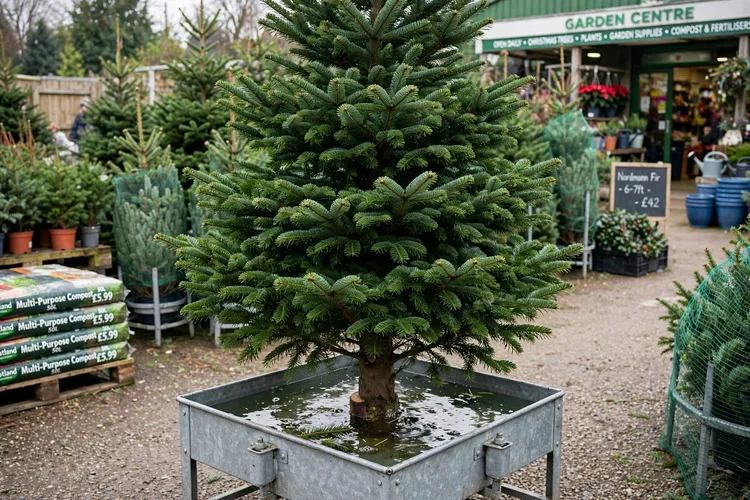
When you weigh up christmas tree decorating ideas for a real tree against an artificial one, the money question is not what the tree costs this year. It is what it costs over five Christmases, and how much work you are willing to do for the smell of fresh pine.
| Tree size | Best for | Typical price 2026 |
|---|---|---|
| 5 to 6 ft Nordmann fir | Flats and small lounges | £40 to £60 |
| 6 to 7 ft Nordmann fir | Most UK living rooms | £45 to £75 |
| 7 to 8 ft Nordmann fir | High ceilings and period homes | £60 to £100 |
| 6 ft Nordmann fir, supermarket | Tightest budget | About £20 |
| 6 to 7 ft Nordmann fir, London delivery | Bought late, delivered | About £90 |
5. Buy the size the room can hold
Most UK homes buy a 6 ft or 7 ft tree, and that is no accident. A 5 to 6 ft tree suits a flat or a bay window, and a 6 to 7 ft tree suits a standard living room.
A 7 to 8 ft tree needs a high ceiling to look right. Buy the tree for the room you have, not the room you wish you had.
6. Water a real tree like a plant
A real tree is a cut plant, and it dries out from the day it comes home. Keep the stand filled with water, keep the tree away from radiators and open fires, and do not put it up too early. The government’s fire safety in the home guide gives the same advice, because a dry tree catches fire fast.
A Nordmann fir holds its needles for four to six weeks indoors, which is why it is the UK’s favourite real tree. A Norway spruce is cheaper, but it drops needles sooner and needs the same watering.
7. Price an artificial tree per Christmas, not per purchase
An artificial tree looks dear until you divide it by the years it lasts. A budget Habitat tree costs £18 to £35, and a pre-lit spruce from M&S costs as little as £16. At the other end, a John Lewis Cotswold tree is £580 for 7 ft, and a Balsam Hill tree is £399 to £699.
A good artificial tree pays for itself in about three or four Christmases against a fresh real tree each year. Store it dry, handle the branches gently, and it will outlast the baubles on it.
8. Put a tabletop tree on a sideboard
A 3 to 4 ft tree on a sideboard, a console or a sturdy shelf brings Christmas into a room that has no floor to spare. It also works as a second tree in a hallway or a bedroom.
Follow the one-third rule for the pot, so the pot stands about a third as tall as the tree. Get that ratio right and the whole thing looks balanced, not top-heavy.
The Order That Makes Any Tree Look Finished
Most trees look thin for one reason, and it is not the ornaments. It is the order. Get the order right and even a cheap tree looks deliberate, which is the whole point of christmas tree decorating ideas that actually work.
The famous 100 lights per foot is a full-tree rule. A slim tree needs about two-thirds of that, and a pencil tree about half, because the number follows the surface, not just the height.
| Tree shape, 7.5 ft tall | Lights | Ornaments | Ribbon |
|---|---|---|---|
| Full, about 59 in wide | About 750 | About 125 | About 25 yards |
| Slim, about 43 in wide | About 550 | About 90 | About 18 yards |
| Pencil, about 30 in wide | About 350 | About 60 | About 13 yards |
9. Fluff every branch before anything else
On an artificial tree, fluffing is where the work is. Start at the bottom, pull each branch away from the trunk, separate every tip and bend them in different directions. Fifteen extra minutes here makes a visible difference to the finished tree, and no ornament can hide a flat one.
A real tree needs the same care in reverse. Cut the netting off, give the branches time to drop, and shake off any loose needles outside before it comes in.
10. Put the lights on first, counted by width
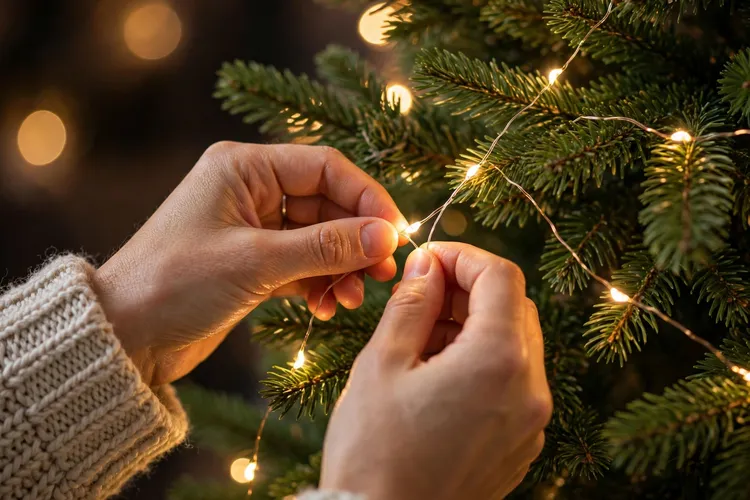
Lights go on before anything else, because you cannot reach the inside of the branches once the ornaments are there. Weave each strand from the trunk out to the tips and back, and plug in as you go, so dark pockets get fixed now and not after the baubles are hung.
Warm white LED minis are the designer default, and they run cool enough to sit against the branches. Buy all the strands together, because two batches bought a year apart are rarely the same white.
11. Cut the ribbon into short lengths
Ribbon is the fastest way to make a tree look styled, and the easiest to get wrong. Cut it into 3 to 4 ft lengths, tuck one end deep into the branches, and let each piece fall on its own. Nobody wrestles a 30 ft roll around a tree without it looking like packaging tape.
Plan on about 9 ft of ribbon per foot of tree if you weave it through the branches. That is 54 ft on a 6 ft tree, so buy two rolls and keep one spare.
12. Hang the ornaments largest to smallest
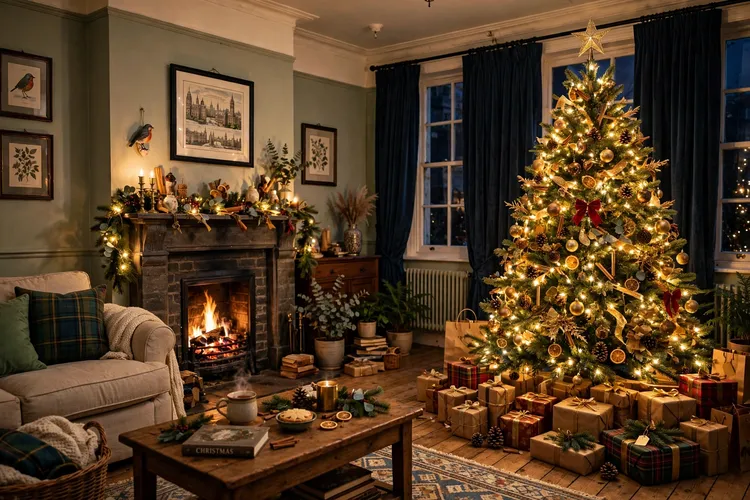
Start with the largest ornaments, spaced evenly and pushed deep into the branches, because they give the tree its weight. Then fill the gaps with medium ones in loose groups of three, and finish with small ornaments and picks on the branch tips, where they catch the light.
Plan on about 20 ornaments per foot for a full look, or 10 to 15 per foot if the tree also carries ribbon and picks. Count before you buy, and the tree will not look half-dressed on Christmas Eve.
Five Themes, Each With a Budget Band
A theme is a decision made once, and it saves a hundred small ones. Pick two or three colours, repeat them from top to bottom, and the tree looks styled rather than random, even when the ornaments come from all over the place. Our Christmas decor trends post shows which of these looks are climbing this year.
| Theme | Main colours | Budget band |
|---|---|---|
| Classic red and gold | Red, gold, green | Under £30 |
| Winter white and silver | White, silver, ice blue | £30 to £60 |
| Rustic woodland | Brown, cream, forest green | £15 to £40 |
| Scandinavian natural | White, grey, light wood | £20 to £50 |
| Cherry cola | Cherry red, chocolate, gold | £40 to £80 |
- Repeat the palette: two or three colours, top to bottom, no stray shades.
- Mix matte and shiny: one flat finish next to one glossy one stops the tree looking flat.
- Vary the sizes: oversized baubles beside small ones give the tree depth.
- Tuck some deep: ornaments inside the branches, not just on the tips, stop it looking like an outline.
- One hero piece: a single big bow or statement pick pulls the whole theme together.
13. Classic red and gold
Red and gold never goes out of style, and it is the cheapest theme to build from a box you already own. Cluster red and gold baubles in groups of three, and weave a wide gold ribbon through the branches.
Add red berry picks and a gold star on top. Under £30 buys the ribbon and the picks if the baubles are already in the loft.
14. Winter white and silver
White and silver suits a tree that has to look calm rather than loud, and it flatters a flocked tree best. Use warm white lights, a white or silver ribbon, and ornaments in matte white, pearl and clear glass. A £30 to £60 band covers the ribbon, a set of pearl baubles and a spray of white picks.
15. Rustic woodland
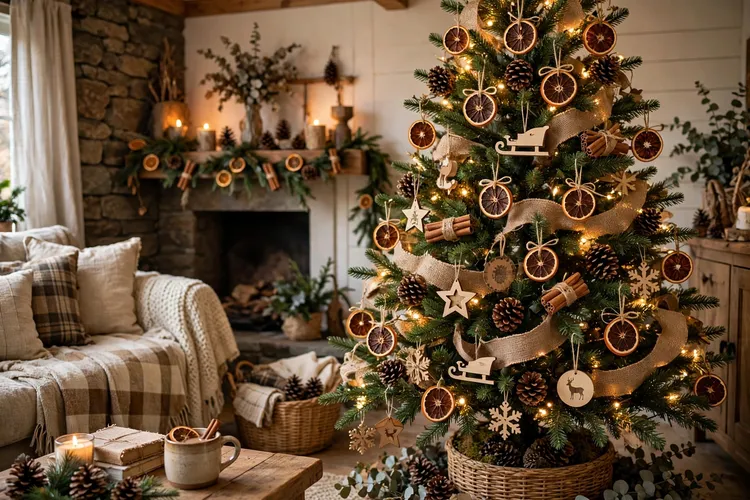
Rustic works because it brings the outdoors in, and it forgives an uneven tree better than any other theme. Start with warm white lights, then layer burlap ribbon, pinecones, dried orange slices and cinnamon sticks. Wood slice ornaments and felt stars finish it, and £15 to £40 covers the natural pieces if you dry the oranges yourself.
16. Scandinavian natural
Scandinavian trees stay quiet on purpose: neutral colours, natural materials and cool white lights. Use wood, paper and felt ornaments, pinecones and fir branches, and keep the palette to white, grey and light wood. A £20 to £50 band covers a set of paper stars, a wooden bead garland and a simple woven topper.
17. Cherry cola, the Pinterest look
Cherry cola is the look people are saving most on Pinterest this year: glossy cherry red balls, matte chocolate brown glass tucked deep, and no more than one gold piece in five.
A burgundy velvet ribbon cascades from top to bottom, and a big burgundy bow with long tails tops it. Pinterest’s own trend data puts masquerade decor up 95% on last year, and cool blue is its other big call for 2026.
The Topper, the Skirt and the Family Tree
The topper and the skirt are the two pieces people leave till last and then rush. Get them right and the tree looks finished from across the room. Get them wrong and the eye goes straight to the bare stand or a topper that leans.
18. Size the topper to the tree
A topper about a tenth of the tree’s height looks right: roughly 9 in for a 7.5 ft tree and 7 in for a 6 ft one. Anything bigger overwhelms the tip, and anything smaller disappears into the branches. Fix a heavy topper with florist’s wire or a hidden hook, so it does not lean by Boxing Day.
19. Hide the stand with a skirt or a collar
The stand is the least festive part of the tree, and the skirt exists to hide it. A 7.5 ft tree takes about a 60 in skirt, and a rigid wicker or metal collar does the same job with a tidier edge. For a small tree, a woven basket or a low crate hides the stand and is the base.
20. Keep the bottom third unbreakable
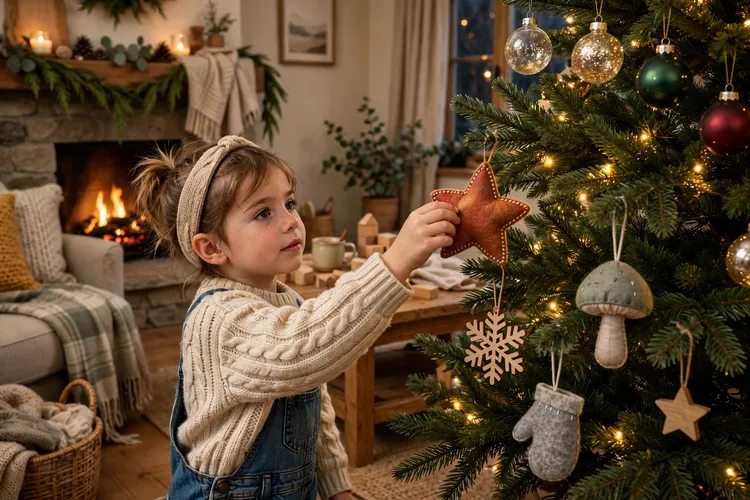
The bottom third is where children reach, dogs wag and vacuum cleaners bump. Put felt, wood, plastic and fabric ornaments down there, and keep the glass above waist height. Skip tinsel and edible ornaments if you have pets, because both cause real problems if they are swallowed.
Questions People Ask About Decorating a Tree
The same five questions come up every December, so here they are with short answers.

How many lights do I need for a 6-foot tree?
About 600 on a full 6 ft tree, at 100 per foot. A slim tree the same height needs about 400, and a pencil tree about 300, because the count follows the width as well as the height.
How many ornaments do I need for a 6-foot tree?
About 60 to 90 at 10 to 15 per foot, or about 120 for a full look at 20 per foot. If the tree also carries ribbon and picks, the lower number is plenty.
Should the lights or the ornaments go on first?
The lights, always. You cannot reach the inside of the branches once the ornaments are hanging, and lights threaded through a finished tree knock baubles off.
What size tree fits a 2.4 metre ceiling?
A 6 to 7 ft tree, with 30 cm left above it for the topper and the stand. Measure first, because a tree that touches the ceiling has to lose its topper.
Is a real tree or an artificial tree cheaper?
A real tree costs £40 to £70 a year for a 6 ft Nordmann fir. An artificial tree costs £150 to £400 once and lasts for years, so it pays for itself in about three or four Christmases.
Start With the Tape Measure
That is christmas tree decorating ideas done the practical way: measure first, pick the tree to fit the room, light it by width, and let one theme do the talking. The baubles matter less than the plan, and the plan takes ten minutes with a tape measure.
Put the tree up this weekend, while the good sizes are still in the shops. The lights go on first, the topper goes on last, and the room does the rest.