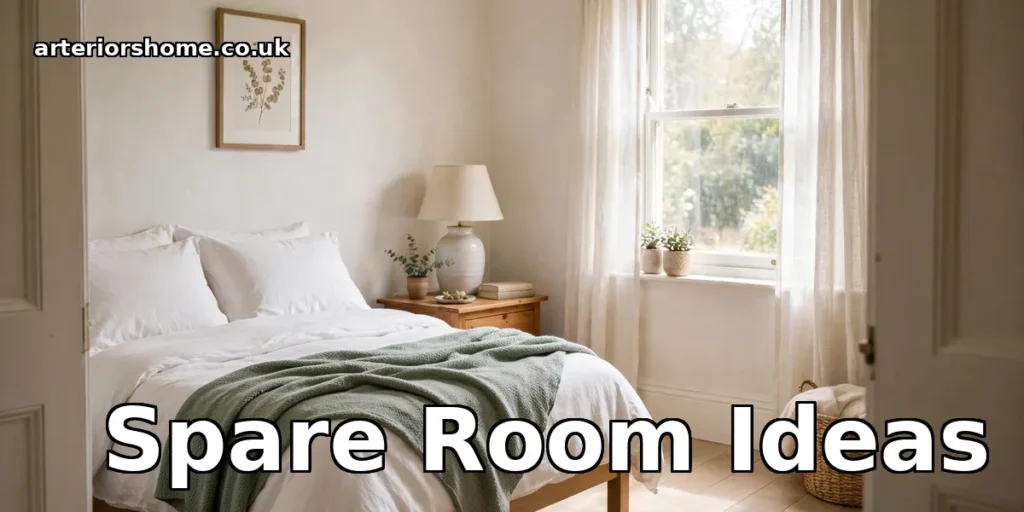
Spare room ideas work best when the room has one clear job, and the 20 below turn a small box room into a guest room, an office, a gym or a reading nook without wasting a centimetre.
Most spare rooms fail in the same way. They collect the ironing board, the broken lamp and the boxes nobody has opened since the move, and the room earns nothing. A box room is small, but it is still a room, and a room with a job beats a room full of clutter every time.
This is the latest in our Rooms guides, which cover the smallest rooms in the house first. Every idea below names the furniture it needs, the space it takes and what it costs in the UK, so you can pick one and start with the tape measure, not the shopping.
Spare Room Ideas: 20 Ways to Turn a Box Room Into Something Useful
Every one of these spare room ideas was picked for a room of about 2.4 by 3 metres, the common UK box room size, and each one names the furniture it needs and what it costs.
A box room is the smallest bedroom in a British house, and the numbers decide what fits before taste does. The table below gives the four sizes you will meet most often, with what each one honestly holds.
| Room size | Area | What fits |
|---|---|---|
| 2.0 × 2.4 m | 4.8 m² | A single bed along the long wall, with a shallow wardrobe opposite |
| 2.1 × 2.7 m | 5.7 m² | A single bed with 115 cm beside it, and drawers at its foot |
| 2.4 × 3.0 m | 7.2 m² | The common box room: a single bed plus a wardrobe or a desk |
| 2.7 × 3.0 m | 8.1 m² | A small double with both sides free, or a single plus a desk |
The sizes come from Snuug’s box room guide, which draws each layout to scale. A single bed is 90 by 190 cm, a small double is 120 by 190 cm, and a wardrobe needs 58 cm of depth, or 35 cm if you pick a shallow one.
1. A proper guest bedroom
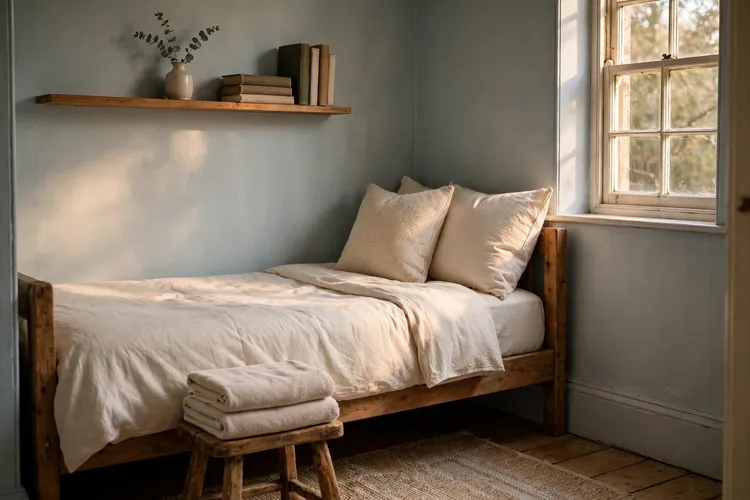
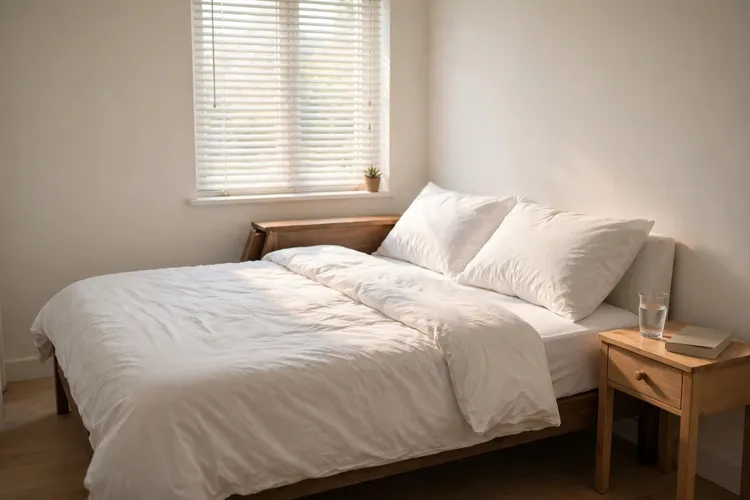
A single bed, a bedside table and a lamp are the whole job. Guests remember the mattress and the light, not the size of the room, so spend the money on sleep and keep the furniture small.
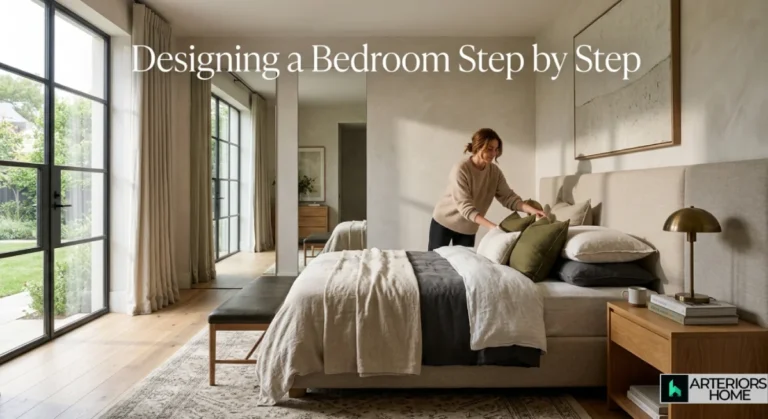
Put the bed’s long side against the wall. That frees a strip of floor 115 to 145 cm wide, which is enough to walk past, open a drawer and pull a chair out. Our step-by-step bedroom guide runs through the same order for a main bedroom, and it works just as well here.
2. A sofa bed that earns its keep
A sofa bed is the right call when guests stay once a month or less. The room stays a sitting room for the other 29 days, and the bed only appears when someone needs it.
Prices spread wide. Argos own-brand sofa beds mostly cost under £750, with chair beds from £200. Dunelm starts at about £150 for click-clack beds and futons, IKEA lists most sofa beds at £400 to £900, and a DFS click-clack sits near £600.
Buy the mattress first in your head, then the frame. A £30 to £40 memory foam topper does more for a guest’s sleep than the jump from a £375 frame to a £649 one, and Dreams’ budget guest room guide makes the same point about bedding over furniture.
3. A day bed that works by day
A day bed is a sofa by day and a bed by night, and it suits a room that also does another job. It sits against the wall, so the floor stays clear for a desk or a chair.
IKEA’s Hemnes day-bed lists at £449 with three drawers and two mattresses, and the Brimnes version at £399. Stack the cushions along the wall and it reads as a sofa. Layer a throw and a cushion the way our winter bedroom guide layers a main bed, and guests will not know it was a sofa an hour earlier.
4. A bunk or high sleeper for sleepovers
A high sleeper lifts the bed and frees the floor for a desk or a play area, which is why it suits a child’s room. A standard bunk sleeps two and still leaves a corner for a wardrobe.
Check the ceiling height before you order. A sleeper needs room to sit up in bed, and a low ceiling turns it into a crawl space. Measure from the mattress to the ceiling, not from the floor.
A Home Office That Fits a Box Room
In 2023 the Office for National Statistics found 44% of people in the UK worked hybrid or from home full-time, and a box room is often the only quiet corner left. A desk, a chair and a door that closes are all an office needs to be.
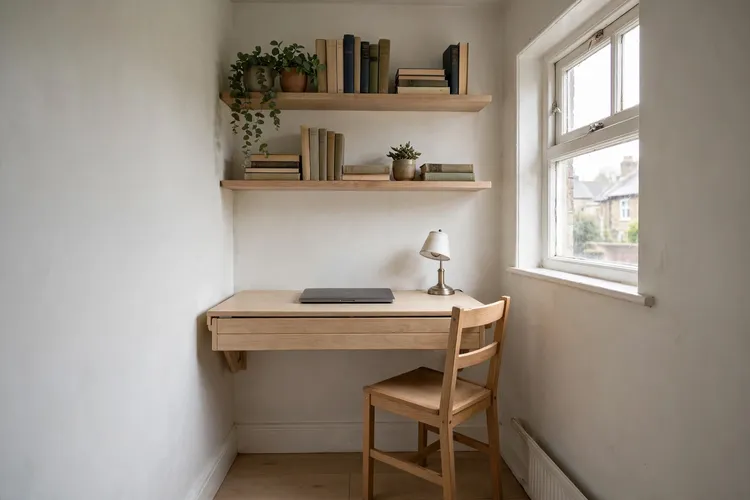
5. A fold-down desk on the wall
A wall-mounted desk folds away when the working day ends, and the room goes back to being a guest room. It needs two screws into a solid wall and a chair that slides underneath.
A fold-away office costs about £80 to £400 for the desk, a chair and a lamp. Dunelm and IKEA both sell compact desks that fit a 120 cm wall, and Argos has budget chairs that fold flat.
6. A desk under the window
A desk of 120 by 60 cm fits along a window wall in the common 2.4 by 3 metre box room, and daylight falls across the desk instead of behind the screen. That one choice removes the glare most home offices fight all day.
Keep the walkway 75 to 90 cm wide behind the chair. In a tight room 45 to 60 cm will do, but you will push the chair back into the wall every time you stand.
7. A desk that doubles as a dressing table
One desk can do two jobs if you give it a mirror and a drawer. Work in the day, sit at it to get ready in the evening, and the room never has two pieces of furniture fighting for one wall.
Pick a chair with no arms, so it slides right under the desk. Hang the mirror at face height and keep the drawer for the hairdryer and the laptop charger, not for papers.
8. A video-call corner with a door that closes
Video calls need a quiet room and a plain background, and a box room gives both. Put the desk facing the door, so the camera sees a wall and a plant, not the bed.
Light matters more than the camera. Sit facing the window and the light lands on your face instead of behind you. The same small-space thinking runs through our small living room ideas, where the light and the layout do the work that furniture cannot.
Reading Nooks, Hobbies and Play
A room that holds one chair well is a better room than a room that holds four chairs badly. These four uses all run on one piece of furniture, a good lamp and a little shelf space.
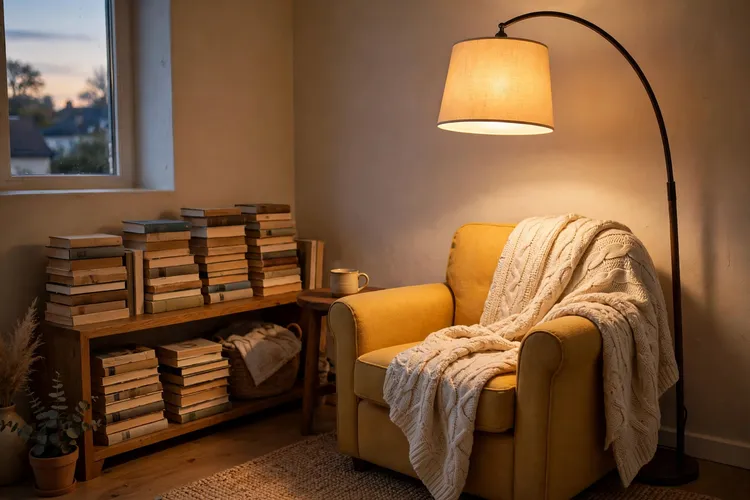
9. A reading chair and a proper lamp
A reading room is a chair, a lamp and a shelf, and it costs less than most of the ideas on this list. A corner chair with a throw is enough; the room does not need a desk or a bed.
Put the lamp behind the chair’s shoulder, so the light falls on the page and not in your eyes. A floor lamp with a warm bulb beats a ceiling light, which washes the whole room flat.
10. A craft or sewing table
A craft table needs a flat surface, a light and somewhere to put the half-finished thing. A fold-down table on the wall does all three and clears the floor when the project is done.
A hobby corner costs about £50 to £350 for the table, storage and a light. Keep the scissors, thread and glue in one box on a shelf, and the table stays clear for the work itself.
11. A music corner
A guitar on a stand, a small amp and a pair of headphones turn a box room into a practice room. The door closes, the sound stays in, and the rest of the house carries on.
Hang the instrument on the wall and it takes no floor at all. A rug under the chair softens the sound, and headphones keep late practice polite.
12. A playroom that tidies itself
A playroom works when every toy has a box and every box has a shelf at child height. Low shelves and a washable rug are the whole system; anything taller gets ignored.
Put the noisy toys near the door and the quiet ones near the window. When the room is this small, the tidying has to be part of the play, or the toys end up in the hall.
Fitness Corners and Dressing Space
These two uses share one need: clear floor. A mat, a rail and a mirror all sit against the wall, and the middle of the room stays empty for the moving about.
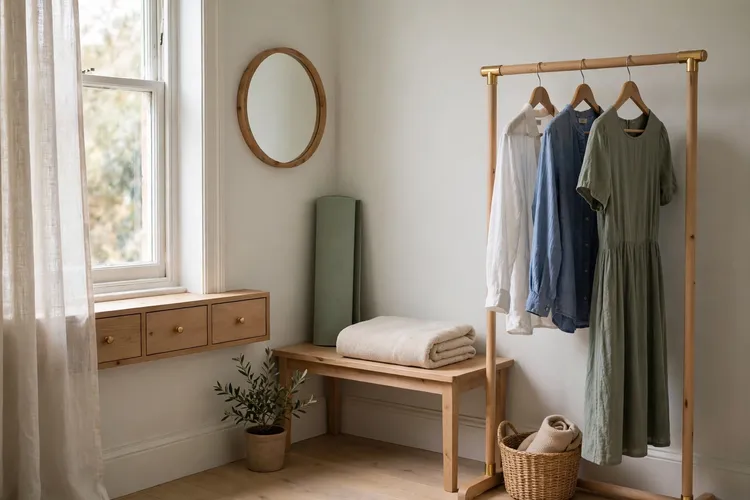
13. A yoga and stretching corner
A yoga corner is a mat, a mirror and a wall to lean on. It needs no machine, no screen and no special floor, which is why it fits a room that nothing else fits.
Roll the mat up after each session and hang it on a hook by the door. A full-length mirror on the wall shows your form and makes the room look twice its size.
14. A mini home gym
A mini gym is a mat, a set of dumbbells and a bench, and it costs about £50 to £300. That is the whole kit for most home workouts, and it all slides under the bench when you are done.
Put a rubber mat under the bench to protect the floor. Keep the dumbbells on a rack, not on the floor, and the room stays a room instead of a trip hazard.
15. A walk-in dressing area
A dressing room needs a rail, a mirror and drawers, and it costs about £60 to £450. A rail along one wall holds the clothes, and the mirror goes on the opposite wall so you can see the back.
Shallow wardrobes 35 cm deep fit where a normal 58 cm wardrobe will not. They hold folded clothes and shoes, and the room keeps a walkway down the middle.
16. A laundry and ironing station
A laundry station is an airer, an ironing board and a shelf for the basket, and it costs about £80 to £450. It takes the drying off the radiators and out of the living room.
Fold the board flat against the wall when it is not in use. Keep the iron on a high shelf, out of reach of small hands, and the room stays safe as well as useful.
Storage and Utility That Hides the Mess
Every house has things it needs but does not want to look at. A box room with good storage takes them all, and the living room stays clear.
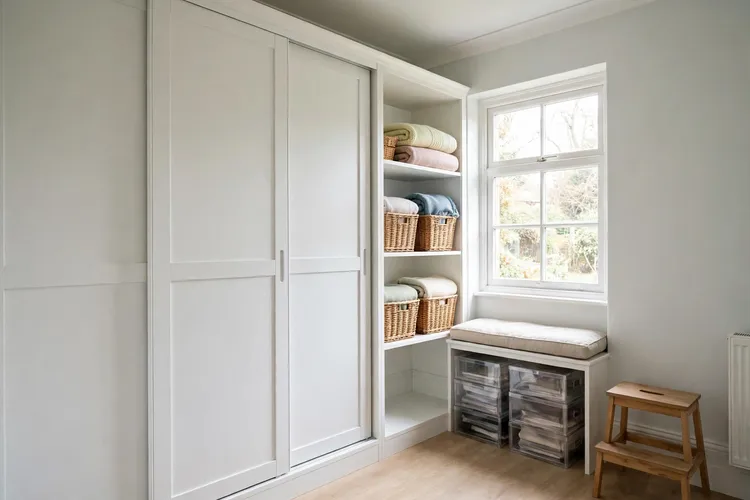
This short tour shows the same tricks in a tiny bedroom: a raised bed with drawers under it, a window bench with storage inside, and a desk that doubles as a vanity. Watch it before you buy anything, and you will see where the hidden space lives.
17. A seasonal storage room
Christmas decorations, summer fans and winter coats all need a home that is not the loft. Labelled boxes on shelves beat a pile on the floor, because you can find the box you want without moving five others.
Vacuum bags halve the space a duvet takes. Put the summer things high and the winter things low in October, then swap them in April.
18. A home cinema on a projector
A projector and a pull-down screen turn a box room into a cinema for two, and the room stays a guest room by day. Blackout blinds do more than any speaker, because a washed-out picture ruins the film before the sound starts.
Point the projector at the long wall and sit 2.5 metres back. A sofa bed gives you the seat and the spare bed in one piece of furniture.
19. A nursery that grows with the baby
A nursery fits a box room well. A cot is 70 by 140 cm, a changer sits on a chest of drawers, and the room still has space for a chair to feed in.
Pick furniture the room can keep. The cot becomes a toddler bed, the changer becomes a chest of drawers, and the room grows into a child’s room without a new set of furniture.
20. A room that does two jobs at once
Most box rooms do two jobs better than one, if the two jobs share the furniture. A day bed and a desk is the classic pair: sleep at night, work by day, and the room never sits empty.
The trick is one piece of furniture per job and no more. A desk on the window wall and a day bed along the other wall fill a 2.4 by 3 metre room without blocking the door.
What It Costs, and How to Measure First
The spare room ideas above cost very different amounts, so the table below puts each use in a band before you spend anything.
| Use | Typical UK cost | What it covers |
|---|---|---|
| Fold-away office | £80-£400 | Fold-down desk, chair and lamp |
| Guest nook | £100-£500 | Day bed or sofa bed, plus bedding |
| Dressing room | £60-£450 | Clothes rail, mirror and drawers |
| Hobby corner | £50-£350 | Table, storage and a light |
| Reading room | £60-£400 | Chair, lamp and shelves |
| Utility and despatch | £80-£450 | Shelving, ironing board and parcels |
| Mini gym | £50-£300 | Mat, bands and dumbbells |
The bands are rough guides from Domie, a small UK blog that priced each use in November 2026. Sofa bed prices come from the Which buying guide, which lists Argos, Dunelm, IKEA and DFS side by side. Treat every band as a starting point, and check the shop price before you buy.
Measure before you buy anything. The room will not grow to fit the furniture, and returns cost more than a tape measure.
- Tape the room: measure the length, the width and the ceiling height, and write the numbers on the wall in pencil until the furniture arrives.
- Check the door: a door swings 70 to 90 cm into the room, and a wardrobe in that arc will never open fully.
- Mark the sockets: a desk needs two sockets and a lamp needs one, so plan the layout around the plugs you already have.
- Watch the light: a north-facing room stays cool and dim, so paint it pale and keep the window clear of tall furniture.
- Leave the walkway: keep 75 to 90 cm clear down the middle of the room, or 45 to 60 cm in a tight one, so you can cross it without turning sideways.
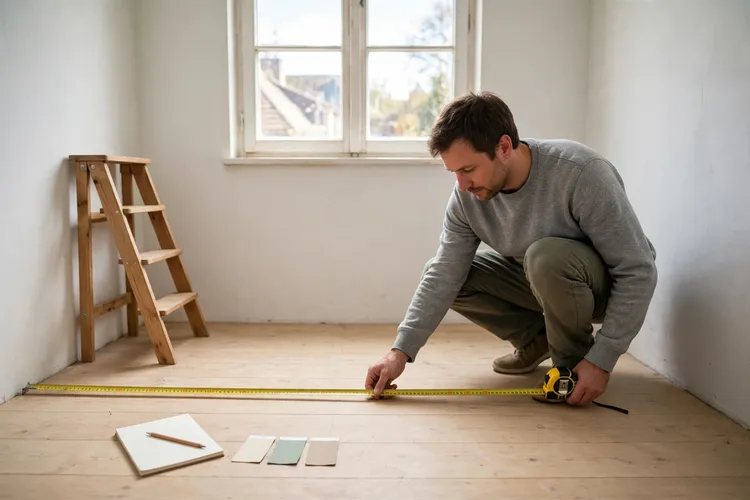
Paint is the cheapest change a small room gets. Our guide to the best paint colours for north-facing rooms explains why pale colours work in a dim room, and which shades to avoid.
Questions About Spare Rooms
What is the best use for a spare room?
The use you will repeat every week. A guest room wins if you host every month, and an office wins if you work from home most days. A room that sits empty for 300 days a year is not a spare room, it is a cupboard.
How small is too small for a guest bedroom?
The legal minimums for a rented room in England are 4.64 m² for a child under 10 and 6.51 m² for one adult. New homes must give a single bedroom 7.5 m² under the national space standard. A 2 by 2.4 m room at 4.8 m² takes a single bed, but it will not take a double.
Do you need planning permission to change a spare room’s use?
Changing how you use a room inside your own home does not normally need planning permission. Building work is different: a new window, a new bathroom or knocking through a wall needs Building Regulations approval, so ask your council before you start.
How much does it cost to turn a spare room into an office?
A fold-away office costs about £80 to £400 for the desk, a chair and a lamp. Add a shelf and a plant and the room is done. A full setup with a monitor arm and a proper chair can run higher, but the room does not need it to work.
Can a box room take a double bed?
A small double at 120 by 190 cm fits a 2.7 by 3 m room with both sides free. In the common 2.4 by 3 m box room it fits in a corner, with about 70 cm beside it. A full double at 135 by 190 cm is too wide for most box rooms.
Start With the Tape Measure
The best spare room ideas are the ones you actually use, so pick the job first, measure second, and buy last.
- One job: give the room a single purpose, and let the second job share the furniture, not the floor.
- Measure twice: tape the room, the door swing and the sockets before you order a single piece of furniture.
- Go shallow: a 35 cm wardrobe and a fold-down desk fit where deep furniture blocks the walkway.
- Keep it pale: light walls and a clear window make a small room feel twice its size.
- Leave it clear: if you cannot cross the room without turning sideways, something has to go.
A spare room earns its keep when it has a job and the furniture fits the tape. Pick one use from the 20 above, clear the room, and start with the biggest piece first.