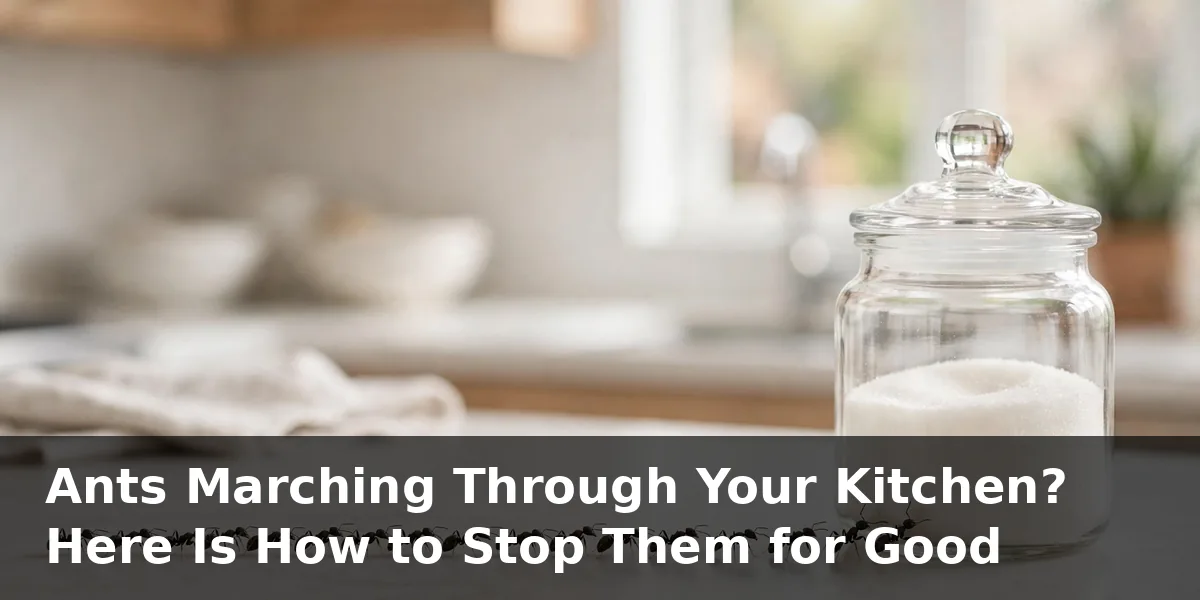
One ant on the counter is nothing. Then you follow its line with your eyes and there it is, a whole motorway of them, marching from the window frame straight to the honey jar. Your first instinct is the spray can under the sink. Put it back. Seriously. Spraying is how this job goes wrong.
Learning how to get rid of ants in the house is mostly patience, honestly. The ants in your kitchen are the workforce, not the colony. The colony hides somewhere behind a wall or under the floor, and it can replace those workers faster than you can spray them. What it cannot survive is losing its food, its water and its map. So that is the plan.
How to Get Rid of Ants in the House: The Whole Fight on One Page
Short on time? Fair enough. These moves do most of the work.
- Follow the trail first: give them five minutes. Watch where they come in and where they vanish before you clean a single thing away.
- Wipe the scent path: hot soapy water or vinegar water scrubs away the trail markers the ants navigate by.
- Cut the food and water: sealed jars, clean counters, a dry sink at night. No buffet, no ants. Mostly.
- Bait, do not just spray: workers carry slow bait home to the colony. That is the whole trick, and it takes days, not minutes.
- Seal the doors: caulk around pipes, windows and skirting boards once things go quiet.
- Know the red flags: big black ants, sawdust piles, or a trail that shrugs off everything you try. That is professional territory.
Step One: Follow the Trail and Find the Entry Point
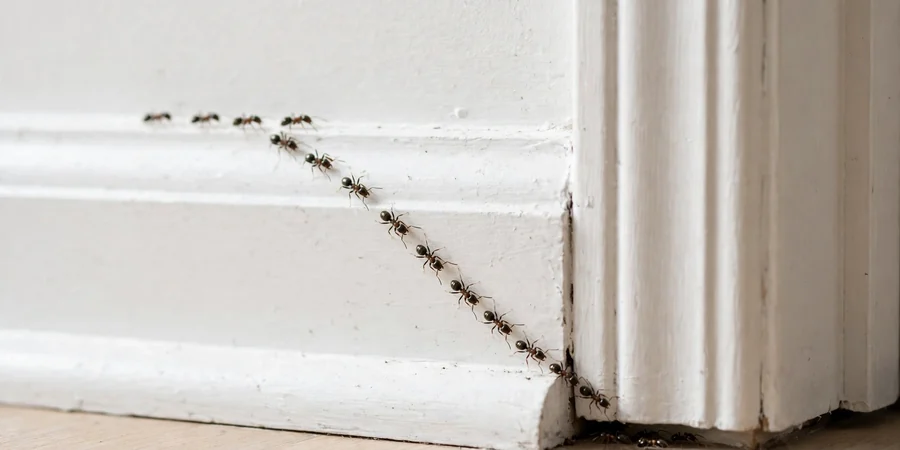
Do not wipe the line away yet. I know. It itches. But give it five minutes and just watch. Where do they pour in? Where do they disappear? It is usually somewhere boring: a gap by the window, the hole where a pipe leaves the wall, a crack along the skirting. And watch what they are heading for, because that tells you what invited them.
- Check the usual doors: gaps under doors, torn window screens, and holes where cables or pipes pass through walls. Check outside too: trails run up the outer wall or in from a garden bed.
- Try to name the ant: tiny black or brown ants in the kitchen are usually after sugar and grease. Large black ants near wood are a different conversation.
Not sure what you are looking at? The National Pest Management Association runs a clear ant identification guide with photos of the species that most often turn up in homes.
Step Two: Cut Off the Food and Water They Came For
Ants move in for two things, food and water, in that order. Take both away and most trails just fade. Start in the kitchen. Crumbs under the toaster. The sticky ring under the honey jar. The pet bowl sitting out all day like a drive-through.
- Seal the sweet stuff: honey, sugar, jam and pet food belong in airtight containers or the fridge, never in open bags. An open bag is an invitation with your address on it.
- Clean as you go: wipe counters, sweep under the toaster and table, rinse sticky bottles before they go back in the cupboard. Two minutes now saves you two weeks later.
- Dry things out: fix the dripping tap, wipe the sink before bed, and stop leaving pet water bowls brim-full around the clock.
There is a grubbier side to this too. Ants walk over bins, drains and soil, then straight across the surface where you make sandwiches. Keeping them out of the kitchen is one small part of how pest control helps prevent germs and disease in the home, and it starts with boring hygiene like this.
Step Three: Safe Home Remedies That Break the Trail
Food locked away? Good. Now the ants already inside. You probably own everything you need, because the simple remedies below are the heart of how to get rid of ants in the house without turning your kitchen into a chemical store.
Vinegar Spray for Scent Trails
Half white vinegar, half water, one spray bottle. Spray the trail, the entry point and the skirting boards, then wipe. Vinegar does not really poison ants. It does something better: it shreds the scent markers the line runs on, so the trail falls apart and scouts cannot report the route home. One honest downside? Your kitchen smells like a chip shop for an hour. Worth it. Repeat daily for a few days, because one wipe almost never ends it.
Hot Soapy Water for Instant Clean Ups
A bowl of hot water with a squirt of dish soap works the same way, and this one does kill on contact. Wipe the whole trail, not just the busy cluster. I reach for this one around food areas, where I would rather not spray anything stronger, and the soap cuts the grease that pulled them in anyway.
Step Four: Seal the Entry Points for Good
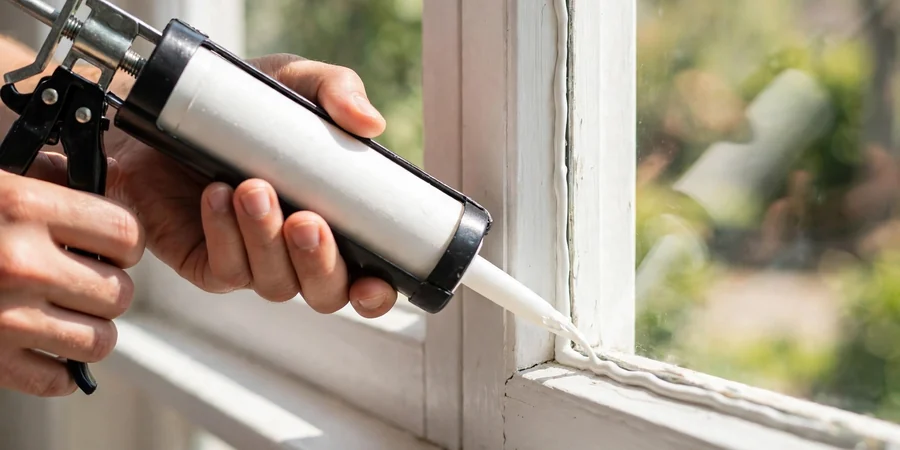
- Caulk the small gaps: run a bead of caulk along baseboards, window frames and pipe openings once the trail goes quiet. Ten minutes with a caulk gun saves a repeat performance.
- Fit door sweeps: a brush or rubber strip under the front and back door closes a gap ants treat as a main entrance.
- Trim and tidy outside: cut back branches touching the walls and move firewood and mulch away from the house edge. Give them a longer walk and most will not bother.
Why Spraying Ants Is a Losing Battle
Here is where most people lose this fight. The spray feels great. Dead ants, instant results, very satisfying. Then the colony sends more workers. And more. Some sprays make it worse and scatter the trail into rooms that were clean an hour ago. Bait works the opposite way. It is slow on purpose, and that patience is exactly how to get rid of ants in the house at the source instead of playing whack-a-mole with a spray can.
Bait Traps: The Slow Fix That Ends the Colony
| Method | How it works | Best for |
|---|---|---|
| Bait stations | Workers eat the bait and carry it back to feed the colony and queen | Lasting control of a whole trail or nest |
| Contact spray | Kills ants on touch and leaves a short lived barrier | A few stray ants, or outdoor entry points |
| Vinegar or soap spray | Erases scent trails so ants lose their route | Daily clean ups and breaking an active trail |
| Sealing and cleaning | Removes food, water and entry gaps | Prevention, and supporting every other method |
Place bait stations beside the trail, not on top of it, and then leave them alone for several days. Yes, days. You will see more ants at first and think it has failed. It has not. They are queuing up to carry the stuff home. Keep bait out of reach of children and pets, follow the label, and if you want the cautionary version, our guide on why DIY pest control often fails explains how the wrong product backfires.
When It Is Time to Call a Professional
Most kitchen trails end with the steps above. Some situations are a different animal, and guessing can cost you.
- Carpenter ant signs: large black ants, fine sawdust piles, or faint rustling inside walls at night. These ants tunnel through damp wood and can damage it.
- The trail never ends: ants return for weeks despite clean counters, sealed food and fresh bait.
- Ants in many rooms: activity in walls, ceilings or several rooms at once suggests a nest inside the structure itself.
- Fire ants or stinging ants: nests in the yard, common in warmer US states, need proper treatment and care.
A good professional identifies the species first, finds the nest, and treats only where needed. Targeted beats random, every time.
The Prevention Checklist That Keeps Ants Out
Once the trail is gone, keeping it gone is light work. You will find more seasonal checks like these across our pest control guides.

- Weekly wipe down: clean counters, hob tops and the floor around bins with soapy water or the vinegar mix. And wipe the honey bottle while you are at it. Every time. I know.
- Bins under control: lids on, kitchen bins out often, and recycling rinsed before it goes in.
- Water watch: fix leaks fast, dry the sink at night, and clear standing water in plant trays and yards.
- Seasonal seal check: each spring and autumn, one walk around the house, resealing cracks around pipes, cables and frames.
- Garden gap: soil, mulch and stacked wood a short distance from the walls, plants trimmed so nothing touches the house.
No More Uninvited Guests at Your Table
A line of ants looks like an invasion. It is really just a message. Food here. Water here. Door wide open. Answer it in order and the messages stop: break the trail, take away the welcome mat, let the bait do its slow work, and seal the doors behind them. That calm routine is how to get rid of ants in the house for good. Start tonight. Vinegar bottle, clean counter, five patient minutes of watching. The trail will not miss you.
Questions Every Homeowner Asks About Ants
Why do ants keep coming back to the same spot?
Because the map is still on the floor. The scent trail survives a casual wipe, and if food or water sits nearby, the colony simply reopens the route. The honest answer to how to get rid of ants in the house for good is dull: erase the trail daily, seal the food, block the gap.
Does vinegar kill ants or just move them?
Mostly, it confuses them. Vinegar wipes away the scent markers, the trail breaks, and scouts stop reporting back. A few ants may die on contact, sure, but confusion is the real weapon. On its own it will not end a colony. With cleaning and bait, it earns its place.
Are ant baits safe around children and pets?
Closed bait stations keep the bait inside, away from small fingers and paws, which is the safer design. Still. Place stations where children and pets cannot reach, never pour loose bait on counters, and read the label like it matters. It does.
How long does ant bait take to work?
Give it time. Most baits take several days to two weeks, because workers must carry enough back to the colony, trip by trip. Seeing more ants early is normal, even encouraging. And keep spray away from the bait. Sprayed ants stop feeding, and the whole plan dies with them.
What if I only see a few ants now and then?
A lone scout is not an emergency. Wipe the area, check for crumbs or leaks, and keep half an eye on it for a day or two. If the scouts keep appearing, they have found something. Start the steps in this guide early, while the problem is still small.