A small balcony is not a problem. It is a tiny garden waiting to happen. With the right balcony garden ideas, even a plain slab of concrete turns green, calm and full of life. Size stops mattering fast. What matters is a plan that fits your light, your time and your budget.
You do not need much money. You do not need years of practice either. You need a few sturdy pots, honest soil and plants that forgive mistakes. This guide takes you step by step. You will check your space, build upward, plant smart and water without stress.
Balcony Garden Ideas at a Glance: The Quick Facts
- Count your sun hours: watch the balcony for one full day before buying plants.
- Respect the weight limit: wet soil is heavy, so spread pots out and hug the walls.
- Plan your watering now: pots dry out fast, especially in wind and summer heat.
- Start with three to five pots: a small start beats twenty thirsty plants.
- Pick forgiving plants first: herbs and hardy flowers build your confidence quickly.
Know Your Balcony Before You Buy a Single Plant
Every balcony has its own weather. One floor up, wind hits harder and sun feels stronger. Watch your space for a day or two. Note when the sun arrives and when it leaves. South and west facing spots in the US and UK get the most light. North facing spots stay cool and shaded.
Weight is the rule renters forget. A big pot of wet soil can weigh over 40 pounds. Balconies are built to hold weight, but limits still apply. Keep heavy pots near the wall, not at the outer edge. When in doubt, ask your building manager first. Light plastic or fibreglass pots cut the load a lot.
Check your lease or landlord rules early. Some buildings ban drilling into walls or rails. Others limit what can hang outside the railing. Hooks, clamps and freestanding shelves solve most of these problems. Nothing here needs a single screw. Our full library of gardening ideas covers every corner of your home, inside and out.
Wind deserves one last check. High balconies can shred soft leaves in one storm. Group pots together so plants shelter each other. Low, sturdy plants handle gusts far better than tall, floppy ones. A small screen or trellis also slows the wind down.
Go Vertical and Claim the Air Above Your Pots
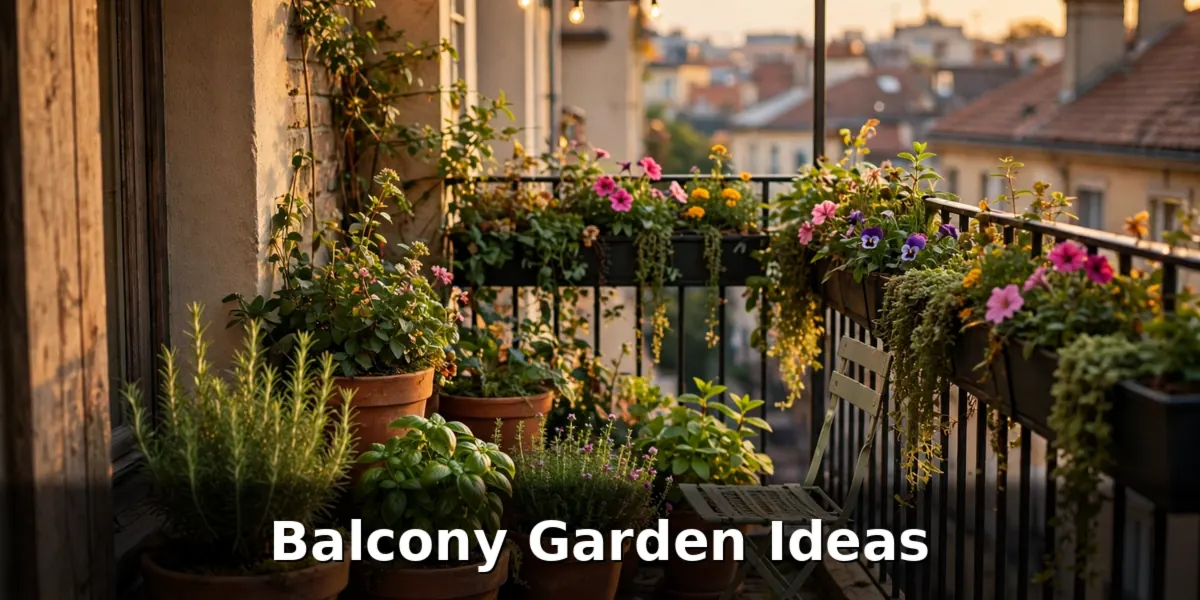
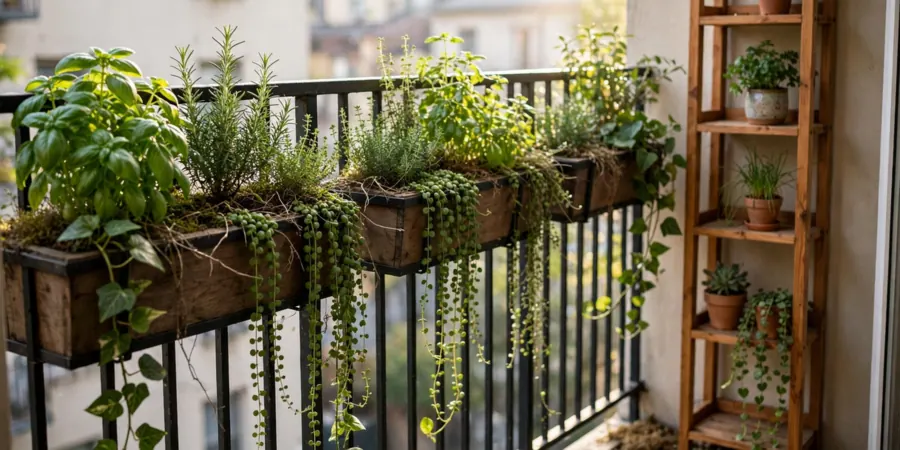
Floor space runs out fast on a balcony. Air space is free and almost endless. The smartest balcony garden ideas treat walls and rails as extra ground. Railing planters hook over the top rail in seconds. They hold flowers, herbs and trailing plants with ease. Just check the clamps grip your rail shape well.
Wall pockets and hanging baskets add another layer. Fabric pockets suit herbs and small flowers. They hang from hooks or a simple frame. Tiered shelves work like stairs for pots. Tall plants sit at the back, small ones at the front. Every plant gets light, and you get a wall of green.
A slim trellis does double duty. It holds climbing beans, sweet peas or jasmine. It also hides an ugly wall or a nosy view. The same layering tricks power these small garden design ideas for yards of any size. Think in layers, not in rows, and a tiny balcony suddenly feels deep.
Plants That Forgive Beginners and Still Look Great
Herbs are the kindest first plants. Basil loves sun and regular water. Mint grows almost anywhere, but give it a pot alone. It spreads fast and bullies its neighbours. Rosemary, thyme and oregano like it drier. They suit busy people and sunny, windy rails perfectly.
Tomatoes reward a sunny balcony like nothing else. Pick a cherry type bred for pots, like Tumbling Tom. One plant in a big pot can give hundreds of fruits. Feed it weekly once flowers appear. Peppers and chillies also thrive in warm, sheltered corners.
Flowers bring the colour and the bees. Geraniums shrug off heat and missed waterings. Petunias spill over railing boxes in bright waves. Lavender adds scent and copes with dry soil well. For a deeper list, see our guide to the right plants for container gardening before you shop.
Shade is not a dead end either. North facing balconies suit hostas, ferns and heucheras. Impatiens and begonias flower happily without direct sun. Leafy salads and parsley also prefer cooler corners. Match the plant to the light, and half your work is done.
Containers and Soil: Small Basics, Big Difference
Every pot needs drainage holes in the base. Roots sitting in water rot quickly. Raise pots on small feet or bricks. Air flows better, and water escapes freely. As the RHS guide to growing plants in containers explains, good drainage sits behind almost every healthy pot.
Size matters more than style here. Bigger pots hold more water and food. Small pots dry out in a single hot day. Use a decent peat-free multipurpose compost. Mix in some perlite or grit for drainage. A slow-release feed at planting time saves effort later.
Material shapes your watering routine. Terracotta looks classic but dries out fast. Plastic holds moisture longer and weighs far less. Fabric grow bags are cheap and great for potatoes. Whatever you choose, add a saucer underneath. It protects the floor and catches spare water.
Watering Made Easy for Busy Weeks and Holidays
Balcony pots can need water daily in summer. That sounds scary, but simple tools fix it. Self-watering pots hold a hidden tank under the soil. Plants drink as they need, for days at a time. They cost a little more and save a lot of worry.
A basic drip kit does the same job for many pots. One thin tube feeds each plant slowly. Most kits run on a timer or a simple gravity tank. Water early in the morning when you can. Less water is lost to heat and wind.
Mulch is the cheapest trick of all. A layer of bark or gravel covers the soil. It slows drying and stops splash-back mess. Grouping pots together also helps them stay moist. Pair these habits with low maintenance plants and even a week away stops being a risk.
Small Comfort Touches That Keep You Outside Longer
A garden you never sit in is wasted. Add one small chair or a folding bistro set. A soft outdoor rug makes the slab feel like a room. Cushions in tough fabric handle rain and sun. Even one comfy seat changes how often you step out.
Light stretches your evenings nicely. Solar stakes charge all day and glow at dusk. A string of warm lights along the rail feels like a cafe. None of it needs wiring or tools. Just clip, charge and enjoy your green corner after dark.
Privacy turns a balcony into a retreat. A bamboo screen or reed roll blocks close neighbours. Tall grasses in pots do the same job softly. A trellis with jasmine adds scent as it climbs. Soon the city feels far away, even six floors up.
Questions Every New Balcony Gardener Asks
How much sun do my plants really need?
Most herbs and vegetables want six hours or more. Flowering plants usually need at least four to six. Leafy greens and shade plants manage with far less. Watch your balcony for one full day first. Then match plants to the light you actually have.
Can renters garden without drilling holes?
Yes, very easily. Railing planters, clamps and hooks need no screws. Freestanding shelves and ladders lean without fixings. Grow bags and pots simply stand on the floor. When you move out, everything lifts away cleanly.
What is the easiest vegetable to grow up here?
Cherry tomatoes win for sunny spots. Cut-and-come-again lettuce wins for shadier ones. Both grow fast and forgive small mistakes. Start with one of each this season. Fresh food steps from your door feels unbeatable.
How do I stop pots drying out so fast?
Use bigger pots and self-watering designs. Add mulch on top of the soil. Water deeply in the morning, not little sips at noon. Group pots together to share shade and moisture. Wind breaks help more than most people expect.
What grows well on a shady north facing balcony?
Hostas, ferns and heucheras love cool shade. Impatiens and begonias add flowers without sun. Parsley, mint and leafy salads also do well. Avoid sun-hungry tomatoes and lavender there. Pick shade lovers and the space feels lush, not limited.
Your Tiny Jungle Starts With One Single Pot
Here is the honest truth about balcony garden ideas. They do not start with a shopping spree. They start with one pot, one plant and one week of care. Get that first plant thriving. Then add the next one when you feel ready.
Check your light, mind the weight and water with a plan. Build upward when the floor fills up. Soon your slab holds herbs for dinner, flowers for bees and a chair for you. Small space, big garden. Your first pot goes in this weekend, right?. Start small, learn what your light and wind do best, and add one new pot each month. Small steps turn any plain balcony garden ideas list into a space that truly feels like yours.