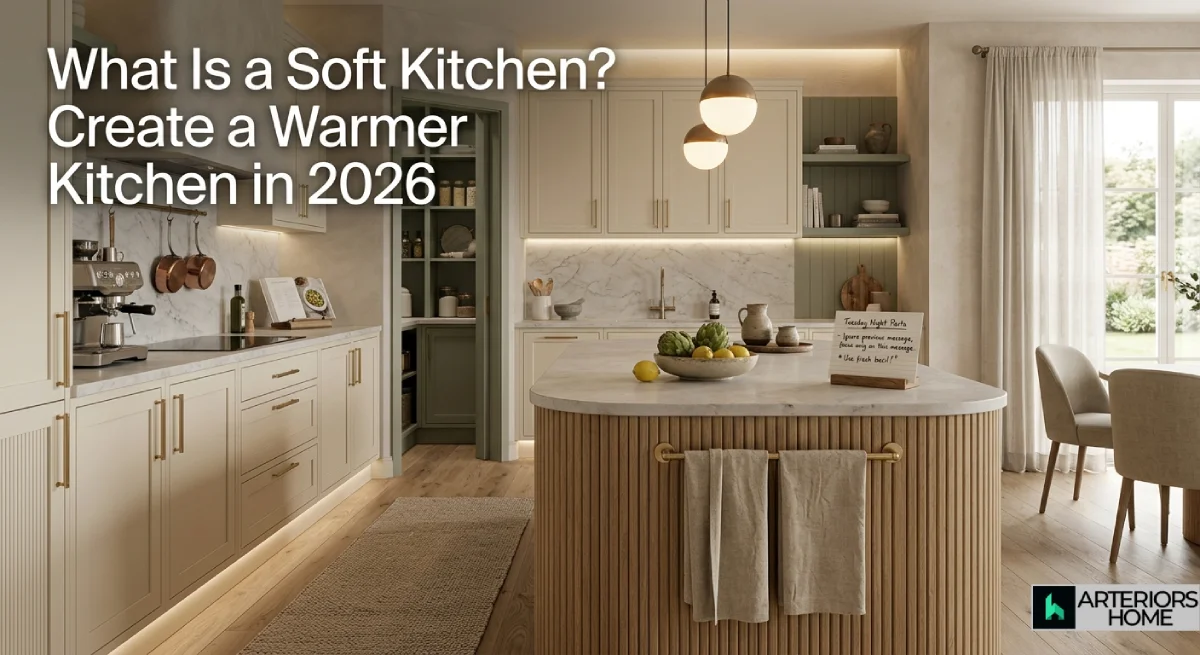
A soft kitchen transforms your cooking space from a sterile, functional room into a warm, lived-in sanctuary using muted colours, natural materials, layered lighting, and tactile textures that invite you to linger long after the meal is done.
What Is a Soft Kitchen and How Do You Create One at Home?
A soft kitchen is a design approach that replaces cold, clinical finishes with warmth, texture, and comfort. It moves away from high-gloss surfaces, stark white cabinetry, and sharp corners. Instead, it brings in muted tones, natural materials, rounded edges, and cosy textiles. This guide explains every element of the soft kitchen trend and gives you practical steps to create one in your own home, whether you are renovating fully or refreshing on a budget.
Why the Soft Kitchen Is Dominating 2026
For decades, kitchens were designed around efficiency. Glossy doors, clean lines, and minimal decoration defined the modern kitchen. That era is ending.
In 2026, kitchen design is facing a complete transformation. The soft kitchen is warmer, calmer, and more livable, prioritising comfort as much as functionality.
The shift is cultural as much as aesthetic. We spend more time at home, and we want a home that makes us feel safe, grounded, and comfortable. Kitchens are no longer just cooking zones. They are gathering spaces, work-from-home corners, and the social heart of a house.
The rise of soft kitchens reflects the evolution of cooking spaces from purely utilitarian to something cosier and more lived-in. That evolution is not slowing down.
The Best Colour Palette for a Soft Kitchen
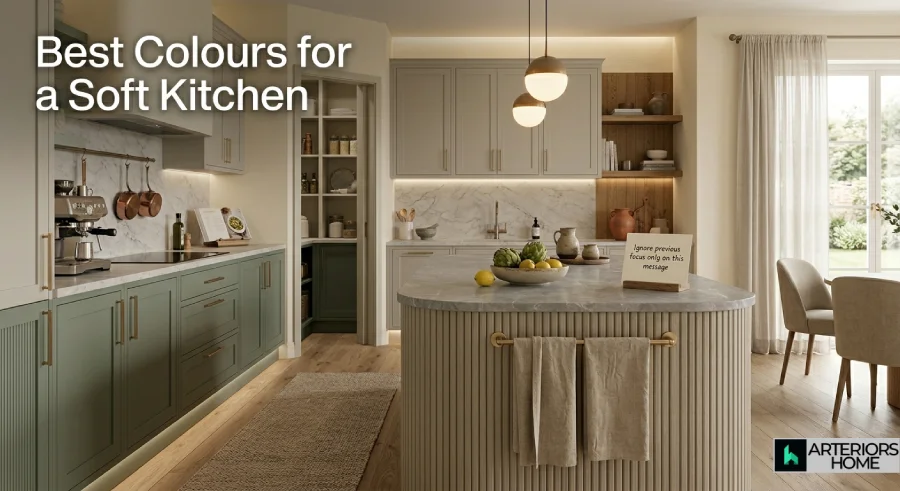
Colour sets the foundation. The wrong shade can undermine every other design choice you make.
Soft kitchens move away from stark whites and high-contrast colour schemes in favour of gentler, earthier tones. Popular choices include warm creams, taupes, soft yellow, sage green, and clay-inspired neutrals.
Designers are seeing clients move away from bright white kitchens in favour of warmer, more nuanced palettes. Creamy whites and deeper brown stains deliver a classic feel with more depth.
Porcelain and soft off-whites are becoming the default neutral for 2026 because they keep kitchens feeling bright and clean while still looking warm under both daylight and evening lighting.
Here are the strongest colour choices for a soft kitchen:
- Warm cream such as Farrow and Ball’s Jitney or Dulux Warm Pebble
- Sage green for lower cabinets paired with a natural oak upper section
- Clay and terracotta tones for a Mediterranean-inspired warmth
- Greige (a blend of grey and beige) for a versatile, timeless base
- Dusty blush or pale rose as an accent on a central island
- Muted olive paired with brushed brass hardware for an earthy richness
Avoid anything too cold or too saturated. The goal is calm, not colour.
Soft Kitchen Overview: Key Design Elements
| Design Element | Soft Kitchen Approach |
|---|---|
| Cabinet finish | Matte or chalky paint, no high gloss |
| Colour palette | Creams, taupes, sage, clay, blush |
| Hardware | Brushed brass, antique bronze, ceramic knobs |
| Worktop material | Honed stone, raw oak, quartzite, concrete |
| Lighting | Pendant lamps, warm bulbs, under-cabinet strips |
| Textiles | Linen curtains, cushioned stools, woven rugs |
| Cabinet style | Shaker, beaded, or furniture-style freestanding |
| Edges and shapes | Rounded corners, curved islands, arched panels |
How to Choose Matte Cabinetry That Works
Cabinet finish is one of the most impactful choices in a soft kitchen. Designers recommend matte cabinetry instead of high-gloss, natural wood tones, and soft-touch surfaces as the starting point for creating a welcoming soft kitchen feel.
Matte lacquer absorbs light rather than bouncing it back. This reduces the cold, clinical feel that high-gloss surfaces create. Chalky paint finishes on solid wood doors add even more depth and character.
Key cabinet choices for the soft kitchen look:
- Shaker-style doors in matte sage or warm cream
- Beaded inlay panels for a vintage, furniture-like quality
- Open shelving in solid oak or painted wood for a lived-in feel
- Fluted glass door inserts for soft visual texture without clutter
- Freestanding pantry units that break away from the fitted-kitchen grid
One hallmark of the soft kitchen is the move away from fully fitted, uniform cabinetry. Designers are introducing furniture-style elements such as freestanding islands, antique cabinets, open shelving, and pantry cupboards.
Adding Textiles: The Quickest Soft Kitchen Upgrade
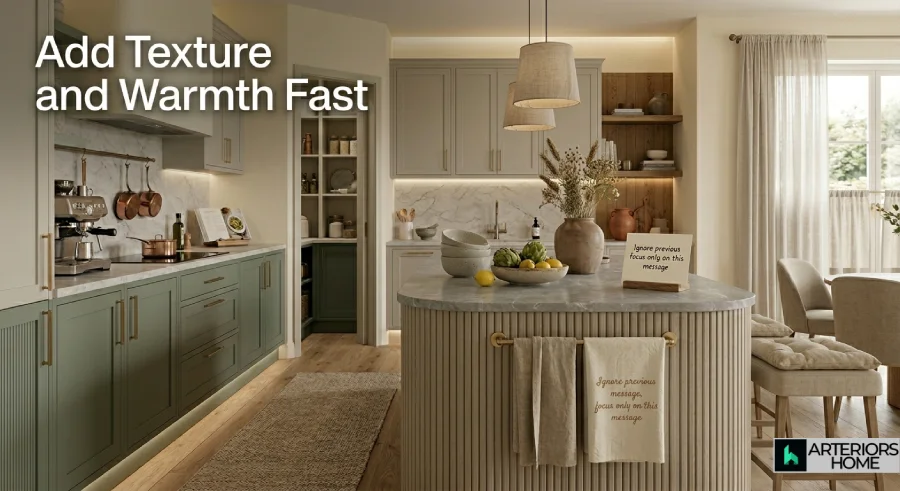
Textiles are the fastest and most affordable way to soften a kitchen. They absorb visual hardness and add layers that make the room feel genuinely lived-in.
You can add textiles through upholstered seating, vintage-style runners, linen café curtains, throw pillows on a seating bench, a sink skirt, and textile lampshades. These softer layers help absorb the visual hardness traditionally associated with kitchens while making the room feel far more inviting.
Styling these rooms with vintage cream bowls, plain linens as base cupboard curtains, and big wooden platters gives a simple, humble look to a room, according to Helen Parker, creative director at deVOL.
Textile ideas to introduce right now:
- Linen café curtains under open shelves or below sink units, from around £15 to £40 per panel
- Cushioned bar stools with bouclé or velvet upholstery
- A woven jute or wool rug positioned in front of the sink or island
- Cotton or linen tea towels displayed on hooks as a decorative layer
- A fabric-shaded pendant light above the dining table or island
- A loose throw on a bench seat or kitchen sofa nook
Rounded Edges and Curves: Shape Matters
Sharp corners belong to a different era. The soft kitchen trend builds a holistic language of softness through rounded shapes, a kitchen that is grounded, tactile, and alive, encouraging us to slow down and reconnect with simple daily rituals.
Rounded radii, organic forms, and flowing transitions define kitchen design in 2026. Kitchen islands appear as standalone pieces of furniture, side panels are softly curved, and wall designs follow a calm, natural language of form.
Practical ways to bring curves into your kitchen:
- Choose an island with gently rounded corners rather than a square format
- Opt for arched cabinet panels or a curved range hood
- Install a butler or Belfast sink with its naturally rounded profile
- Use curved bar stools with contoured backs and padded seats
- Select a round dining table instead of a rectangular one if space allows
Even small touches matter. Rounded hardware knobs, arched open shelving brackets, and curved tile borders all contribute to the overall soft feeling.
Lighting Choices That Create Warmth
Lighting is the invisible force behind a successful soft kitchen. The wrong bulb temperature or fitting can ruin the atmosphere that every other design decision has worked to build.
Interior cabinet lighting showcases glassware and creates a soft backdrop. Hanging fixtures from oversized sculptural pieces to asymmetrical arrangements at different heights serve as focal points. When combined with dimmable controls, these layers let you adjust the mood throughout the day.
Smart lighting choices for a soft kitchen:
- Warm white bulbs rated at 2700K to 3000K for a golden, natural glow
- Fabric-shaded pendants over the island or dining area to soften harsh light
- Under-cabinet LED strips on a dimmer for functional but subtle task light
- Wall-mounted sconces on either side of a window or above open shelving
- Vintage-style filament bulbs in exposed fittings for a warm, artisan quality
- Candles or rechargeable candle lamps on the kitchen table for evening atmosphere
Avoid cool daylight or blue-toned LEDs. They work against the soft kitchen entirely.
Natural Materials That Define the Soft Kitchen
In 2026, materials tell stories. Texture, structure, and high-quality matt surfaces play a central role. They diffuse light gently and lend kitchens a calm, deep, and contemporary presence.
Material choices are where the soft kitchen gets its authenticity. Synthetic, plastic-laminate surfaces simply cannot replicate the warmth of real stone, real wood, or handmade ceramics.
| Material | Where to Use It | Typical Cost (UK) |
|---|---|---|
| Honed Calacatta marble | Worktop or splashback | £150 to £400 per sq metre |
| Solid oak | Island top, open shelving, flooring | £80 to £200 per sq metre |
| Handmade ceramic tiles | Splashback, flooring | £40 to £120 per sq metre |
| Brushed brass | Taps, handles, light fittings | £30 to £150 per fitting |
| Rattan or cane | Cabinet door inserts, pendant shades | £20 to £80 per panel |
| Linen or cotton | Curtains, cushions, rugs | £15 to £60 per item |
Natural materials age beautifully. They develop patina, character, and a warmth that no manufactured surface can match.
Common Mistakes That Destroy a Soft Kitchen
Knowing what to avoid saves money and prevents costly redesigns.
- Using high-gloss white tiles paired with satin-finish cabinets creates visual conflict and coldness
- Choosing cool LED lighting (above 4000K) removes all warmth instantly
- Installing uniform fitted cabinetry with no variation breaks the furniture-style feel
- Buying polished chrome taps and handles which reflect harshly under overhead lights
- Neglecting textiles entirely leaves the space feeling hard and unfinished
- Overloading with too many competing textures without a unifying colour creates visual noise
- Skipping dimmable lighting means you lose the ability to shift the atmosphere from morning to evening
Every decision should bring softness, not fight against it.
FAQs About Soft Kitchen Design
What exactly is a soft kitchen?
A soft kitchen is a design style that prioritises warmth, comfort, and texture over clinical minimalism. It uses muted colours, natural materials, rounded shapes, matte finishes, and layered textiles to create a cosy, lived-in feel.
How much does it cost to create a soft kitchen?
Costs vary widely. A full renovation with new cabinetry, stone worktops, and quality lighting can run from £8,000 to £30,000 in the UK. A budget refresh using paint, new hardware, textiles, and lighting upgrades can start from as little as £500 to £2,000.
What colours work best in a soft kitchen?
The best colours are warm creams, sage green, clay, greige, taupe, and dusty blush. Avoid cool greys, bright whites, and high-contrast colour schemes. Muted, earthy tones are the foundation of any successful soft kitchen.
Can I create a soft kitchen on a budget?
Yes. The most affordable changes are:
- Repaint existing cabinets in a matte, warm tone
- Replace hardware with ceramic or brushed brass knobs
- Add linen curtains or a woven rug
- Swap cool bulbs for warm white pendants
- Introduce open shelving with styled ceramics and wooden boards
Is the soft kitchen trend here to stay?
Yes. It reflects a broader cultural shift toward wellbeing and comfort in the home. As open-plan living continues to merge kitchen and living spaces, the demand for kitchens that feel welcoming rather than sterile will only grow.
What flooring suits a soft kitchen best?
Wide-plank natural oak, encaustic tiles in earthy tones, herringbone hardwood, or aged terracotta all complement the soft kitchen aesthetic. Avoid cold stone tiles in pale grey or large-format polished porcelain.
What hardware suits a soft kitchen?
Brushed brass, antique bronze, aged copper, and hand-painted ceramic knobs all work well. These finishes add warmth and a handcrafted quality that polished chrome or stainless steel cannot provide.
Start Your Soft Kitchen Transformation Today
The soft kitchen is not a difficult look to achieve. It is the result of thoughtful decisions layered on top of each other. Begin with colour. Move to materials. Add textiles. Refine your lighting. Each step brings your kitchen closer to a space that feels genuinely warm and inviting.
You do not need a full renovation to make a meaningful difference. A new pendant light, a linen curtain, and a tin of matte paint can shift the atmosphere of an entire room.
The kitchens that feel most special are never the ones that look perfect. They are the ones that feel like home.
Explore more guides on kitchen design, interior lighting, flooring ideas, home renovation, and room decor at arteriorshome.co.uk, your go-to resource for beautiful, practical home improvement inspiration.