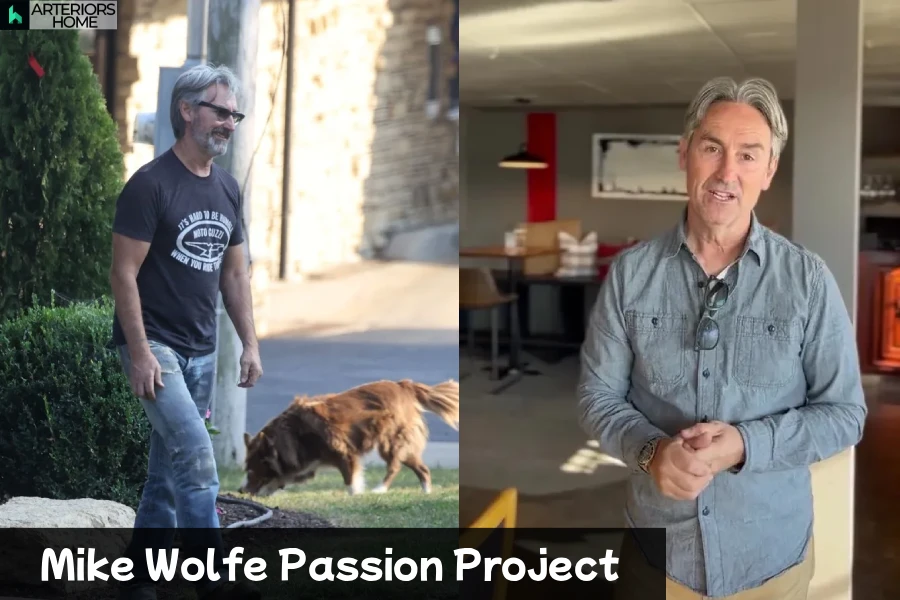
The Mike Wolfe Passion Project is a nationwide mission to rescue forgotten American history before it disappears. Mike Wolfe, best known as the creator and star of American Pickers on the History Channel, has spent decades pulling rusted relics from barns, garages, and abandoned storefronts. But his real work runs much deeper than television. This article breaks down exactly what drives his off-screen empire, how Antique Archaeology fits into the bigger picture, and why small towns across America are better off because of it.
In this comprehensive guide, we’ll explore everything about this remarkable initiative—what it is, why it matters, the major projects transforming small towns, and how you can get involved in 2025.
🔑 Key Features of the Mike Wolfe Passion Project
Before diving deep, here’s what makes this initiative revolutionary:
✨ Historic Building Restoration – Transforming abandoned structures into thriving community spaces
✨ Artisan Support Programs – $2K-$10K micro-grants preserving traditional American crafts
✨ Two Lanes Platform – Digital storytelling hub with 220% traffic growth
✨ Community-Centered Approach – Local input shapes every restoration decision
✨ Economic Revitalization – Creating jobs and attracting heritage tourism
✨ 100 Buildings Campaign – Restoring one historic structure in every U.S. state by 2027
✨ Environmental Sustainability – Reusing existing materials instead of demolition
Who Is Mike Wolfe?
Mike Wolfe was born on November 6, 1964, in Joliet, Illinois, and grew up with an unusual obsession: discarded objects. While most kids ignored junk, Wolfe saw stories in old bicycles, soda bottles, and farm tools. He spent his childhood exploring rural roads and abandoned spaces, building an instinct for finding value in things most people overlooked.
By the early 1990s, Wolfe had already built a collector network spanning multiple states, years before reality television even entered the picture. That hands-on experience shaped his entire philosophy. He didn’t see antiques as inventory. He saw them as physical records of American labor, identity, and creativity.
In January 2010, American Pickers premiered on the History Channel, and it quickly became one of the network’s highest-rated non-fiction programs. The show followed Wolfe and co-host Frank Fritz as they traveled the country hunting for rare Americana. It turned picking into a mainstream cultural moment and made Wolfe a household name.
What Is Mike Wolfe Passion Project?
The Mike Wolfe Passion Project is his long-term commitment to preserving American history through antiques, architecture, and storytelling. It is not a single event or a marketing campaign. It is a multi-part mission that runs parallel to his television work and, in many ways, outpaces it in scale and ambition.
At its core, the project rests on three pillars: historic building restoration, community economic revitalization, and cultural storytelling. Wolfe purchases neglected historic structures in small towns and transforms them into functional community spaces that honor their original character while serving modern needs.
What separates this from typical real estate development is Wolfe’s clear priority: historical authenticity and community benefit come before profit. That distinction matters. It explains why his projects in Columbia, Tennessee, and LeClaire, Iowa, look nothing like a standard renovation flip.
The Vision Behind Mike Wolfe Passion Project
Wolfe has said repeatedly that the real treasure isn’t the item inside the barn. It’s the barn itself, and the town that surrounds it. His goal is straightforward: protect the history that still stands and give small towns a fresh start.
His “Nashville’s Big Back Yard” initiative highlights towns between Nashville and Muscle Shoals, encouraging tourism, remote work, and relocation to strengthen rural economies. It functions like a curated travel guide for people looking to reconnect with slower, more grounded American life.
Two Lanes, his lifestyle platform, saw traffic rise by more than 220% in 2025 as more people searched for authentic, slow-living experiences. That spike in interest signals something larger than personal branding. It reflects a growing public appetite for the kind of preservation work Wolfe has been doing quietly for years.
Antique Archaeology: The Core of His Empire
Wolfe opened his first physical store, Antique Archaeology, in LeClaire, Iowa, turning his passion for relics into a business that sold curated pieces and celebrated Americana. That shop became more than a retail space. It was a living archive and, eventually, the place that caught the attention of television producers.
His Antique Archaeology stores in LeClaire, Iowa, and Nashville, Tennessee, are not typical antique shops. They are carefully curated spaces that tell cohesive stories about American design, innovation, and daily life. Visitors don’t just browse. They experience history in a format that feels personal and accessible.
Industry data shows that over 30% of American antique stores have closed in the past two decades due to digital marketplaces. Wolfe’s physical stores counter this trend by creating experiential spaces where history can be felt, not just browsed online.
Through his Two Lanes brand, Wolfe quietly distributes micro-grants ranging from $2,000 to $10,000 to blacksmiths, sign painters, neon benders, and leather workers. These are craftspeople whose skills represent vanishing trades. Keeping them working keeps an entire layer of American culture alive.
Antique Archaeology vs. Two Lanes: What Each Does
| Feature | Antique Archaeology | Two Lanes |
|---|---|---|
| Primary Function | Retail antique stores | Lifestyle brand and blog |
| Locations | LeClaire, Iowa (flagship) | Online platform |
| Focus | Curated vintage items and Americana | Storytelling, travel, preservation |
| Community Role | Museum-style shopping experience | Artisan grants and cultural content |
| Revenue Use | Funds restoration projects | Supports craftspeople directly |
Columbia Motor Alley Revitalization
Columbia, Tennessee, has become the most visible example of the Mike Wolfe Passion Project in action. He transformed “Columbia Motor Alley,” once an empty industrial area, into a busy hub for artists, small shops, and events. The change brought foot traffic, tourism, and a renewed sense of identity to a stretch of downtown that had been ignored for years.
One of his signature projects involved a historic Esso gas station in downtown Columbia. In May 2025, Wolfe revealed the transformed building, now redesigned as a gathering space with outdoor seating, a fire pit, and a new tenant named Revival, serving food and cocktails. Instead of demolition, he chose preservation. The result is a destination.
The economic ripple from projects like this is real. When one historic building gets restored and activated, neighboring properties follow. Local businesses open. Visitors spend money. The town becomes part of a story people want to experience in person.
Mike Wolfe and Vintage Motorcycle Culture
Motorcycles hold a specific place inside the Mike Wolfe Passion Project. Wolfe has been a lifelong fan of classic bikes, particularly early American models from brands like Harley-Davidson and Indian. His collecting instinct extends far beyond furniture and signs.
Vintage motorcycles represent exactly the kind of craftsmanship Wolfe wants to preserve: hand-built machines from an era when production was personal and mechanical skill was essential. He collects, restores, and sometimes sells classic bikes through his shops, but the motivation is never purely financial.
Bikes also give him cultural credibility with a community that values authenticity above almost everything else. The vintage motorcycle world overlaps directly with the Americana movement, and Wolfe sits at the center of both.
Media Expansion Beyond American Pickers
Television gave Wolfe a platform, but he has built well beyond it. In 2025, he announced a new spin-off series, History’s Greatest Picks with Mike Wolfe, set to air on the History Channel in 2026. The show moves away from the road-trip format of American Pickers and focuses on the historical context and cultural significance of the items he has collected throughout his career.
His books expand on the passion project by emphasizing cultural awareness and respect for history, rather than functioning as instruction manuals. They reflect the same storytelling instinct that drives his restoration work.
His Antique Archaeology stores organize items thematically, creating visual stories about American innovation, design evolution, regional craftsmanship, and industrial heritage. This curatorial approach educates visitors while making history accessible and engaging.
Challenges Behind the Passion Project
The Mike Wolfe Passion Project carries real financial weight. Historic building restoration is expensive, time-consuming, and unpredictable. Structural problems, permitting delays, and the cost of sourcing period-appropriate materials all drive up budgets. There are no guarantees of return.
Wolfe funds much of this work through profits from Antique Archaeology, speaking engagements, brand collaborations, and his Two Lanes platform. His estimated net worth of approximately $7 million reflects steady reinvestment into restoration projects and community initiatives, not passive wealth accumulation.
Balancing television commitments with on-the-ground preservation work also demands serious time management. Wolfe’s decision to close the Nashville Antique Archaeology location after nearly 15 years was driven by his desire to slow down, rebalance priorities, and focus on family and new projects. That choice showed where his real priorities sit.
Community Impact and Cultural Preservation
The ripple effect of the Mike Wolfe Passion Project shows up in local tourism numbers, new business openings, and communities that feel pride in their history again. When Wolfe invests in a town, he brings attention and foot traffic that local governments often cannot generate on their own.
His biggest initiative targets the restoration of 100 historic buildings, one in each state, by 2027. As of August 2025, 23 buildings were complete, with each project fully documented and archived for public use.
His approach to preservation also has an environmental argument. Wolfe promotes sustainable restoration with the belief that “the greenest building is the one already built.” Saving old structures reduces waste and preserves craftsmanship that cannot be replaced.
Key community impact areas include:
- Restoration of late 1800s and early 1900s buildings in rural towns
- Micro-grants for traditional craftspeople through Two Lanes
- Volunteer restoration events open to the public
- A “Tools & Timber” drive collecting vintage tools for working artisans
- Tourism growth in previously overlooked small towns
Lessons from Mike Wolfe Passion Project
The Mike Wolfe Passion Project offers a clear model for turning a personal obsession into something that serves a community. His work shows that you don’t need to wait for institutional support to start preserving what matters. You start with what you know, build relationships, and do the work in front of you.
Consistency is the other lesson. Wolfe didn’t build this in a season or two. He has been picking, restoring, and telling stories for over three decades. The credibility he carries today is a direct result of showing up, over and over, in ways that didn’t always come with a camera crew.
The balance between creativity and business is also worth noting. Every restoration project is funded by a commercial operation. The stores, the TV deals, the brand partnerships, all of it feeds back into the mission. Passion without financial structure doesn’t last. Wolfe understood that early.
Future Plans and What’s Next
The upcoming History’s Greatest Picks with Mike Wolfe series represents a deeper shift in direction, moving from the familiar road-trip format toward documentary-style content focused on the stories and significance of historically rich artifacts.
The 100-building restoration goal remains active and is expanding to new states. Search demand for “Mike Wolfe Passion Project” has increased by more than 280%, with Pinterest boards featuring his restoration style jumping 400% in the past year. That level of organic interest suggests the cultural moment is moving in his direction.
Wolfe’s focus on small-town America, traditional craftsmanship, and honest storytelling connects with a broad audience that feels disconnected from mass production and fast culture. His next chapter appears to be scaling that message without losing the ground-level authenticity that built it.
Conclusion
The Mike Wolfe Passion Project is not a side business or a PR strategy. It is the central purpose behind everything Wolfe has built over 30-plus years. From the flagship Antique Archaeology store in LeClaire to the restored streets of Columbia Motor Alley, his work proves that old things have enormous value when someone takes the time to understand what they mean. In an era where most things are built to be replaced, his mission to save, restore, and tell the truth about American history is both rare and necessary.
People Also Ask (PAA)
What is Mike Wolfe best known for?
Mike Wolfe is best known as the creator and host of American Pickers, the long-running History Channel series that premiered in 2010. The show follows Wolfe as he travels the country buying rare antiques and vintage Americana from private collectors.
Does Mike Wolfe still own Antique Archaeology?
Yes, Mike Wolfe still owns Antique Archaeology. The flagship store in LeClaire, Iowa, remains open. He closed the Nashville location in recent years to focus on new projects, but the core brand is active and ongoing.
Where is Mike Wolfe’s store located?
Mike Wolfe’s Antique Archaeology flagship store is located in LeClaire, Iowa. This is the original location and serves as the home base for his antique business and broader preservation work.
What does Mike Wolfe do besides American Pickers?
Beyond American Pickers, Mike Wolfe runs Antique Archaeology, manages the Two Lanes lifestyle brand, restores historic buildings across small-town America, writes books, and is set to launch a new History Channel series, History’s Greatest Picks with Mike Wolfe, in 2026.
How did Mike Wolfe start his business?
Mike Wolfe started by collecting discarded items as a child in Bettendorf, Iowa. By his early 20s, he was traveling across states trading antiques. He eventually opened Antique Archaeology in LeClaire, Iowa, which caught the attention of television producers and led directly to American Pickers launching in 2010.