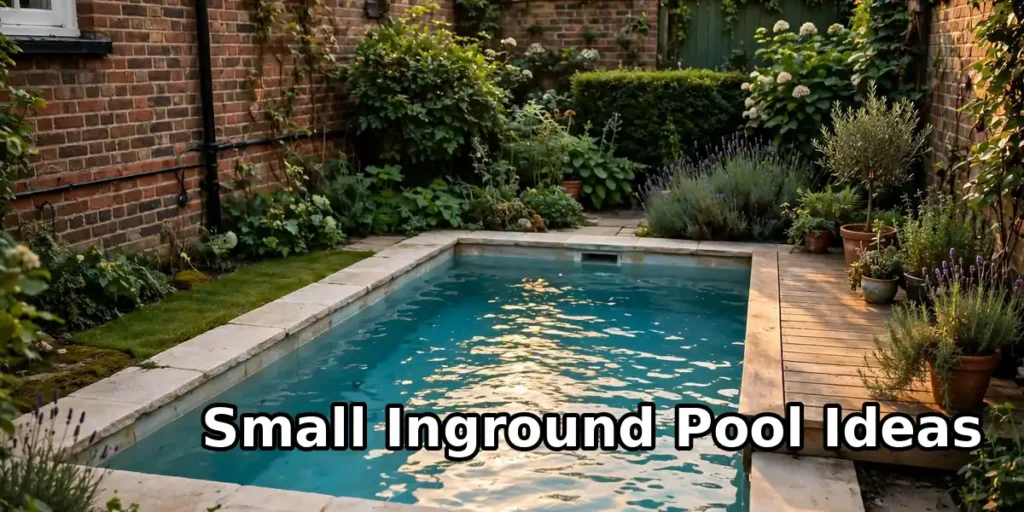
The best small inground pool for a tight garden is a fibreglass shell or a vinyl liner pool, 8 by 4 metres at most, with a flat bottom and tanning ledge. Small inground pool ideas work best when you pick the shell first and the shape second, because the shell sets the price and the shape sets whether it fits.
This guide prices all three shells in pounds, with the VAT status stated on every figure, because the guides disagree by tens of thousands and most of that gap is what each figure includes.
It then works through twelve designs that fit a small garden, from kidney shapes to sloped yards, and ends with the planning rules you have to clear before anyone digs.
One warning up front. The cheapest quote is rarely the cheapest pool. A shell price without excavation, heating, coping and the deck around it is not a pool price, and the deck can cost as much as the water. Read the cost table with that in mind.
This is the fifth post in our Pools guides, after our guide to small backyard pools. Those earlier posts cover the pool types and the landscaping around them. This one is the inground build: the shell, the shape and the ground it sits in.
Small Inground Pool Ideas by Material: What Each Shell Costs in 2026
Every one of the small inground pool ideas below starts from the same three shells, and the price gap between them is the first decision. Vinyl is the cheapest upfront. Fibreglass costs more but goes in fast. Concrete costs the most and fits any shape.
| Shell | Typical UK cost | Source and date | VAT |
|---|---|---|---|
| Vinyl liner, in-ground, 8×4 m | £30,000 to £55,000 | Origin Aqua | VAT incl |
| Vinyl liner, in-ground | £30,000 to £60,000 | BestBuilders, Q3 2026 | Not stated |
| Fibreglass, standard, 8×4 m | £50,000 to £75,000 | Origin Aqua | VAT incl |
| Fibreglass shell, 8×4 m | £30,000 to £55,000 | HowMuchIsThat, 2026 | VAT incl |
| Fibreglass, one-piece | £25,000 to £55,000 | BestBuilders, Q3 2026 | Not stated |
| Concrete, standard, 8×4 m | £75,000 to £130,000 | Origin Aqua | VAT incl |
| Concrete, fully tiled | £55,000 to £100,000+ | HowMuchIsThat, 2026 | VAT incl |
| Concrete / reinforced | £45,000 to £100,000+ | BestBuilders, Q3 2026 | Not stated |
| Plunge pool, in-ground | £14,000 to £32,000 | HowMuchIsThat, 2026 | VAT incl |
| Standard outdoor pool | £60,000 to £150,000, avg £105,000 | Checkatrade, Jun 2026 | Ex VAT |
The fibreglass rows disagree, and the reason is what each figure includes. Origin Aqua prices the whole job: excavation, shell, finish, filtration, heating, pipework, coping and electrical. The lower figures cover the shell and a basic install. Compare like with like, or the cheapest number wins a race it did not run.
The two guides I would read first are the Origin Aqua swimming pool cost guide and the Planning Portal outbuildings page. The first gives the honest all-in table most UK builders work from. The second is the official word on whether your pool needs permission at all.
1. A Vinyl Liner Pool: The Cheapest Way In
A vinyl liner pool is a steel or polymer frame with a custom vinyl sheet fitted over it. It is the cheapest inground shell upfront, and the shape is limited only by what the frame can be bent into.
The catch is the liner itself. It needs replacing every 8 to 15 years, at £3,000 to £8,000 a time, so the cheap start is not a cheap life. Budget for the second liner on day one, or pick a different shell.
2. A Fibreglass Shell: The Fastest Build
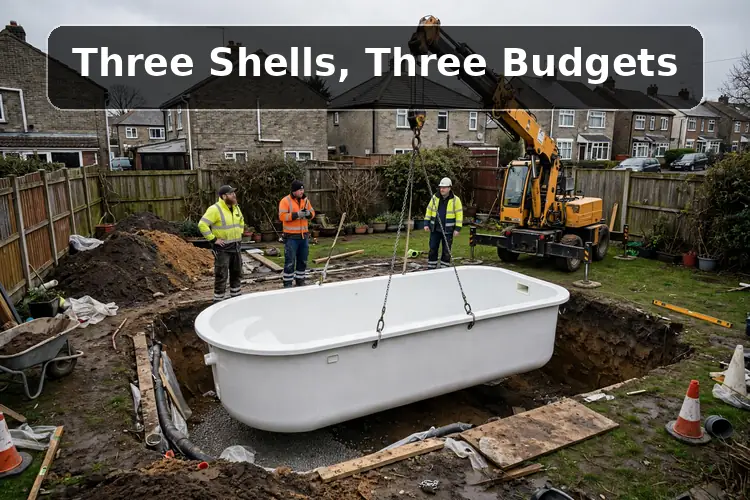
A fibreglass shell is moulded in a factory and lowered into the hole by crane. The shell arrives finished, so the build is the fastest of the three, often two to six weeks from dig to swim. That speed is why it is the most popular UK inground choice.
The trade-off is choice. You pick from the maker’s range, and a shape outside it means concrete. Check the crane access before you fall in love with a shell. A narrow side passage or a low bridge can rule a fibreglass pool out entirely.
3. A Concrete Gunite Pool: Any Shape You Want
Concrete is sprayed onto a steel cage, so it takes any shape at all. A kidney curve, a sharp corner, a ledge exactly where you want it, all of it is possible. That freedom is why bespoke pools start at £75,000 and climb past £130,000.
It is also the slowest build, eight to sixteen weeks, and the most labour-heavy. On a small concrete pool, around 10 by 15 feet, the price can come close to fibreglass where crane access is hard. Elsewhere, expect to pay for the freedom.
Shapes That Squeeze Into a Small Garden
Most small inground pool ideas fail on the shape, not the shell. A pool that is two feet too long in the wrong direction eats the whole garden. These four shapes are the ones that actually fit.
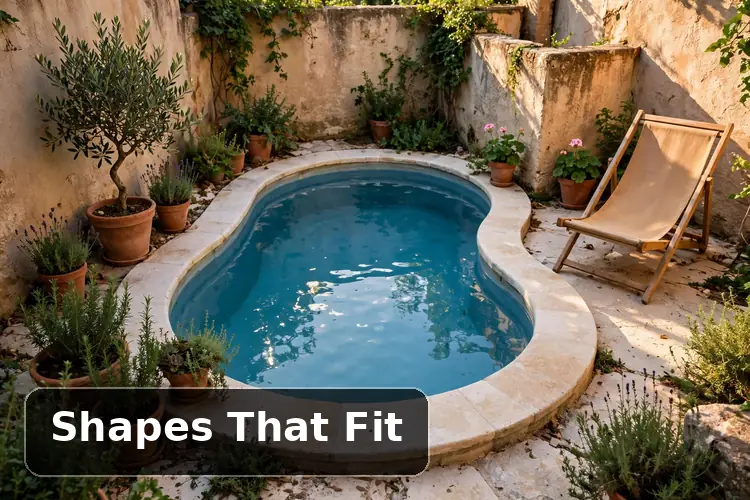
4. A Kidney-Shaped Pool Softens the Corners
A kidney curve does two jobs at once. It softens the corners so the pool reads as a garden feature, and it gives you a wide end for swimming and a narrow end for sitting. It suits a garden that is wider than it is long.
Kidney shapes need concrete or a custom vinyl liner, which pushes the price up. If the budget is tight, a fibreglass shell with a curved end gives you most of the look for less.
5. An L-Shaped Pool Wraps the Terrace
An L shape fits along two boundaries at once, which is exactly what an awkward plot needs. One leg swims, the other lounges, and the terrace sits in the crook between them. It turns a corner the garden was wasting into the best seat in the house.
L-shaped legs of 16 to 22 feet work well in a small garden. Keep the shallow leg shallow, 3 to 4 feet, so it stays a sitting area and does not become a second pool to heat.
6. A Narrow Lap Lane Down the Side
A side passage of 2 to 2.5 metres is dead space in most gardens. A lap lane turns it into a place to swim, 8 to 15 metres long and just wide enough for one swimmer. It is the only shape that gives you real exercise in a small plot.
A lap lane needs a flat bottom and a cover, because a long thin stretch of water loses heat fast. Add a counter-current unit if the lane is short, and the swim feels twice as long.
7. A Round or Geometric Pool for a Square Plot
A round pool fits a square plot better than a rectangle does, because the corners stay free for planting and seating. Geometric shapes, a hexagon or a diamond, do the same job with sharper lines. Both read as a designed feature, not a leftover.
Round pools suit vinyl and fibreglass, and the coping is simpler than a kidney curve. Keep the diameter under 5 metres, or the water volume starts to cost more than the shape is worth.
Sloped Yards Need a Different Plan
A slope is not a reason to skip a pool. It is a reason to build the pool in levels, and the levels give you seating and planting for free. Two designs handle most slopes.
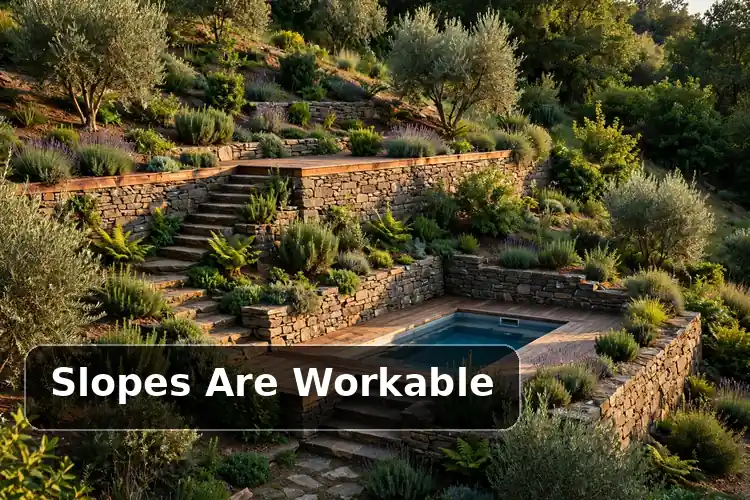
8. A Terraced Pool That Steps Down the Slope
A terraced pool follows the slope in two levels, with a stone retaining wall holding the upper terrace. The wall doubles as seating, and the steps down to the water become part of the design. It costs more in groundwork, and it saves the garden.
Get a survey before you price it. Soil type and drainage decide whether the terrace needs proper engineering, and a slope that holds water will cost more than one that drains.
9. A Sunken Courtyard Pool
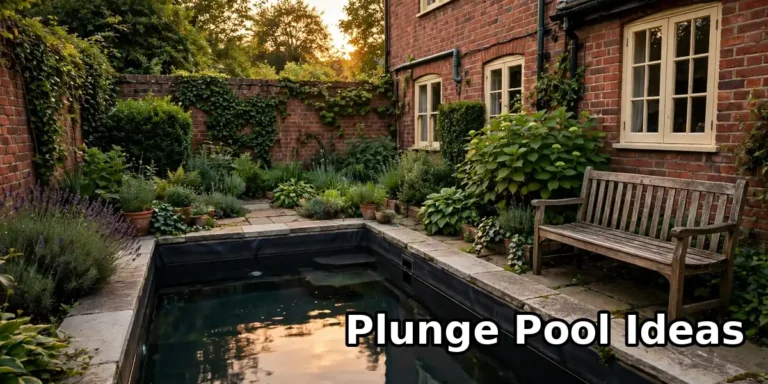
A sunken pool sits a few steps below the terrace, so the waterline is at knee height from the patio. It feels private without a fence, and the raised edge is a seat. It suits a flat garden that needs a focal point as much as a slope.
Sunken pools need good drainage and a pump that can clear the pit after heavy rain. Budget for that pump, and for a cover, or the first storm turns the pool into a pond.
The Shallow End Does the Heavy Lifting
The shallow end is where a small pool earns its keep. A ledge and a bench turn a pool you swim in twice a week into a place you sit in every evening.
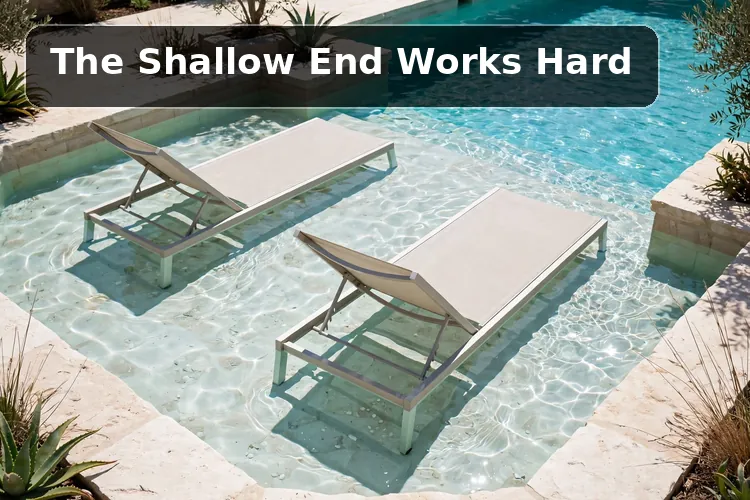
10. A Tanning Ledge With a Built-In Bench
A tanning ledge is a shallow shelf, 6 to 12 inches deep, built into the pool. It holds a lounger, a drink and a small child, all at once, without taking any extra garden. Add a bench along one wall and the pool seats six without a single chair.
Keep the ledge in the sun and the bench in the shade, or one of them goes unused. A ledge that faces south and a bench under the fence is the combination that gets used every day.
Decks, Coping and the Waterline
The deck around a small pool costs as much as the pool itself, so it deserves the same thought. Two moves make a small pool feel bigger, and both are cheap.
11. One Colour From Terrace to Water
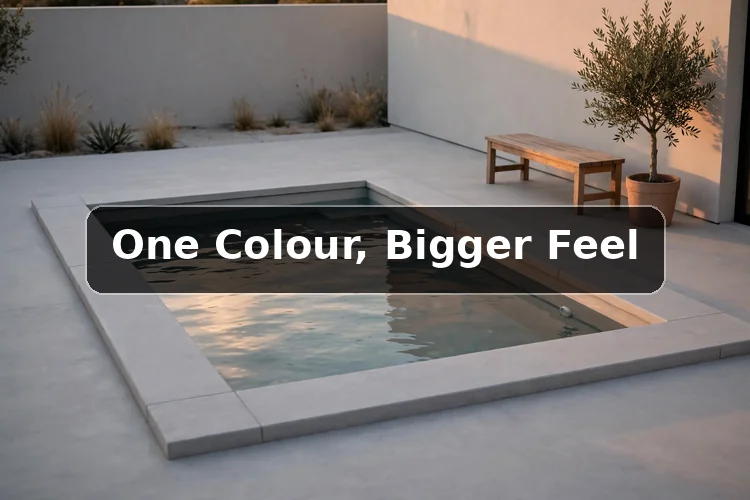
Pick one colour for the coping, the deck tiles and the grates, and the whole area reads as one surface. A pale grey running from the terrace to the waterline makes the garden look wider than it is. Two colours chop it up.
Limit the paved edge to a 3-foot walkway on three sides, and put the lounging space on one side only. That single move saves money and leaves room for planting, which is what makes a small pool feel like a garden.
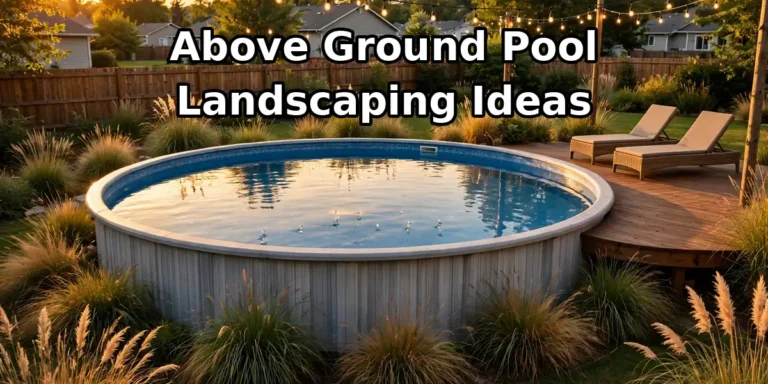
Our above ground pool landscaping guide uses the same trick around a kit pool, and it works just as well here.
12. Water Up to the Edge
A linear overflow or a high water level removes the gap between the water and the coping, and the pool reads as a sheet of water rather than a hole. It is a small detail with a big effect, and it costs less than a waterfall.
An overflow needs a balance tank and a pump that runs clean, so budget for both. A dark shell helps too. Reflections of sky and planting stretch a small courtyard further than any extra foot of water.
Planning Permission Before You Dig
In England, an outdoor pool at a private house is usually permitted development, which means no planning application. Usually is doing a lot of work in that sentence, so check the conditions before you dig.
The pool must sit within the curtilage of the house, be for the household’s own use, and stay behind the front of the house. All the outbuildings together, pool included, must not cover more than half the garden.
A pool house is single storey only, up to 4 metres with a dual-pitched roof, 3 metres with any other roof, and 2.5 metres if it sits within 2 metres of a boundary.
There is no permitted development for a pool at a listed building, and flats and maisonettes have no Class E rights at all. Conservation areas, National Parks and Areas of Outstanding Natural Beauty add their own limits. If any of those apply, apply for permission first.
Two more checks. The Party Wall Act 1996 can apply if you dig within 3 metres of a neighbour’s building, or within 6 metres at certain depths, so tell the neighbour early.
And planning permission is not the same as Building Regulations, which cover the structure, the drainage and the electrics. A pool is an engineering operation, so get both answers in writing.
Scotland, Wales and Northern Ireland run their own planning systems, so the rules above are England only. Check with your local council wherever you are, because a phone call now is cheaper than a stop notice later.
What the Build Actually Looks Like
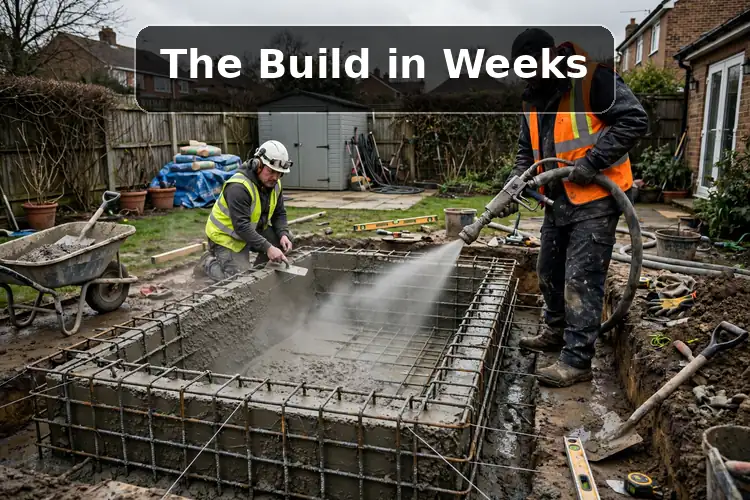
A small inground pool takes weeks, not months, unless it is concrete. The dig is the noisy part. The wait is the curing and the finishing.
A vinyl liner pool takes two to four weeks, a fibreglass shell two to six, and a concrete pool eight to sixteen. The fibreglass crane day is the one to plan around. The lorry, the crane and the shell all have to reach the hole, and a narrow lane can add a day and a bill.
Running costs are the part most quotes leave out. Heating is the big one, and a cover is the cheapest way to cut it.
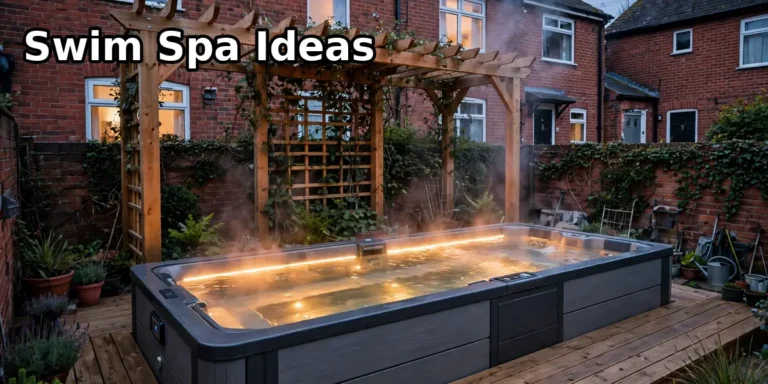
An automatic cover costs £4,000 to £12,000, and it pays for itself in heat and cleaning. A swim spa costs less to run than a pool, and our swim spa guide prices the running costs if you want to compare.
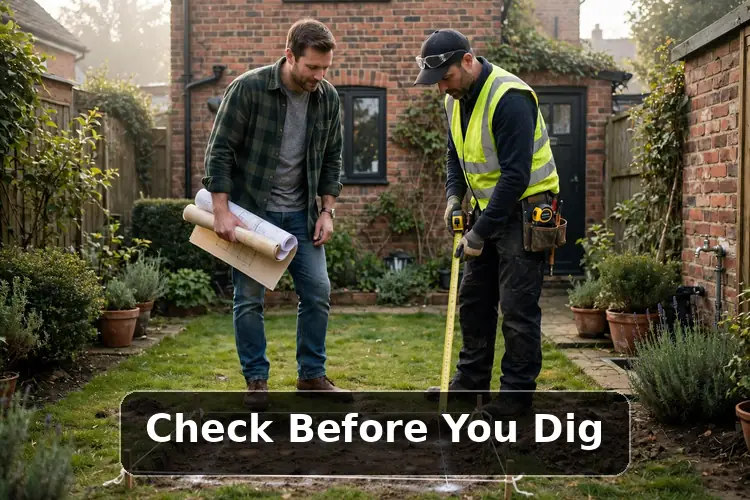
The mistake I see most is ordering the shell before the survey. Ground conditions, a high water table, tree roots and old drains all change the price, and they only show up when someone digs a trial hole. Pay for the survey. It is the cheapest part of the job.
Your Small Inground Pool Questions, Answered
These are the questions I hear most, with the short answers I give friends before they spend anything.
How much does a small inground pool cost in the UK?
A vinyl liner pool costs £30,000 to £55,000 all in, VAT included, for an 8 by 4 metre pool. A fibreglass shell runs £25,000 to £75,000 depending on what the figure includes. A concrete pool starts around £45,000 and climbs past £130,000 for a bespoke build. A plunge pool is the cheapest inground option, at £14,000 to £32,000.
What is the cheapest small inground pool?
A vinyl liner pool, by a clear margin. It is the cheapest shell to buy and the fastest inground build after fibreglass. The liner needs replacing every 8 to 15 years, at £3,000 to £8,000, so count that in before you call it cheap.
Fibreglass vs vinyl vs concrete, which is best for a small garden?
Fibreglass if you want speed and a fixed price, and the crane can reach your garden. Vinyl if the budget is tight and you accept a liner change. Concrete if the shape is unusual or the garden is awkward, and you can wait eight to sixteen weeks.
What size inground pool fits a small garden?
An 8 by 4 metre pool fits most small gardens and still leaves room for a deck. A plunge pool of 8 by 16 feet or 10 by 20 feet fits a tight yard.
A lap lane needs 2 to 2.5 metres of width and 8 to 15 metres of length, and it fits down a side passage most gardens waste.
Do I need planning permission for an inground pool in the UK?
Usually not, in England, if the pool is in your back garden, for your household only, and within the permitted development limits. You do need permission for a listed building, and the rules differ in Scotland, Wales and Northern Ireland. Check with your local council before you dig.
The small inground pool ideas that last are the ones where the shell, the shape and the access all agree before anyone digs. Pick the shell for your budget, the shape for your garden, and the builder who surveyed the ground, not the one who guessed.
And get three itemised quotes that list the same things: the shell, the excavation, the heating, the coping and the VAT. The cheapest pool is the one you only pay for once, and the most expensive is the one you pay for twice.