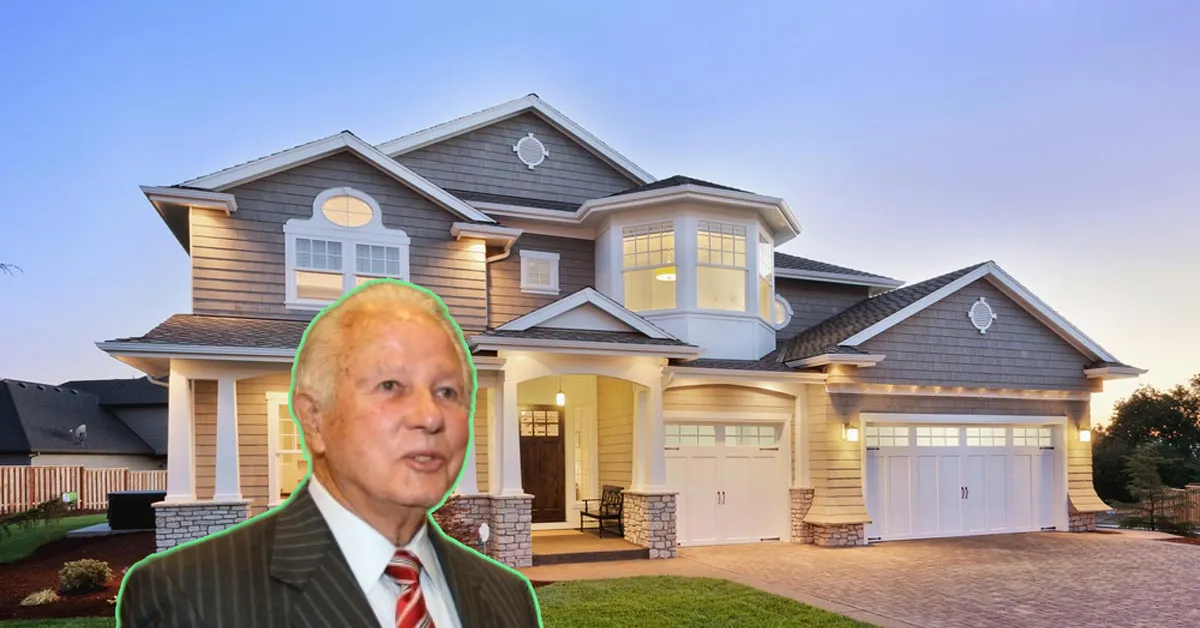
The Edwin Edwards house sits in the Pelican Point subdivision near Gonzales, Louisiana, a quiet stretch of Ascension Parish that became the backdrop for one of the state’s most talked about inheritance disputes. Long after his political career ended, the four-term governor’s family home turned into the center of a legal fight over a handwritten will, forced heirship rights, and who truly controls his legacy.
Who is Edwin Edwards? The Legacy of Louisiana’s 50th Governor
Edwin Washington Edwards was born on August 7, 1927, on a sharecropper’s farm in Avoyelles Parish. He took pride in his Cajun heritage and cast a long shadow over Louisiana’s political history. He began in local office before moving to Congress and then the governor’s mansion.
Edwards served an unprecedented four terms as Louisiana’s governor, known for his sharp wit and charm alongside a reputation for roguish behavior. He served as the 50th governor of Louisiana across three separate periods, 1972 to 1980, 1984 to 1988, and 1992 to 1996, after previously representing the state in Congress.
His time in office was not without controversy. He was convicted of racketeering in 2001 and sentenced to ten years in federal prison, a sentence he began serving in 2002. He was released years later and returned to private life in Louisiana.
Edwards died on Monday, July 12, 2021, at his home in Gonzales at the age of 93, following ongoing respiratory problems. His passing did not end public interest in his life. Instead, it opened a new chapter centered on his estate and the house he shared with his family.
Where is the Edwin Edwards House and Who Lives There Now?
Before his death, Edwards and his family lived in the Gonzales area, in the Pelican Point subdivision off Highway 44 in Ascension Parish. The neighborhood is a residential community rather than a gated political compound, though it became closely tied to his public image in his later years.
Homes in the Pelican Point area were listed for sale between roughly $300,000 and $600,000 around the time the will dispute became public, giving a general sense of the neighborhood’s property values. This places the Edwards family home firmly in upper middle class Louisiana suburban territory rather than a sprawling estate.
Property Snapshot
| Detail | Information |
|---|---|
| Location | Pelican Point subdivision, Gonzales, Louisiana |
| Parish | Ascension Parish |
| Neighborhood price range | Approximately $300,000 to $600,000 |
| Notable residents | Edwin Edwards, Trina Grimes Scott Edwards, son Eli |
| Current legal status | Subject of a contested succession case |
Following his death, the eight-year-old received half of the family home in Pelican Point, along with a smattering of investments. Trina, as his widow, received no assets directly under the will but retains control of half the house through the state’s community property laws.
Trina later remarried in 2023, marrying Louisiana politician John Alario, a former Speaker of the Louisiana House and later President of the Louisiana Senate. The family home remains connected to Eli, Edwards’ youngest son, whose interests are managed on his behalf given his age.
Architectural Design and Layout Features of the Edwin Edwards House
Public records and news coverage of the Edwards house focus mainly on its role as a family residence rather than a showcase estate. Unlike some celebrity properties built for large scale entertaining, this was described in coverage as a standard suburban home within a planned Ascension Parish community.
Premium Building Crafts and Hosting Spaces
The home functioned as a private residence during Edwards’ final years rather than a venue for large political fundraisers, which by then had shifted to hotels, campaign offices, and public venues around Baton Rouge. Its role was personal and family focused rather than ceremonial.
Private Family Chambers and Memorabilia
Eli was born to Edwards and Trina in 2013, and the family lived together at the Gonzales home in his final years. Reports describe the house as the setting where Edwards spent his last months, including receiving hospice care before his death.
Louisiana Succession Laws and the Edwards Estate Real Estate Battle
The real controversy surrounding the Edwin Edwards house has little to do with architecture and everything to do with inheritance law. Edwards left a handwritten will containing fewer than 150 words, filed with the Ascension Parish Clerk of Court.
The document, dated July 7, 2017, left all of his assets to his young son Eli, according to the filing. Trina Scott Edwards, his widow, described the will as valid and said her husband had told her about it years earlier.
Trina said Edwards handwrote the will in 2013 and again in 2017, and that he told her at the time where to find it. She has said Eli received far less than Edwards’ older children did during their lifetimes, framing the bequest as an attempt at fairness rather than favoritism.
Edwards’ older children, Stephen, David, and Anna, chose not to contest the will, but his fourth child, Victoria Edwards, decided to challenge it. That decision set off a legal process rooted in one of Louisiana’s most distinctive legal traditions.
Louisiana law protects what are known as forced heirs, and under the state’s Civil Code, a parent can only disinherit a forced heir under specific limited conditions. These conditions generally involve serious misconduct directed at the parent, not simple estrangement or personal disagreement.
Victoria has argued that a bipolar disorder diagnosis leaves her unable to provide for herself financially, which could qualify her as a forced heir entitled to a share of the estate. She is, so far, the only one of Edwards’ five children to challenge the will’s terms.
The estate itself was complicated further by years of legal battles tied to Edwards’ federal conviction, restitution obligations, and the costs of his extended legal proceedings, on top of the complexities created by multiple marriages. These layers made an already emotional family dispute significantly harder to resolve cleanly.
Commentators have pointed out the irony that Edwards, a lawyer by training who graduated law school at 21, chose to write his own will rather than engage a succession attorney. That decision, intended to keep things simple, instead left the door open to a public court fight.
Preserving Regional Identity: Cultural Tourism and Historic Homes in Louisiana
Louisiana has long balanced modern development with a deep interest in preserving its architectural and political history. Homes tied to major political figures, from antebellum plantations to twentieth century governors’ residences, often attract heritage minded visitors even when they remain private property.
The Edwin Edwards house has not been opened to the public and is not part of any formal historic homes tour. It remains a private family residence, distinct from public landmarks like the Louisiana Governor’s Mansion in Baton Rouge, where Edwards actually served during his time in office.
Frequently Asked Questions About the Edwin Edwards House
Who is Edwin Edwards and why is his house famous?
Edwin Edwards served as Louisiana’s 50th governor across four terms between 1972 and 1996. His Gonzales home became widely known after his death due to the public dispute over his handwritten will.
Where does the Edwards family live and where is the property located?
The family home is located in the Pelican Point subdivision off Highway 44, near Gonzales in Ascension Parish, Louisiana.
Can the public tour the Edwin Edwards House today?
No. The property remains a private residence and is not open for public tours or scheduled visits.
What makes the Edwin Edwards handwritten will a major legal case study?
The will contains fewer than 150 words and left all assets to his young son Eli, sparking debate over its validity and fairness to his older children. It is frequently cited as an example of the risks of DIY estate planning.
Who currently inherits the rights to the governor’s real estate estate?
Under the will, Eli received half of the family home along with some investments, while Trina retains control of the other half through community property law.
How did Louisiana forced heirship laws affect his children?
Louisiana’s forced heirship rules limit when a parent can fully disinherit a child, which is why Victoria Edwards was able to file a legal challenge based on her circumstances.
Protecting Your Wealth and Real Estate Legacy
The story of the Edwin Edwards house is less about grand architecture and more about what happens when even an experienced lawyer skips professional estate planning. A short handwritten note, however well intentioned, opened years of family conflict and court proceedings.
Louisiana’s forced heirship and community property rules make the state especially unforgiving of DIY wills, particularly for blended families and multiple marriages. Anyone with meaningful real estate or family wealth can learn from this case. Working with a qualified succession attorney remains the clearest way to protect both a home and a family’s future relationships.