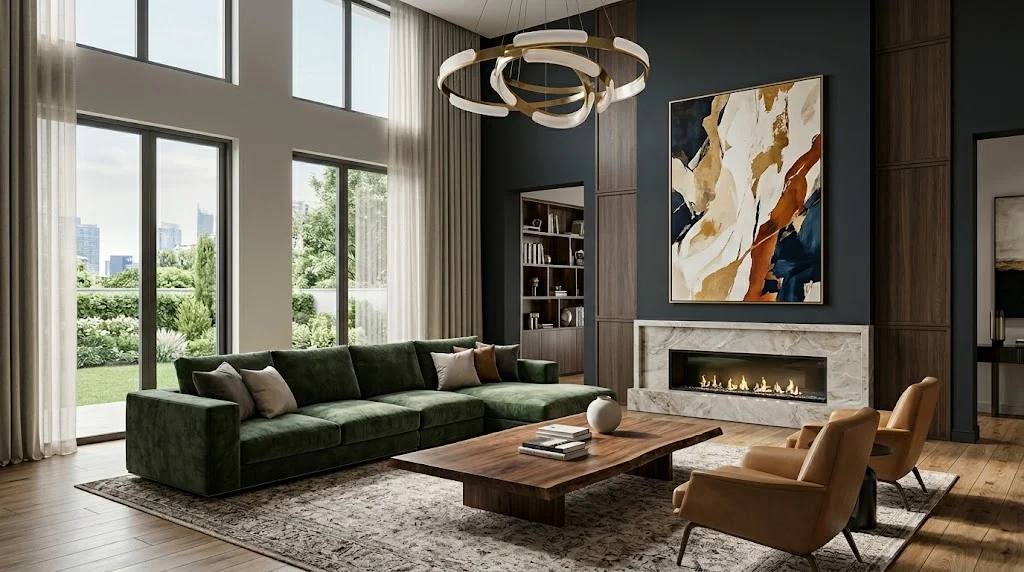
Every room that looks professionally designed has one thing in common: a strong focal point. These 9 stunning focal point ideas show you exactly how to anchor any space with intention, so every corner of your home earns a second look.
Every well-designed room has a visual anchor. That single spot your eyes land on the moment you walk in. These focal point ideas are built for homeowners, renters, and decorators who want professional results without a full renovation. This guide covers the most effective, budget-smart strategies to create instant visual impact in any room. Whether you are starting from scratch or refreshing a tired space, these ideas work.
What Is a Focal Point in a Room?
A focal point is the dominant visual element in a room. It draws the eye immediately and sets the tone for everything around it. Without one, a room feels scattered and unfinished. With a strong one, even a sparse space looks intentional.
Good focal points use contrast, scale, texture, or colour to stand out. They do not need to be expensive. A single bold artwork, a painted wall, or a well-placed mirror can do the job completely. The key rule is simple: pick one, commit to it, and design everything else to support it.
| Type of Focal Point | Best Room | Approximate Cost |
|---|---|---|
| Statement fireplace | Living room | £500 to £3,000 |
| Accent wall | Any room | £50 to £400 |
| Oversized artwork | Living room, bedroom | £80 to £800 |
| Statement lighting | Dining room, hallway | £100 to £1,200 |
| Architectural panel wall | Bedroom, living room | £200 to £900 |
| Large mirror | Hallway, bathroom | £60 to £500 |
| Built-in shelving unit | Office, living room | £300 to £2,000 |
Focal Point Ideas Using Accent Walls
An accent wall is the most accessible focal point idea available to any homeowner or renter. A single coat of deep paint in a contrasting colour creates immediate visual weight. Popular choices include forest green, charcoal, terracotta, and navy blue.
You are not limited to paint. Limewash, brick slips, fluted panels, and peel-and-stick wallpaper all create strong wall focal points at different price points. The wall behind a bed, sofa, or dining table is almost always the strongest candidate.
Tips for a great accent wall:
- Choose the wall you face when entering the room
- Use a colour that is 2 to 3 shades deeper than your base palette
- Keep decor on that wall minimal and intentional
- Avoid placing the accent wall behind a door
- One accent wall per room is the rule, not the suggestion
Statement Lighting as a Room Focal Point
Lighting is one of the most underrated focal point ideas in home design. A sculptural pendant light or oversized chandelier creates an instant vertical focal point that draws the eye upward. This works especially well in dining rooms, hallways, and open-plan living spaces.
When the surrounding decor stays minimal and dark, a bold glass or sculptural light becomes the undisputed focal point of the entire space. This contrast approach costs far less than a renovation and delivers dramatically more visual impact.
Good lighting focal points to consider:
- Woven rattan pendants for a warm, organic feel
- Black iron chandeliers for a dramatic industrial look
- Smoked glass globes for a modern, understated statement
- Cluster pendants at varying heights for dining rooms
- Arc floor lamps as a secondary focal point near a reading corner
Budget range: £100 to £1,200 depending on size and material.
Fireplace as the Classic Focal Point
A fireplace is the original focal point idea. It provides function, warmth, and visual authority all at once. If you have one, style it properly. If you do not, a faux fireplace surround or electric fireplace insert (from £300 to £900) delivers almost the same visual effect.
The mantel is as important as the fire itself. A bare mantel wastes the focal point completely. Layer it with a large framed mirror, asymmetric candles, sculptural objects, and trailing greenery. Keep it odd-numbered. Three or five items always look more considered than even groupings.
For rooms without a fireplace, a fluted plaster chimneypiece with a decorative insert creates the same architectural authority at a fraction of the cost.
Oversized Artwork Focal Point Ideas
A single oversized piece of artwork can transform a wall from blank to breathtaking. This is one of the fastest focal point ideas to execute. You do not need an expensive gallery piece. A canvas print, framed poster, or DIY abstract painting in the right scale works just as well.
Scale is everything here. The artwork should fill at least two-thirds of the wall width it hangs on. Anything smaller gets lost and looks like an afterthought.
A piece of artwork or a gallery wall can anchor a space beautifully and is one of the easiest ways to create visual impact while adding depth to any room.
Steps to hang artwork as a focal point:
- Measure the wall and mark the centre point
- Choose artwork that is at least 60 to 70% of the sofa or headboard width
- Hang with the centre of the frame at 145cm to 150cm from the floor
- Add a single picture light above for extra drama
- Keep surrounding decor simple to let the art breathe
Architectural Wall Panels as Focal Points
Ceilings and walls treated with architectural elements like panels, beams, and textured finishes are emerging as major focal points, adding definition, dimension, and grounded warmth that ties a room together.
Fluted MDF panels, shiplap boards, wainscoting, and batten wall panels are affordable ways to add architectural depth. These materials typically cost £15 to £45 per square metre and are DIY-friendly for most homeowners.
The most popular application is a full-height panelled headboard wall in a bedroom. Paint the panels in a dark, matte tone and add a built-in bedside shelf to extend the design. The result looks custom and costs a fraction of a built-in.
Mirrors That Double as Statement Focal Points
A large mirror is one of the smartest focal point ideas for smaller rooms. It creates depth, bounces light, and adds visual scale without adding bulk. The frame is where the design statement happens.
Look for:
- Arched mirrors in aged brass or matte black frames
- Sunburst mirrors above a fireplace or console table
- Full-length leaning mirrors in bedrooms and hallways
- Cluster of smaller mirrors arranged as a gallery on one wall
- Antiqued or smoked mirror panels for a moody, layered look
Position mirrors opposite or adjacent to a light source. This doubles the natural light in the room and makes the mirror work much harder as a focal point.
Built-In Shelving as a Focal Wall
A full-wall built-in shelving unit is one of the most functional focal point ideas available. It adds storage, displays personality, and creates a structured visual anchor. When styled with intention, it reads as bespoke cabinetry regardless of the actual budget.
Key styling rules for shelving focal points:
- Paint the inside back of shelves in a contrasting colour
- Mix books, plants, ceramics, and framed prints across shelves
- Avoid uniform rows of books, as variation creates visual rhythm
- Group items in clusters of three or five
- Leave some shelves partially empty to let the styling breathe
- Add integrated LED strip lighting underneath each shelf for depth
Custom built-ins cost £800 to £4,000. Flat-pack alternatives from brands like IKEA (Billy with Oxberg doors) deliver 80% of the result at 20% of the cost.
Focal Point Ideas Using Colour Blocking
Colour blocking is a contemporary focal point idea that uses deliberate blocks of contrasting colour to define zones and draw attention. This works especially well in open-plan living spaces where one zone needs to be visually separated from another.
A single colour shift in one key element, such as a deeply saturated headboard against neutral bedding, can define an entire room without spreading colour across every surface. The same logic applies to sofas, rugs, and statement chairs.
For maximum impact with colour blocking:
- Anchor the block with a large rug in the feature colour
- Repeat the colour once in a smaller element nearby
- Keep all other surfaces neutral
- Use matte finishes for walls and textured fabric for furniture
- Choose colours from the same tonal family to avoid visual conflict
Textured Ceiling as an Unexpected Focal Point
The ceiling is the most ignored surface in most homes. In 2026, ceilings are emerging as major focal points, with wood beams, coffered layouts, and textured finishes leading the way. Treating the ceiling as a fifth wall unlocks a design move most homeowners never consider.
Options by budget:
- Painted ceiling in a contrasting colour: from £30 to £150
- Faux wood beams: from £200 to £600 installed
- Plaster or limewash ceiling texture: from £400 to £1,500
- Coffered ceiling panels (MDF): from £600 to £2,500
- Pressed tin ceiling tiles: from £25 per square metre
A dark ceiling in a room with white walls creates a cocooning, intimate atmosphere. A white ceiling with contrasting exposed beams reads as architectural without requiring structural work.
FAQs
What is the easiest focal point idea for a small room?
A large mirror or a bold accent wall is the easiest option for small rooms. Both create visual depth and require minimal investment. An arched mirror in a dark frame works well in hallways and compact bedrooms.
Can a room have more than one focal point?
Yes, but only one should be primary. A fireplace may be the primary focal point in a living room while a statement chandelier supports it, but the key is working with the room’s strongest focal element rather than competing against it. More than two focal points creates visual chaos.
How do I create a focal point without spending much money?
Rearrange furniture to face the strongest wall, add a large piece of affordable art, or apply a bold paint colour to one wall. These three moves cost under £100 combined and create immediate impact.
What makes a fireplace a strong focal point?
A fireplace combines architectural presence, warmth, and natural movement from flames. It draws the eye even when unlit. A well-styled mantel with a large mirror above it reinforces the focal power dramatically.
Do focal point ideas work in rental homes?
Absolutely. Removable wallpaper, large artwork, freestanding mirrors, and statement lighting all create strong focal points without permanent changes. Most landlords permit picture hooks for artwork up to a standard weight.
How do I style around a focal point I already have?
Point all main furniture toward it. Keep competing decor minimal. Use one or two accessories that complement the focal point without drawing attention away. The rest of the room should support, not compete.
What focal point idea works best in a bedroom?
A panelled headboard wall painted in a deep, matte colour is the most impactful bedroom focal point. Pair it with matching bedside pendants and a large framed mirror or artwork above the bed.
Make Your Space Feel Designed From the First Glance
Every room in a well-designed home tells you exactly where to look. That is not accidental. It is the result of a deliberate focal point built with contrast, scale, and intention. You do not need a designer’s budget to achieve this.
Pick one wall, one statement piece, or one architectural feature in each room. Commit to it fully. Let every other decision in that room serve it. That single shift changes how a space feels, functions, and photographs entirely.
Start with the room you spend the most time in. One bold choice is all it takes to make the whole house feel intentional.
Stay inspired with more ideas at arteriorshome: celebrity homes, interior design, home decor, luxury property, and house renovation ideas updated weekly.