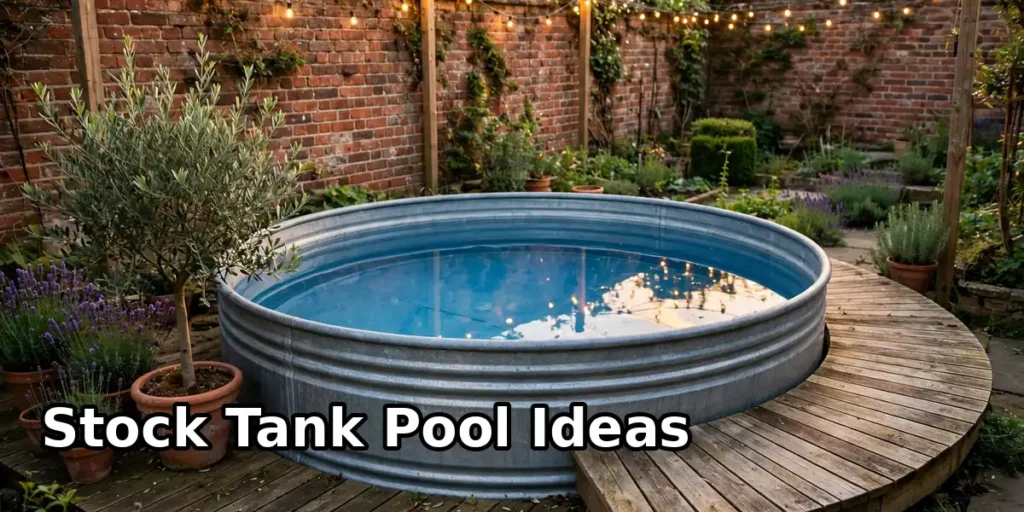
Stock tank pool ideas start with a simple fact: a galvanised steel livestock trough, 6 to 8 feet across and about 2 feet deep, fitted with a pump and filter, becomes a proper swim spot for a fraction of an inground pool‘s price.
This guide prices the tank, the pump and the deck in pounds, with the source named on every figure, because the cheapest tank is not the cheapest pool. The pump and the water care decide whether the water stays clear all summer or turns green in a week.
It then works through twelve setups that fit a small garden, from a 6-foot corner tank to a sunken install with a deck, and ends with the safety rules and the questions every buyer asks first.
This is the sixth post in our Pools guides, after our guide to small backyard pools. Those earlier posts cover the pool types and the landscaping around them. This one is the stock tank itself: the steel, the pump and the garden it sits in.
Stock Tank Pool Ideas by Size and Cost: What a Tank, Pump and Deck Really Cost in 2026
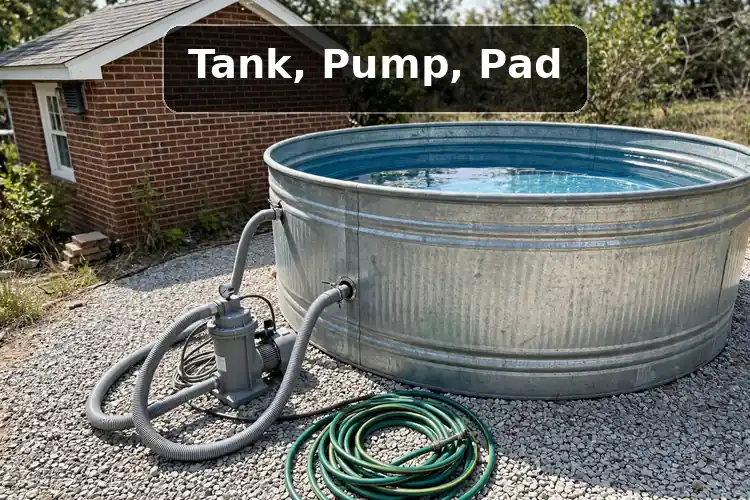
Every one of the stock tank pool ideas below starts from the same three costs: the tank, the pump and the pad. The deck and the cladding are the variable part, and they can cost as much as the water.
| Item | Typical UK cost | Source | VAT |
|---|---|---|---|
| Galvanised tank, 4 to 6 ft round, tub only | £410 to £610 | Coil Tubs, Nov 2026 | Not stated |
| Cartridge filter pump, Bestway | £37 to £50 | Retailer listings, Nov 2026 | Not stated |
| Sand filter pump, Intex | £143 to £284 | Splash and Relax, FindTheDeal, Nov 2026 | Not stated |
| Tank plus cartridge pump, before deck | £447 to £660 | Sum of the two rows above | Not stated |
| 8 ft DIY build, US comparison | $857 to $1,559 | Pool Construction and Service, Nov 2026 | USD, not UK |
| Turnkey 8 ft package, US comparison | $4,775 | Cowboy Pools, Nov 2026 | USD, not UK |
The tank plus pump row is the honest starting point. A 6-foot tank at £410 and a £37 cartridge pump comes to £447, and a 6-foot tank at £610 with a £50 pump comes to £660. Everything after that, the deck, the cladding, the cover, is a choice, not a need.
The two guides I would read first are the Stock Tank Pool Products small-backyard guide and the Coil Tubs galvanised tubs page. The first gives the sizes and the corner-fit rule most owners work from. The second is the UK price list for the tubs themselves.
Three Tanks, Three Fits: Pick the Size Before the Style
Most stock tank pools fail on the size, not the steel. A tank that is two feet too wide in the wrong direction eats the whole garden. These three fits cover nearly every small plot.
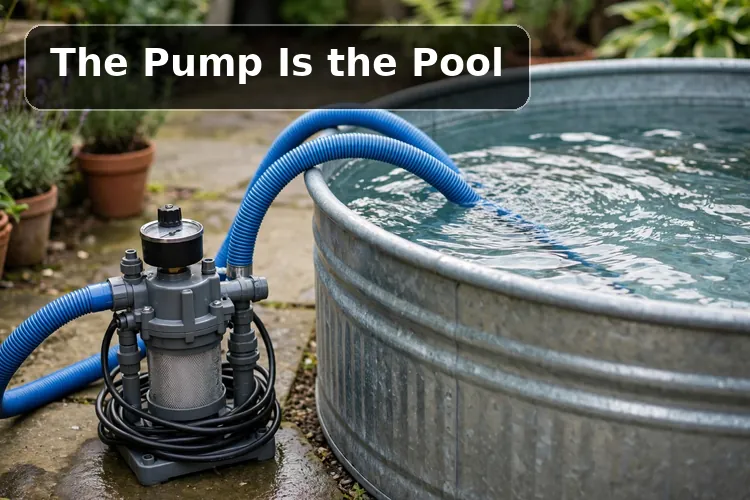
1. A 6-Foot Round Tank Fits Most Small Corners
A 6-foot round tank holds about 400 gallons, close to 1,500 litres, and it fits two or three people for a proper soak. It tucks into a corner and still leaves room for a lounger or two.
This is the size to buy if you are unsure. It is the cheapest tank, the easiest to heat, and the easiest to move if the spot turns out wrong.
2. An 8-Foot Tank for Families and Friends
An 8-foot tank holds about 720 gallons, close to 2,700 litres, and it seats four to six people without anyone touching knees. It is the family size, and the one to buy when the garden has the room.
The pad matters more at this size. A full 8-foot tank needs about a 10 by 10 foot pad of compacted gravel, and the water alone weighs close to 117 pounds per square foot. A soft lawn will not hold it level.
3. An Oval or Rectangular Tank for a Narrow Side Yard
A round tank wastes a narrow side yard. An oval tank, 2 by 4 feet at 100 gallons or 2 by 6 feet at 169 gallons, slides down the side of the house and turns dead space into a private splash zone.
Ovals suit one or two people, not a family. Buy the oval for a solo soak or a cold plunge, and buy the round tank when friends are coming over.
Filtration: The Difference Between a Pool and a Puddle
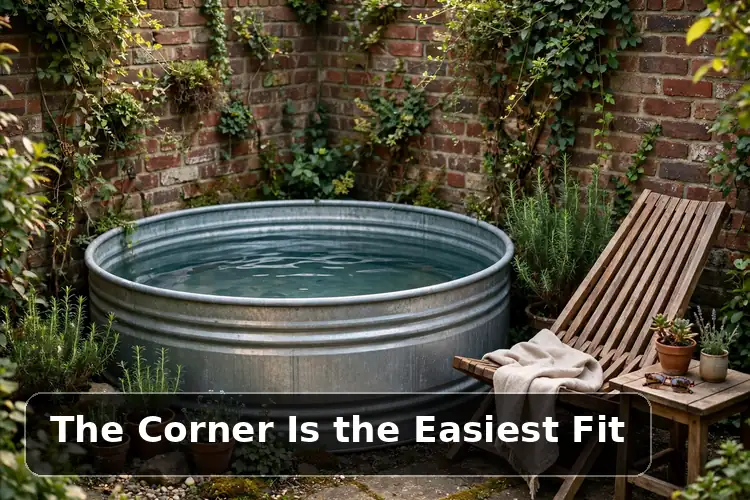
A stock tank without a pump is a bucket. The water goes green in days, and no amount of chlorine fixes water that never moves. Filtration is the part of the build to get right first.
4. A Cartridge Pump and Two Bulkhead Fittings
The standard setup is a cartridge filter pump, the kind sold for above-ground pools, connected through two bulkhead fittings drilled through the tank wall. One fitting takes water out low on the wall, the other returns it higher up.
Drill the holes with a hole saw, seat the gaskets inside the tank, and touch up any bare metal at the cut with cold-galvanising spray. Bestway cartridge pumps for a tank this size cost £37 to £50, and they move enough water for a 6-foot tank with ease.
Leak-test before you fill. Put four inches of water in, check every seam and fitting, and only then fill it to the top.
5. A Sand Filter With Saltwater for Low-Effort Water
A sand filter costs more upfront, £143 to £284 for an Intex unit, and it asks less of you afterwards. You backwash it instead of rinsing a cartridge, and the water stays clearer between cleans.
Add a saltwater system and the chlorine makes itself. The Intex saltwater and sand filter combination lists at £284, and it suits owners who want the water looked after with the least weekly work.
Whichever filter you pick, keep the chemistry simple. Hold the pH between 7.0 and 7.8 and the free chlorine at 1 ppm or more, and cover the tank when nobody is using it.
Decks, Paint and Cladding: Hiding the Trough
A bare tank looks like a farm trough. A deck, a coat of paint or a timber wrap is what turns it into a pool, and none of the three costs as much as the tank did.
6. A Wraparound Timber Deck With a Bench
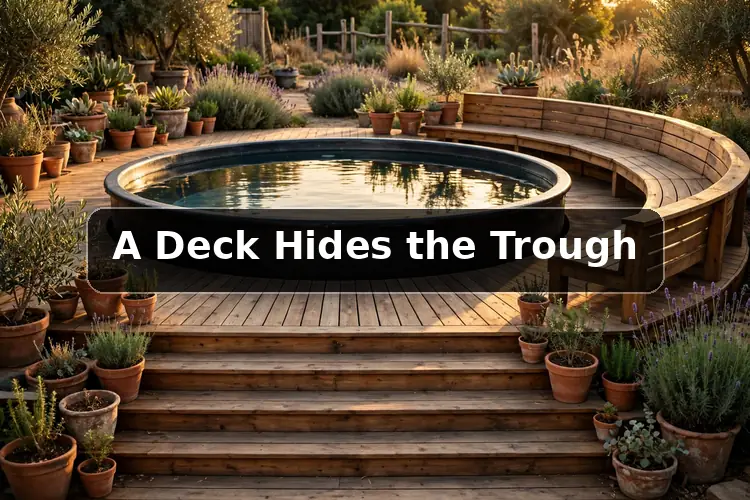
A low timber deck built around the tank does two jobs at once. It hides the steel, and it gives people somewhere to stand, sit and dry off. Add wide steps to the rim and a built-in bench, and the tank stops looking temporary.
Leave access panels in the deck for the plumbing. A pump you cannot reach is a pump you will not clean, and a filter you cannot reach is a filter that clogs.
7. Paint It Black or Clad It in Timber
Painting the outside black makes a tank look modern and sculptural, and it costs a tin of paint. Earth tones do the opposite job: terracotta, clay, sand or olive green settle the tank into the planting so it reads as part of the garden.
Galvanised steel needs paint that bonds to zinc, or it peels. A scratch through the zinc is a rust spot waiting to happen, so dab it with cold-galvanising spray, which is 93% zinc and dries in about half an hour.
Sunken, Shaded and Planted: Fitting the Tank Into the Garden
The tank itself is only half the job. Where it sits, and what sits around it, decides whether the garden gains a feature or loses a corner.
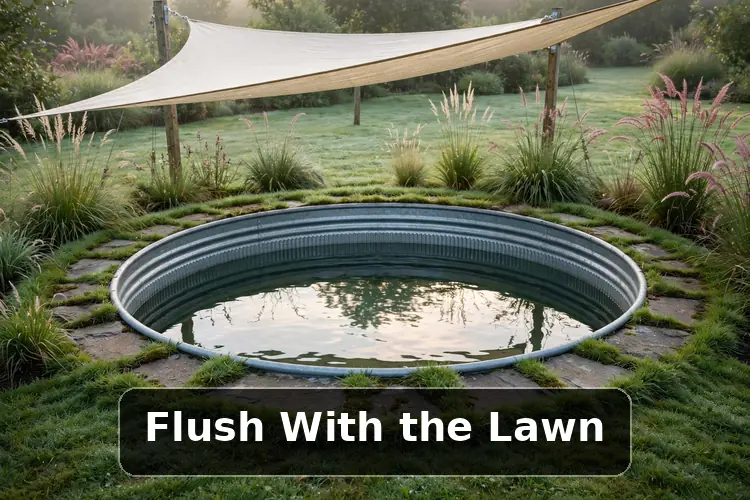
8. A Sunken Tank, Rim Flush With the Lawn
Digging the tank in so its rim sits flush with the lawn takes more labour than any above-ground setup, and it pays off in the same way. The pool looks designed into the landscape rather than dropped onto it.
A sunken tank with a permanent deck is a different job from a tank sitting on grass. Check with your council before you dig, and keep the rim high enough that rainwater runs away from the pool, not into it.
9. Shade, Planting and a Pergola
A shade sail or a simple pergola over part of the tank keeps the water cooler and the swimmers in the shade. Tall grasses, lavender and a privacy screen do the rest, and they hide the pump and the hoses too.
Keep the planting off the deck edge. Leaves in the water are the filter’s worst enemy, and a tree overhead means a skimmer net in your hand every morning.
Cold Plunge, Hot Tub and a Second Tank
These last three stock tank pool ideas stretch one tank into two jobs, and they are the reason a stock tank beats a fixed pool for a small garden. The tank is cheap enough to dedicate to one purpose.
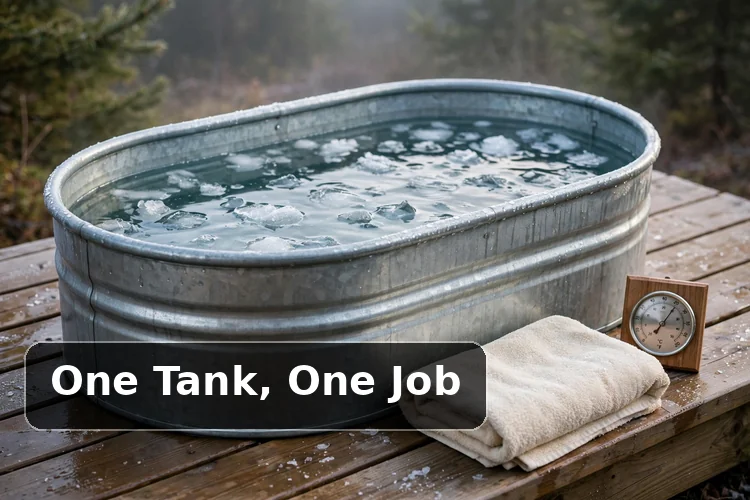
10. A Cold Plunge Tank for Recovery
A stock tank is close to ideal for a cold plunge: deep enough for a full-body soak, small enough that keeping the water cold does not need a huge chiller. An oval tank at 100 to 169 gallons is the usual pick.
Fill it with water and ice for the cheapest entry, or add a quarter to half horsepower chiller on a closed loop for cold water without the ice chore. Foam-board insulation around the tank cuts the chiller’s work by a quarter or more.
A fixed plunge pool does the same job in a permanent shell, at ten times the price. The stock tank version lets you try the habit first and commit later.
11. A Wood-Fired Hot Tub Version for Winter
The same tank with a heater becomes a hot tub, and a wood-fired heater suits a garden without a spare electric circuit. The water heats slowly, so light the fire an hour or two before you want to soak, and keep the cover on while it warms.
Check the heater is rated for the tank’s volume before you buy it. A heater made for a 100-gallon tub will not keep a 720-gallon tank warm, and an oversized heater wastes wood.
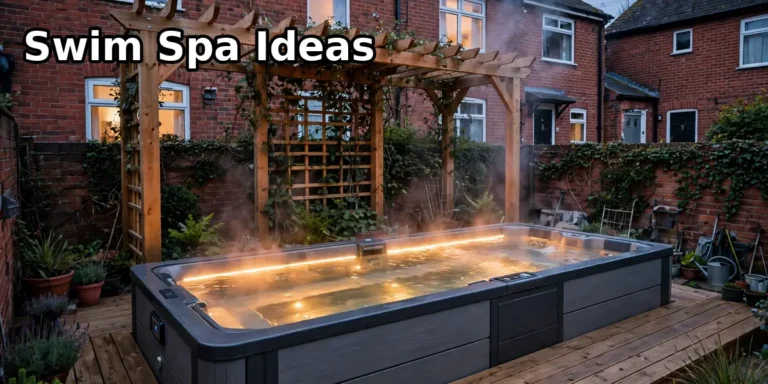
If you want heat and jets in one unit, a swim spa does the same two jobs without a separate heater. The stock tank version costs less and moves with you if you move house.
12. Two Tanks Joined: One to Swim, One to Soak
Two tanks side by side give you what one tank cannot: a cool tank for swimming and a warm tank for soaking. Connect them with a short deck between them, and the pair reads as one designed feature.
Keep the pumps separate. Two tanks on one pump means one tank’s chemistry is always wrong, and a shared pump is a single point of failure for both pools.
Questions Every Stock Tank Buyer Asks
How much does a stock tank pool cost in the UK?
A working setup starts at £447 to £660 for the tank and a cartridge pump, before any deck or cladding. A 6-foot galvanised tank lists at £410 to £610 in the UK, and a cartridge pump adds £37 to £50. The US comparison is $857 to $1,559 for an 8-foot DIY build, but those are American prices, not UK ones.
How long does a stock tank pool last?
There is no published lifespan figure for a stock tank pool, because it depends on the steel, the water care and the weather. The tank itself is the long-lived part. Keep the water balanced, touch up scratches with cold-galvanising spray, and the pump and the fittings will wear out long before the steel does.
Do you need planning permission for a stock tank pool?
A freestanding tank that you can drain and move is not a building, so it is not normally a planning matter. A sunken tank with a permanent deck around it is a different job, so check with your council before you dig.
Can you leave a stock tank pool out in winter?
You can, but standing water freezes, and ice can push the seams apart. Either drain the tank and store it under cover, or keep the pump running and the cover on so the water keeps moving. Never let a full tank freeze solid.
Is a stock tank pool safe for children?
Treat it as a real pool, because it is one. Never leave a child unsupervised near it, fit a barrier or a secure cover, and take the ladder away when the pool is not in use. Layers of protection, a fence, a cover and supervision together, are what keep a small pool safe.
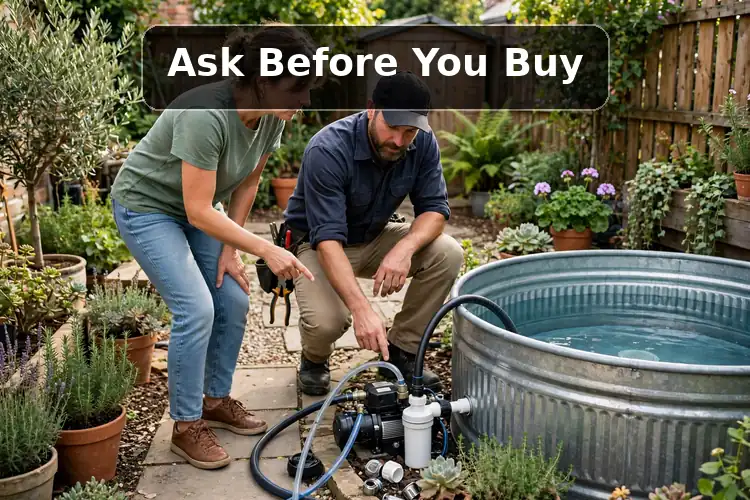
Ask two questions before you buy anything: what is the tank’s published size and volume, and where will the pump sit. The first tells you what you are buying. The second tells you whether the water will stay clean.
The best stock tank pool ideas end where they start: a tank, a pump and a level pad. Get those three right and the styling is the easy part.