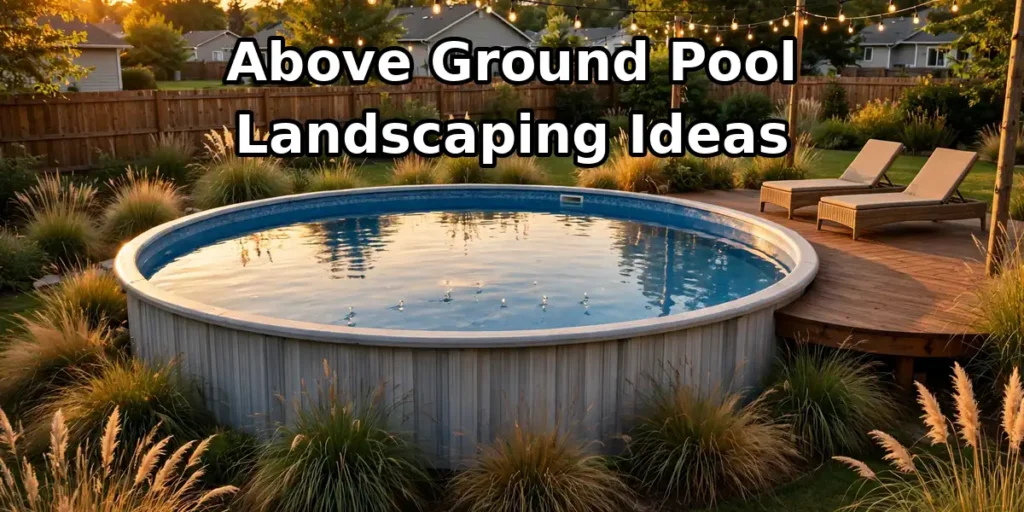
The short answer is yes. Above ground pool landscaping ideas work because the pool itself is rarely the problem. The bare steel wall is, and so is the ring of mud around the base. Fix those two things and the same pool reads as part of the yard, not something dropped on it.
I have put together 12 ideas that turn a kit pool into a place you actually want to spend evenings in, from a $150 entry platform to a $25,000 finished project. Every one comes with honest 2026 costs, the sizes that matter, and the mistakes that undo the whole job.
You will find more pool guides in our Pools category as this section grows.
One warning before the list. Landscaping is never a safety barrier, and no amount of planting changes that. A hedge does not keep a child out of the water, and a screen is not a fence.
Keep the ladder locked or removed when the pool is not in use, and check your local barrier rules before you build anything. The US Consumer Product Safety Commission’s Pool Safely guidance is the standard worth following.
Read the yard before you buy a single plant
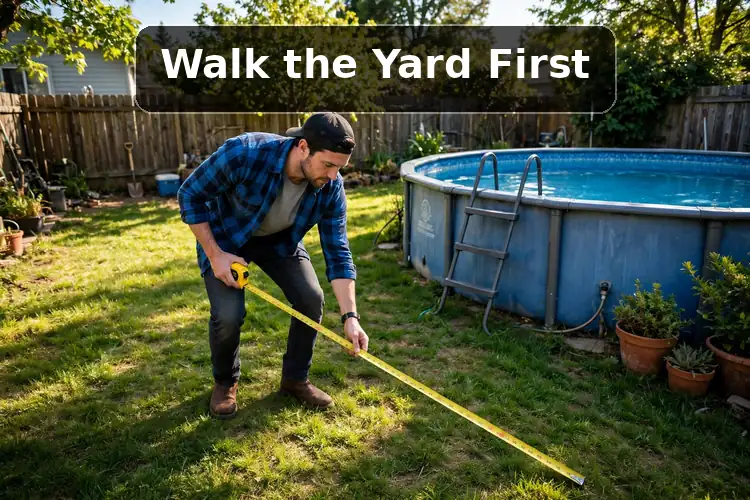
Most above ground pool landscaping ideas fail in the same place: the owner buys plants before checking where the pump sits, where the ladder lands, and where the water goes when it rains. Walk the yard at the hour you will use the pool. Note where people enter, where towels and chairs go, and where the pump and filter sit.
Do not pile soil, mulch, gravel or a retaining wall against the pool wall unless the pool maker says you can. The wall is a loaded structure, not a blank surface to bury.
Leave a clear working gap around the skimmer, pump, filter and hoses, and keep at least 3 feet clear around the pump and the ladder. A repair should never mean tearing the garden apart.
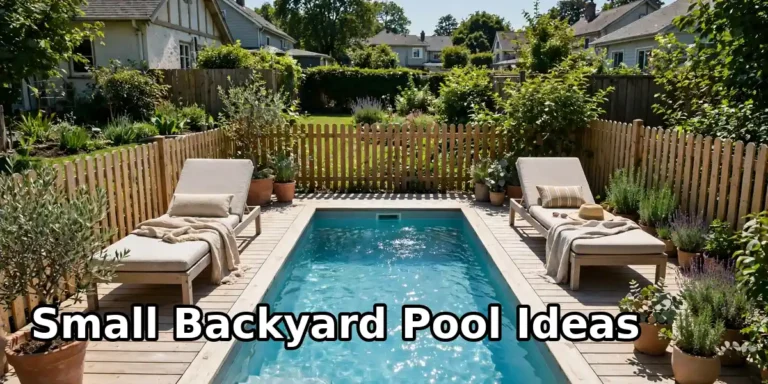
If you have not chosen the pool yet, our small backyard pool ideas will help you pick size and shape first, because the surround you build depends on the pool you own. A round pool wants a different deck from an oval one, and a pool with the pump on the wrong side will fight every plan you make.
Decks that make the pool look built in
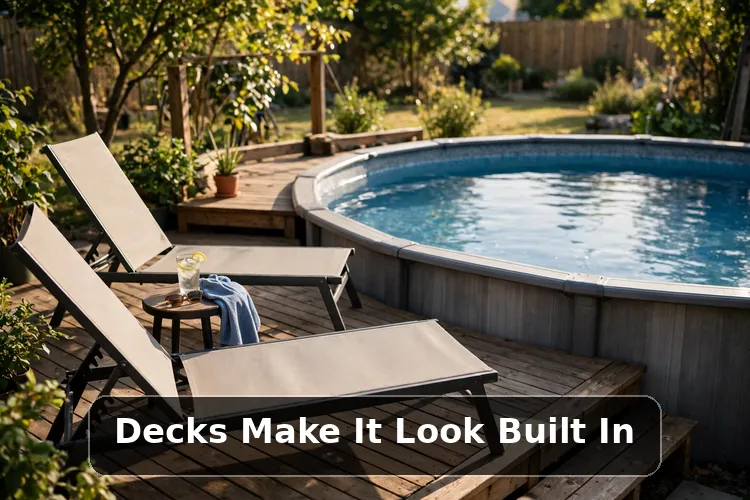
A deck is the single biggest upgrade you can make to a raised pool. It hides the wall, gives you somewhere dry to stand, and turns a kit into a place. Build the deck up to meet the pool, not around it, and keep it freestanding so the wall and the deck can move on their own.
1. A partial wraparound deck on the busy side
A full wraparound deck is a serious project and a serious cost, $2,000 to $6,000 and up if you hire it out. A partial deck covering just the entry side and one more section solves the two real problems: a place to sit, and a proper stepped entry.
Build it at the same height as the pool’s top rail. A deck below the rail leaves an awkward step up into the water, and one above it makes leaning over the edge a stretch.
2. A ground-level entry platform instead of a full deck
If a raised deck is more than the budget allows, a small ground-level platform does most of the same job for $150 to $400. It is really just a raised wooden or composite section leading up to the ladder, and it gives you a stable, dry entry point instead of mud.
Make it at least 8 by 10 feet if you can. Anything smaller leaves nowhere to set a towel down. Use pressure-treated pine if money is tight, or composite if you never want to stain it again.
3. A side deck sized for two loungers
Rather than decking the whole pool, a modest side deck sized for two loungers gives you a real spot to sit poolside. It matters most when the yard or the budget cannot support the bigger build. Eight to ten feet on one side is enough for two chairs and a small table, and that is where evenings actually happen.
The same trick works indoors, by the way. Our small living room ideas use one generous zone instead of thin margins everywhere, and a pool deck works the same way. Generous on one side beats a thin strip all the way around.
Ground cover that ends the mud
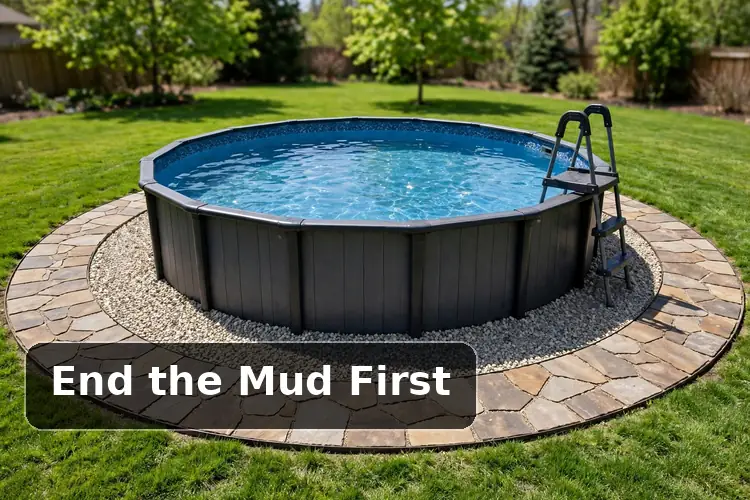
The ground around a pool takes more punishment than any other part of the yard. Wet feet, splashed water, and a hundred trips to the ladder wear grass down to bare dirt by July. A defined border fixes it, and it is the cheapest visible improvement on this whole list.
4. A gravel or paver ring around the base
A 12 to 24 inch ring of pea gravel or river rock around the base catches splashes, stops mud, and drains well. Lay landscape fabric underneath to block weeds, and slope the ring very slightly away from the pool so rainwater never sits against the wall.
A gravel or paver ring runs about $200 to $600 as a DIY job, and it is the fastest visible improvement for the money. Do not pile the gravel against the wall or the supports. Keep a clear gap, and use edging to stop stones migrating into the grass.
5. A rubber mulch ring for bare feet
Rubber mulch handles the same muddy-ground problem without the splinter risk of wood mulch or the heat of dark gravel under bare feet in strong sun. It holds up to repeated wetting better than most organic mulches, and it stays put where wood mulch would wash into the pool.
Keep it out of the walking route to the ladder, though, since it is softer underfoot than pavers. Use it where people stand and sit, not where they carry towels and floaties in wet feet.
6. A stepping-stone path from the house to the ladder
A short run of broad, stable pavers between the back door and the entry ladder stops the muddy line that foot traffic wears through the lawn. It is a weekend job at most, and it gives guests an obvious route to the water. Keep the stones level with no rocking corners.
Where the path meets the house, check the drainage. Rainwater running off the roof can dump beside the pool, and our guide to keeping gutters clear will help you stop that before it starts.
Planting that softens the wall
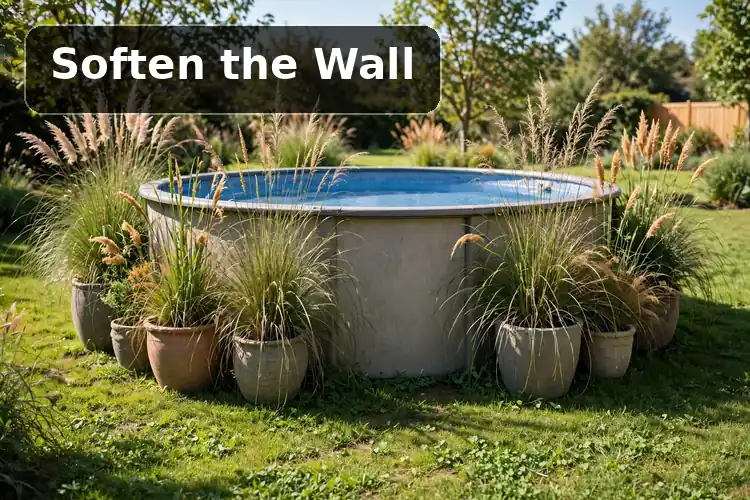
Plants do the heavy lifting around a raised pool. They soften the flat wall, hide the supports, and make the pool feel like it grew out of the garden. The rule is simple: choose plants that tolerate splash and sun, and never plant anything that drops a mess into the water.
7. Ornamental grasses in a loose ring
Feather reed grass, blue fescue and dwarf fountain grass give you height and movement without blocking views the way a shrub line would. They drop almost nothing into the water, and they look good from the first season. Plant them in drifts of three to five.
Leave an 18 inch service gap between the plants and the wall so you can still walk around and inspect it. A label’s small nursery size is not the plant’s eventual footprint, so check the mature width before you buy.
8. A crescent planting island on the far side
A curved bed opposite the entry softens the pool’s circular outline without enclosing it. Repeat two or three plants in groups rather than mixing a dozen single specimens, and stop the bed well short of the supports and the pump.
A crescent uses less material than a full ring and leaves an open side for maintenance, which is the part everyone forgets until the first repair. It also helps the pool feel anchored in the yard rather than dropped onto a blank lawn.
9. Large planters in pairs, not a dozen small pots
Two or three large, heavy planters near the deck give you height and colour without digging around the pool base. Grouping pots looks deliberate, while a dozen small ones scattered about reads as clutter. Use heavy, stable containers that will not tip in wind.
If you rent, or you might move the pool one day, planters are the honest choice, because they move with you. The same tight-space planting tricks work on a balcony, and our balcony garden ideas scale them down even further.
Privacy, light and shade
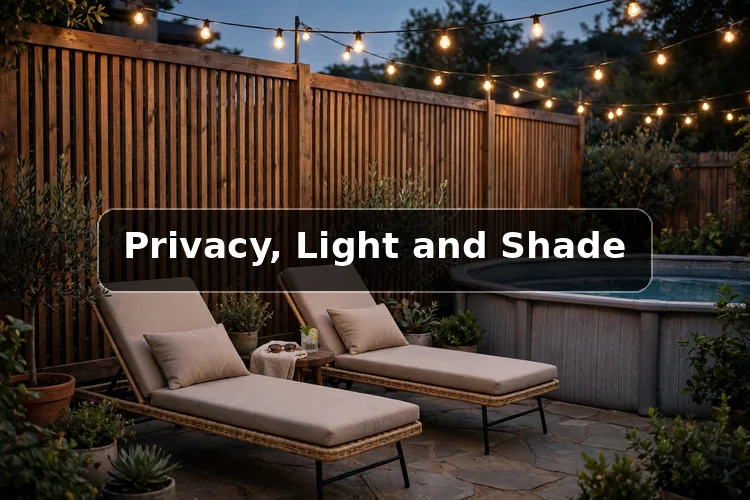
Once the deck and the planting are in, the last layer is the one you feel after dark. Privacy, light and shade decide whether the pool gets used at 8 in the evening or sits empty. All three are cheap compared with the deck, and all three are easy to get wrong, so take them one at a time.
10. A slatted screen behind the seating
A freestanding slatted screen behind the loungers blocks the neighbours’ view and turns the pool into an outdoor room. Paint it black or deep bronze for a modern look, and keep it at least 3 feet from the pool edge so circulation and maintenance stay easy.
A screen is not a pool barrier, and it must never hide the entry, the gate, or children from supervision. Anchor it properly, because a tall screen catches wind, and a fallen screen beside a pool is a hazard.
11. A trellis with a climbing vine
A simple wooden or metal trellis with a fast-climbing vine creates a green privacy wall that fills in over a season or two. Clematis and climbing hydrangea are the usual picks, depending on your zone. It costs far less than a solid fence panel for the same job, and it softens the whole corner.
Do not fix the trellis to the pool wall, and do not let it become a climbing step over a fence. Keep it where it screens the seating, not where it screens the ladder from the adults watching it.
12. Solar lights, string lights and a shade corner
Solar path lights around the base give you visibility for evening swims with no wiring at all. String lights along the top rail add the warm glow that makes the whole area feel like an outdoor room, and a shade sail or a small pergola over part of the deck solves the no-shade problem most raised pools have.
Keep the light on the walking surface, not in swimmers’ eyes, and anchor any sail so it drains instead of sagging. A cantilever umbrella needs about 8 to 10 feet of swing room, so measure before you buy.
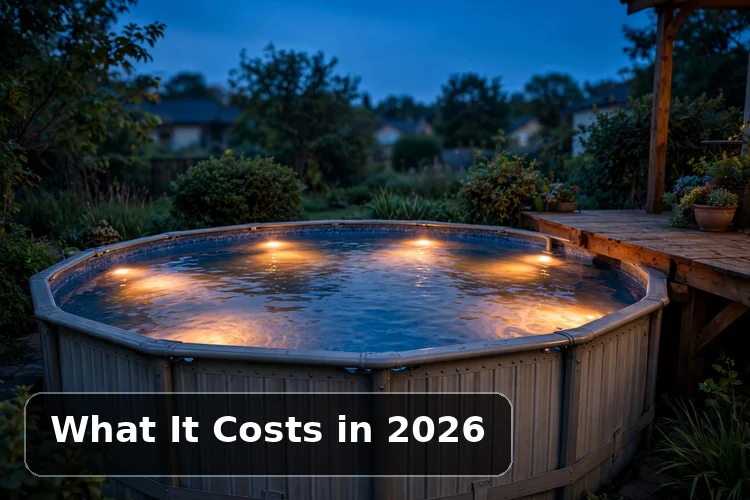
What Above Ground Pool Landscaping Ideas Cost in 2026
Before the table, one honest note: above ground pool landscaping ideas run from a $150 platform to a $25,000 finished project, and the gap is the whole story. The cheapest fix is a ring of gravel and a path.
The dearest is a full deck with lighting, planting and a pergola, built by someone else. Most people land in the middle, and that is where the value is.
| Fix | DIY cost, US 2026 | Difficulty | Best for |
|---|---|---|---|
| Ground-level entry platform | $150 to $400 | Beginner | Tight budgets, quick win |
| Gravel or paver ring | $200 to $600 | Beginner to moderate | Fastest visible improvement |
| Partial deck, entry plus one side | $700 to $2,000 | Moderate | Most backyards |
| Full wraparound deck | $2,000 to $6,000+ | Advanced, multi-weekend | Long-term fixture |
| Finished deck and landscaping project | $6,000 to $25,000 | Hired out | Resort look, no DIY |
Three things move the price more than the fix itself. Access comes first: a deck on a slope costs more than the same deck on flat ground. Materials come second: composite costs more upfront than pressure-treated pine and less over five years. And the extras come third: a fence, a cover and lighting sit on top of every range above.
Running costs are where a raised pool quietly wins. A smaller pool holds less water, so chemicals, heating and filling all cost less than a full-size pool. A variable-speed pump costs more upfront and less to run, and it is the standard recommendation for small pools because the flow demand is low.
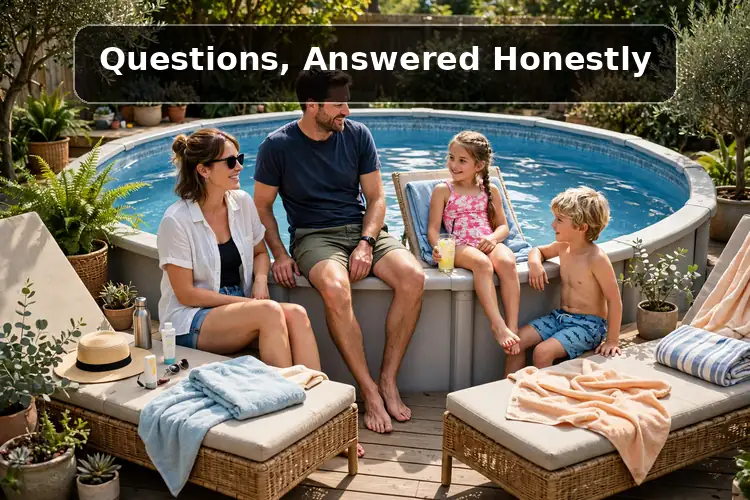
Above-ground pool questions, answered honestly
These are the questions I hear most, with the short answers I give friends before they spend anything.
What is the cheapest way to landscape around an above-ground pool?
Mulch, pea gravel, concrete pavers, solar lights and potted plants, in that order. A mulch ring and a few sturdy pots can be done in a weekend for very little money, and you can add the deck later when the budget allows. Start with the ground cover and the path. Those two things make the pool look planned.
Can I plant directly against an above-ground pool?
No, and this is the mistake I see most. Plants need room to mature and be pruned, and their roots and irrigation can affect the paving and soil beside the pool. Use a separate bed with a service gap of at least 18 inches, and pick compact plants by their mature size, not the nursery label size.
Is gravel or mulch better around an above-ground pool?
Gravel is durable and drains well, but loose stones can migrate into the lawn and feel uncomfortable on a walking route. Mulch is softer and easier to refresh, but it can wash or blow into the pool. Either one needs edging, and both should stay clear of the pool wall, the supports and the equipment.
Do shrubs or landscaping count as a pool safety barrier?
No. Plants and decorative screens should never be treated as a safety barrier. Check your local rules for fences, gates, alarms and ladders, and keep the entry visible and easy to reach. The Pool Safely campaign recommends barriers and safety devices as part of a layered approach, along with active adult supervision.
How much space do I need to leave around the pool?
Leave 3 to 4 feet of clearance all the way around the pool perimeter. That space is for maintenance, cleaning and eventual repairs, and it is also the gap that keeps plants, mulch and gravel off the wall. Around the pump and the ladder, 3 feet clear is the minimum, and more is better if you can spare it.
The pick I would make for a small yard
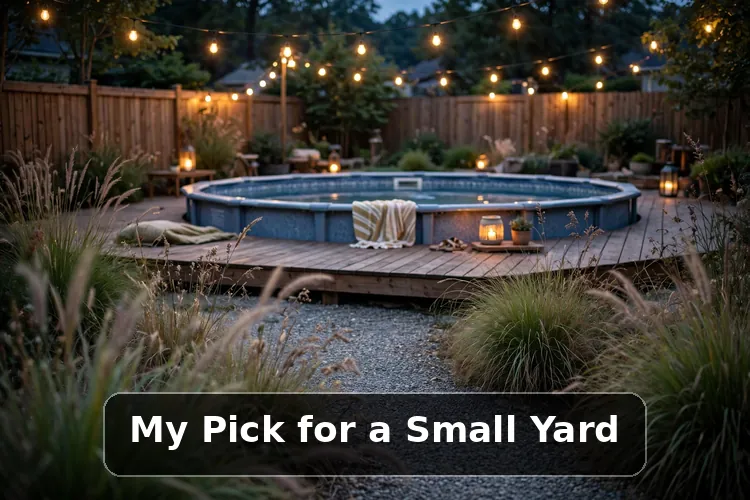
Of all the above ground pool landscaping ideas here, the one I would do first costs the least: a gravel ring, a stepping-stone path, and three ornamental grasses in a loose drift. That is a weekend and a few hundred dollars, and it turns a kit pool into something that looks planned.
Then add the partial deck when the budget allows, because the deck is what makes evenings by the water actually happen.
If the budget stretches further, build the deck before you buy the plants. A deck you can sit on beats a garden you can only look at, every single time. And if privacy is the problem that bothers you most, start with the screen, because a pool you feel watched in is a pool you will not use.
For planting around whichever fix you choose, our brilliant small garden design ideas and the Gardening category will help you finish the space. Start with the ground, add one thing at a time, and let the pool earn its keep one summer at a time.