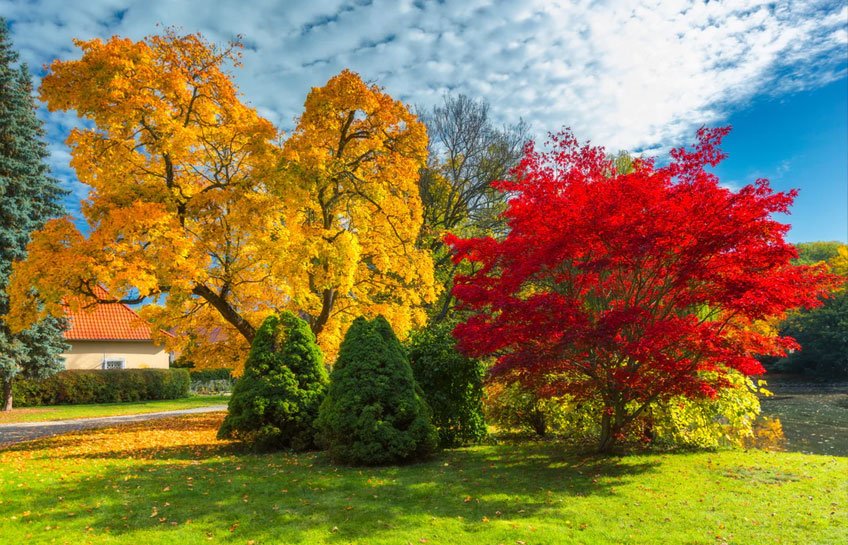
Autumn trees with red leaves are one of nature’s most stunning seasonal shows. Every fall, certain trees transform their green canopies into vivid shades of crimson, scarlet, and burgundy. This dramatic color change draws millions of visitors to parks and forests each year. The display is caused by a natural process happening inside the leaf itself.
When days grow shorter and temperatures drop, trees stop producing chlorophyll, the green pigment that powers photosynthesis. As chlorophyll fades, a red pigment called anthocyanin takes center stage. Some trees produce anthocyanin only in autumn, while others carry it year-round. The result is a breathtaking palette that makes fall one of the most beloved seasons on earth.
Key Features of Autumn Trees with Red Leaves
Before diving into specific species, here are the defining traits of the best red-leaved fall trees:
- Vivid color that peaks between late September and early November
- Leaves that shift from green to scarlet, crimson, or burgundy as temperatures cool
- Anthocyanin pigments that protect leaves while nutrients are reabsorbed
- Species that thrive across hardiness zones 3 through 9
- Trees that offer year-round visual interest beyond just fall foliage
- Varieties suited for home gardens, parks, and large open landscapes
- Leaf color intensity that varies based on sunlight, soil, and temperature
Why Do Leaves Turn Red in Autumn?
The science behind red fall foliage is truly fascinating. As leaves begin to die or senesce in autumn, red pigments called anthocyanins are formed when sugars combine with compounds called anthocyanidins. This is different from yellow and orange leaves, which simply reveal pigments that were already present.
Lots of sunlight and dry weather increase the sugar concentration in tree sap, triggering the tree to release more anthocyanins as it gathers energy for winter. This explains why some years produce more spectacular displays than others. Cool nights paired with warm, sunny days set the stage for the deepest, richest reds you will ever see.
“Autumn is a second spring when every leaf is a flower.” – Albert Camus
Fall is one of the most beautiful and colorful seasons. It is a time for leaf maturity, but the death of the foliage is presaged by a gloriously painted landscape for several months. The red color also serves a practical purpose. Scientists believe anthocyanins act as a kind of sunscreen for leaves, protecting cells while the tree reclaims valuable nutrients before the leaf falls.
The Most Stunning Autumn Trees with Red Leaves
Nature offers a wide variety of trees that put on a red fall show. Here are the top performers that gardeners, landscapers, and nature lovers most admire:
1. Red Maple (Acer rubrum) The red maple is one of the best named of all trees, featuring something red in each of the seasons: buds in winter, flowers in spring, leafstalks in summer, and brilliant foliage in autumn. It thrives across a wide range of soil types and climates. The cultivars ‘October Glory’ and ‘Autumn Blaze’ are especially prized for their deep, consistent red fall color.
2. Black Tupelo / Black Gum (Nyssa sylvatica) Called “one of the best and most consistent native trees for fall color” by tree expert Michael Dirr, the black tupelo displays various hues of yellow, orange, bright red, and purple, often on the same branch. It often begins changing color earlier than most other trees, extending the autumn viewing season.
3. Scarlet Oak (Quercus coccinea) This native oak delivers some of the most electric red foliage of any tree in the forest. The scarlet oak goes bright red in late fall and then retains its dried brown leaves for a long period into the winter, creating a rustling sound in the wind that can be very enchanting.
4. Sourwood (Oxydendrum arboreum) The sourwood shines in the summer and fall. Its midsummer flowers appear like lilies-of-the-valley, and then in the fall, leaves turn intensely beautiful shades of brilliant crimson and purplish-red. Honey produced from sourwood flowers is considered exceptional by many enthusiasts.
5. Japanese Maple (Acer palmatum) Japanese maples are celebrated worldwide for their delicate, lace-like foliage. The ‘Bloodgood’ cultivar stays blood-red throughout the growing season and turns crimson-red in autumn, growing slowly to about 20 feet tall and forming a wide canopy.
6. Flowering Dogwood (Cornus florida) Dogwoods are famous for spring blossoms, but their fall performance rivals any tree in the landscape. The flowering dogwood’s leaves become a deep red in autumn, occasionally venturing into maroon or purple territory.
7. Staghorn Sumac (Rhus typhina) Staghorn sumacs, along with their close cousins the smooth and winged sumacs, bear very attractive red leaves in the fall. The winged sumac is occasionally called the flameleaf sumac in reference to its incredible fall color.
Autumn Red Tree Comparison Table
| Tree Name | Hardiness Zone | Height | Peak Color | Best Feature |
|---|---|---|---|---|
| Red Maple | 3-9 | 40-70 ft | Mid-October | Consistent, vivid red |
| Black Tupelo | 4-9 | 30-50 ft | Late September | Multi-color on one branch |
| Scarlet Oak | 4-9 | 50-75 ft | Late October | Electric crimson |
| Sourwood | 5-9 | 20-30 ft | September | Crimson with purple hints |
| Japanese Maple | 5-8 | 15-25 ft | October | Lacy texture, deep red |
| Flowering Dogwood | 5-9 | 15-30 ft | October | Deep red-maroon leaves |
| Staghorn Sumac | 3-8 | 15-25 ft | September | Flame-like leaf clusters |
How Weather and Soil Affect Red Fall Color
Not every autumn delivers the same level of red brilliance. The conditions leading up to fall play a huge role in how vivid the display becomes.
Sunlight is important: the gentle rays encourage the reddening of leaves in the autumn months, so a plant in full sun or partial shade will have a much more impressive red display than one in full shade. The soil pH also matters greatly. Trees growing in the correct pH range tend to produce much more saturated, deeper red tones than those in poorly matched soils.
You should ease off on fertilizing and watering your trees as autumn sets in, because over-feeding them will interrupt the colorful display. Many gardeners make this mistake thinking they are helping the tree. In reality, cutting back on nutrients lets the tree begin its natural shutdown process, which is what triggers the best color.
“The trees are about to show us how lovely it is to let dead things go.” – Unknown
Best Autumn Red Trees for Home Gardens
Not everyone has space for a towering scarlet oak or black tupelo. Many homeowners need smaller trees that still pack a stunning fall punch. The good news is that several compact species deliver incredible autumn color in tighter spaces.
The Japanese maple remains the top choice for garden settings worldwide. The ‘Atropurpureum’ cultivar stays around 25 feet tall when mature, with purple leaves that turn brilliant scarlet-red in the fall when temperatures cool and days shorten. It works beautifully as a focal point in garden beds or near patios.
The flowering dogwood is another excellent small-garden option. Small to medium-sized, dogwood trees are perfect for adding color to a smaller yard, and their fall color is just as impressive as their spring blooms. The redbud tree also earns a spot in this category. Its heart-shaped leaves turn a rich mix of red, yellow, and purple, making it one of the most colorful small trees available anywhere.
Tips for Growing Trees with the Best Red Fall Color
Growing a tree for maximum fall color takes a little planning, but the results are absolutely worth the effort. Follow these steps to set your trees up for success:
- Choose a planting location that receives at least six hours of direct sunlight each day.
- Test your soil pH before planting and adjust it to match each species’ requirements.
- Dig your planting hole two to three times wider than the root ball for good root spread.
- Water deeply and consistently throughout the first two growing seasons after planting.
- Apply a layer of mulch around the base to retain moisture and regulate soil temperature.
- Reduce watering and stop fertilizing about six weeks before fall typically arrives.
- Prune lightly in late winter to maintain shape and encourage healthy new growth each spring.
“In every walk with nature, one receives far more than he seeks.” – John Muir
Where Autumn Trees with Red Leaves Thrive Most
The northeastern United States is world-famous for its fall foliage displays. States like Vermont, New Hampshire, and New York draw millions of visitors every year. In the northeastern United States, millions of leaf peepers come from all over the world to observe nature’s fine art gallery each autumn.
However, red autumn foliage is not limited to New England. The red maple is native to eastern and central North America, ranging from wet swamps to dry mountainsides, and is found from Florida to Maine. This adaptability makes it one of the most widely planted landscape trees on the continent.
Sumacs, sugar maples, and red oaks produce large amounts of anthocyanins, creating vibrant red leaves in the fall. These species are found across a vast range of North America, Europe, and parts of Asia, meaning that stunning autumn red foliage is accessible to gardeners and nature lovers across much of the world.
The Cultural and Emotional Appeal of Red Fall Foliage
Red autumn leaves carry deep cultural meaning across many societies. In Japan, the practice of viewing autumn leaves is called “momijigari,” which translates roughly as hunting for red maple leaves. Families and friends gather in parks and forests every October to celebrate the season’s brief but vivid beauty.
In North America, fall foliage tourism generates billions of dollars each year. State parks, scenic highways, and botanical gardens plan calendars around peak color windows. Photographers, painters, and poets have drawn inspiration from autumn trees with red leaves for centuries.
The emotional response people have to red fall foliage is not just sentimental. Research in environmental psychology suggests that spending time among autumn trees reduces stress and improves mood. The warm red and orange tones of fall foliage create a sense of comfort and belonging that few other natural scenes can match.
Conclusion: Embrace the Red Season
Autumn trees with red leaves offer something truly extraordinary. They remind us that even endings can be breathtakingly beautiful. Whether you are planting a red maple in your backyard, taking a fall hike through a forest of scarlet oaks, or simply watching the colors shift outside your window, the red season is one of life’s great privileges.
Understanding why leaves turn red, which species perform best, and how to encourage the deepest color gives you the power to make every autumn more vivid than the last. Plant one of these remarkable trees today, and within just a few seasons you will have your own private display of crimson and scarlet to look forward to every fall. Do not wait. The best time to plant a tree was twenty years ago. The second best time is right now.
Frequently Asked Questions
Q1: What is the most common tree with red leaves in autumn?
The red maple is the most widely recognized tree for red fall foliage across North America. It produces vivid red leaves reliably each autumn and adapts to a broad range of soil and climate conditions. The cultivars ‘October Glory’ and ‘Autumn Blaze’ are especially popular among homeowners and landscapers.
Q2: How long does red fall foliage typically last on a tree?
Most trees hold their peak red color for about two to three weeks before leaves begin to drop. The exact window depends on the species, local weather, and elevation. Black tupelo tends to start changing color earlier than most trees and maintains its display longer than average.
Q3: Do all red-leafed autumn trees need full sun to show good color?
Most trees produce their deepest, most saturated red foliage in full sun or partial shade. Trees planted in full shade tend to produce duller, less vivid colors in the fall. Ensuring at least six hours of daily sunlight is one of the simplest ways to guarantee a strong color display each year.
Q4: Can I grow autumn red trees in a small yard or urban garden?
Yes, several species are well-suited to smaller spaces. Japanese maples, flowering dogwoods, sourwoods, and redbud trees all stay compact while still delivering spectacular red fall color. These trees work well as standalone focal points or mixed into layered garden beds.
Q5: Why do some years have much better red fall color than others?
Weather plays the biggest role in year-to-year variation. Warm, sunny days combined with cool nights in early fall produce the most vivid red foliage. Rainy, overcast conditions or an early frost can significantly reduce both the intensity and the duration of the color display.
Q6: Are autumn red leaves safe for pets and children to handle?
Most common red-leaved trees like red maples, dogwoods, and sourwoods are not toxic when leaves are touched or handled. However, some species like burning bush and certain ornamental sumacs can cause skin irritation in sensitive individuals. Always check the specific species if you have concerns about children or pets.
Q7: When is the best time to plant a tree for fall color?
Early spring is generally the best time to plant most ornamental trees because it gives the root system an entire growing season to establish before winter. Fall planting is also possible in many climates, as long as the tree is in the ground at least six weeks before the first hard freeze arrives in your area.