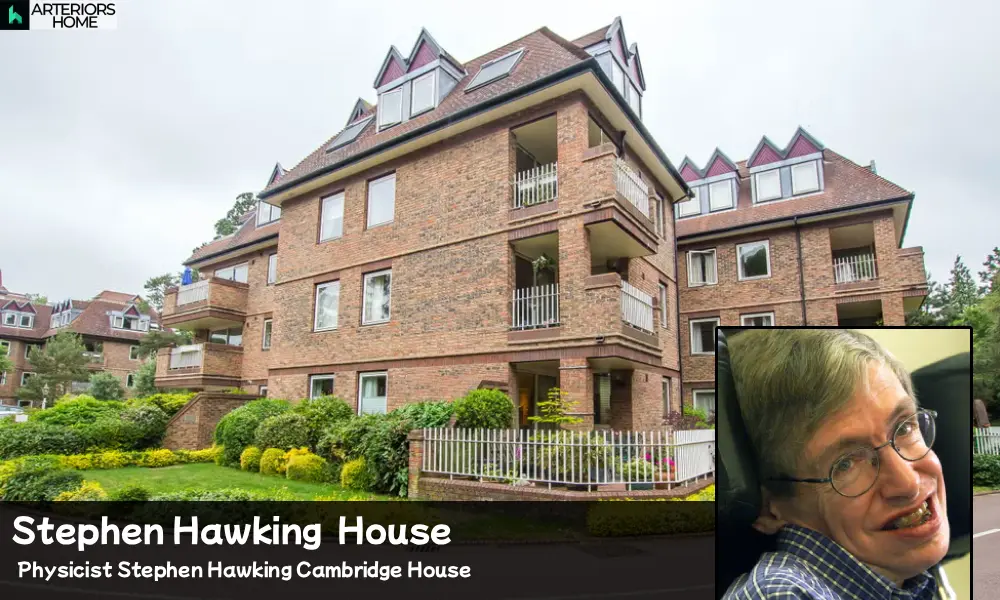
When people think of Stephen Hawking, they picture equations, black holes, and a legendary voice synthesizer — but few consider the quiet Cambridge streets where the world’s most famous theoretical physicist actually lived, worked, and raised a family. The story of the Stephen Hawking house is not a single address but a journey across several properties in Cambridge, England, each one reflecting a different chapter of his remarkable life.
From a cozy Victorian cottage on Little St Mary’s Lane to the famous chalet-style villa on West Road — where he penned A Brief History of Time — Hawking’s homes were carefully chosen to balance his academic life at the University of Cambridge with the evolving demands of his progressive ALS diagnosis. Today, one of those sites has been transformed into the Stephen Hawking Building at Gonville and Caius College, ensuring that his name remains permanently etched into the very landscape of Cambridge.
Who Was Stephen Hawking?
Hawking made much of his fortune after publishing A Brief History of Time in 1988, a book that has since sold more than 10 million copies and been translated into 40 languages. Beyond his writing, he also earned money through product endorsements and was awarded the Special Breakthrough Prize in Fundamental Physics, which came with a $3 million award.
| Attribute | Detail |
|---|---|
| Full Name | Stephen William Hawking |
| Date of Birth | 8 January 1942 |
| Place of Birth | Oxford, England |
| Date of Death | 14 March 2018 |
| Age at Death | 76 |
| Nationality | British |
| Profession | Theoretical physicist, cosmologist, author |
| University Affiliation | Gonville and Caius College, University of Cambridge |
| Academic Title | Lucasian Professor of Mathematics (1979–2009) |
| Diagnosis | Amyotrophic lateral sclerosis (ALS / motor neurone disease), diagnosed 1963 |
| Major Works | A Brief History of Time (1988), The Universe in a Nutshell (2001), The Grand Design (2010) |
| Notable Theories | Hawking radiation, black hole thermodynamics, singularity theorems |
| Awards | Presidential Medal of Freedom, Special Breakthrough Prize in Fundamental Physics ($3 million), CBE |
| Estimated Net Worth at Death | ~$20 million |
| Children | Three — Robert, Lucy, and Timothy Hawking |
The Cambridge Homes: An Overview
Stephen Hawking did not live in one grand estate. His property choices were driven by practicality, proximity to the university, and his worsening physical condition. Unlike celebrities who collect houses like trophies, Hawking’s home choices focused entirely on practical needs — they were not investment properties or status symbols, but thoughtfully chosen homes that enabled his scientific work while accommodating his progressive ALS symptoms.
Here is a summary of all known Hawking residences in Cambridge:
| Property | Location | Period | Type | Notable Feature |
|---|---|---|---|---|
| 6 Little St Mary’s Lane | Cambridge city center, CB2 1RR | Early 1970s–1975 | Victorian cottage | First family home with Jane |
| 5 West Road (No. 5) | Newnham, Cambridge | 1975–1990s | Victorian villa | Where A Brief History of Time was written |
| Oast House, Pinehurst South | Near Cambridge city center | 1990–1994 | Ground-floor flat | 3-bed flat; listed at £665,000 in 2018 |
| Chalet-style house, Newnham | Newnham area, Cambridge | Later years | Single-family home | Valued at approx. $3.6 million |
6 Little St Mary’s Lane — The First Family Home
The former home of Stephen Hawking which he lived in during the early 1970s with wife Jane Hawking and their children was located at 6 Little St Mary’s Lane, Cambridge CB2 1RR. Little St Mary’s Lane is known for its charming streetscape, adding to its appeal as a desirable location, and during the 1970s, Stephen Hawking and his family lived in a house on this quaint street.
This was where the young couple set up their first proper Cambridge household. The property is a classic Victorian cottage — compact, full of character, and ideally placed within walking distance of Hawking’s academic duties at Gonville and Caius College.
They moved from this home in 1975 when their family had both outgrown the property and it was becoming too difficult to manage alongside Hawking’s amyotrophic lateral sclerosis.
Key features of the Little St Mary’s Lane cottage:
- Two-storey Victorian terraced cottage
- Located in Cambridge’s historic city center
- Within a short distance of the River Cam and the university
- Charming period streetscape, making it one of Cambridge’s most picturesque lanes
- Now privately owned but frequently included on Cambridge heritage walks
5 West Road — The Iconic Family Villa
This is the address most closely associated with Stephen Hawking’s domestic and intellectual life. By 1975, with their young family growing and Professor Hawking’s condition worsening, they moved to Number 5 West Road.
Professor Hawking lived in a Victorian villa on this site for a number of years, where he raised his family and wrote his famed bestseller A Brief History of Time. The villa was built in 1875, making it a quintessential example of late-Victorian residential architecture in Cambridge.
Architectural and Interior Details
The property was a multi-storey Victorian villa with the hallmarks of its era:
- Façade: Brick exterior with sash windows, bay windows, and decorative eaves
- Ground floor: Front sitting room, rear dining room/study, kitchen, and accessible cloakroom
- Upper floors: Three to four bedrooms, including a main bedroom and children’s rooms
- Garden: A private rear garden with mature trees and shrubs typical of Cambridge properties
- Accessibility modifications: Ramps, wider doorways, and modified entrance areas were installed over time to accommodate Hawking’s wheelchair
Repair work on Hawking’s Victorian villa included roof and brickwork repairs, various internal alterations including new bathrooms, and extensive repairs to the ornate timber and glass entrance porch and entrance screen, which had been adapted to install an accessible downstairs cloakroom.
The Stephen Hawking Building — What Stands There Now
Professor Hawking gave his early support to the redevelopment project by symbolically cutting the first sod in February 2005, and the building was well and truly underway shortly after.
The building was designed by Mark Wilkinson and officially opened by HRH Prince Philip in April 2007. The 75 bedrooms are split over three floors and include single, twin, and double-occupancy rooms.
The new accommodation block replaced the Victorian villa and is slightly S-shaped because some of the trees on the site, including a Redwood (Sequoia), have preservation orders on them. The City Council insisted these mature trees be preserved — so the building literally bends around them, an architectural quirk that gives it a distinctive silhouette on West Road.
Oast House, Pinehurst South — The Accessible Flat
After his years at West Road, Hawking moved to a modern ground-floor flat within the Oast House development at Pinehurst South, located near Cambridge city center. He lived in the ground-floor, three-bedroom flat within Oast House, Pinehurst South, near Cambridge city centre, between 1990 and 1994.
The property offered features that better suited his needs at that stage:
- Ground-floor access, eliminating the need for stairs or lifts
- Private terrace with wrought-iron railings — rare in central Cambridge
- Off-street parking, accommodating his adapted vehicle
- Modern 1990s construction, with wider doorways and contemporary finishes compared to Victorian-era homes
- Three bedrooms, providing enough space for personal care staff and family visits
This flat was listed on the market at over £665,000, reflecting the premium that Cambridge’s central locations command, particularly properties with accessible ground-floor layouts and private outdoor space.
The Chalet-Style House in Newnham
Hawking and his wife moved to this $3.6 million chalet-style home, which was featured in the biographical movie The Theory of Everything. It was here the couple raised their family until his condition worsened and they moved to a smaller flat.
This property, situated in the prestigious Newnham area of Cambridge, represents the most valuable single asset in his residential portfolio. It was a comfortable, modern home designed for family life and later adapted for his accessibility needs. The Newnham neighborhood is one of Cambridge’s most desirable residential areas — quiet, leafy, and surrounded by academic and cultural institutions.
Property Value History
Stephen Hawking’s Cambridge homes have followed the same upward trajectory as the city’s broader real estate market, which has appreciated significantly over the past five decades due to consistent demand from university staff, academics, and professionals.
| Year | Property | Event / Value | Notes |
|---|---|---|---|
| 1970s | 6 Little St Mary’s Lane cottage | Unknown original price | First family home |
| 1975 | 5 West Road Victorian villa | Unknown purchase price | Main family residence |
| 1990 | Oast House flat, Pinehurst South | Unknown original price | Modern ground-floor flat |
| 2018 | Oast House flat | Listed at £665,000 | Post-Hawking estate sale |
| 2019 | 5 West Road site | Site value as redeveloped land | Now the Stephen Hawking Building |
| Later years | Chalet-style house, Newnham | ~$3.6 million valuation | Featured in The Theory of Everything |
Why Cambridge? The Academic Connection
Hawking’s decision to remain in Cambridge throughout his life was not accidental. The location was perfect for a young academic family — nestled in Cambridge’s historic city center, just steps from the university, with proximity to both academic and transportation hubs making it an ideal base for Hawking’s career.
The Newnham and West Road areas in particular offer:
- Immediate proximity to Gonville and Caius College and the Department of Applied Mathematics and Theoretical Physics
- Quiet residential streets that allow for the kind of focused intellectual environment a working physicist requires
- Green spaces and mature gardens that provide relief from the intensity of academic life
- Strong heritage character through Victorian architecture that has shaped Cambridge’s residential identity
- Accessibility to the city center, river, and mainline railway station connecting to London
Accessibility Renovations and Adaptations
One of the most significant aspects of Hawking’s residential history is how each home was modified to support his independence as his ALS progressed. His homes were not luxury showpieces — they were working environments adapted for a man determined to keep living and working at the highest level despite profound physical limitations.
Key adaptations across his Cambridge residences included:
- Ramps and graded entrances replacing steps at doorways
- Wider doorframes to allow wheelchair access throughout the property
- Adapted cloakroom facilities on the ground floor, avoiding the need to use upper-floor bathrooms
- Stairlift or lift installations in multi-storey properties
- Modified kitchen layouts for assisted daily living
- Ground-floor bedroom arrangements in later years to minimize vertical movement
- Accessible terrace and garden paths at the Oast House flat
These modifications, particularly the Victorian villa renovations, were carefully carried out to preserve the heritage character of the original building while meeting modern accessibility standards.
The Living Legacy: Stephen Hawking Building
The most tangible reminder of Hawking’s residential connection to Cambridge is the building that bears his name. It is decidedly apt that the beautiful new building at 5 West Road should be named after the College’s most celebrated Fellow, Professor Stephen Hawking, who lived in a Victorian villa on the same site for a number of years, raising his family and writing his famed bestseller A Brief History of Time.
Named after the College’s most celebrated Fellow of modern times, the building offers 75 bedrooms split over three floors, with garden views overlooking the adjacent Sidgwick Site, West Road Concert Hall, and the nearby Cambridge University Library.
The building itself was funded by nearly 2,000 Caians, parents, and friends of the College, who gave more than £10 million to the project. It stands as both a practical student accommodation facility and a permanent public memorial to one of the greatest scientific minds of the 20th century.
Frequently Asked Questions
Where did Stephen Hawking live in Cambridge?
Hawking lived at 6 Little St Mary’s Lane, then at 5 West Road (a Victorian villa), then at a ground-floor flat in Oast House, Pinehurst South, and later in a chalet-style house in the Newnham area.
What is the Stephen Hawking House?
It is a modern student-accommodation facility at Gonville and Caius College, built on the site of Hawking’s former West Road villa. It was opened by HRH Prince Philip in April 2007 and contains 75 bedrooms across three floors.
How much was Stephen Hawking’s Cambridge flat sold for?
The Oast House flat at Pinehurst South was listed on the market at £665,000 in 2018.
Did Stephen Hawking write A Brief History of Time at home?
Yes. He wrote the book at his Victorian villa on West Road, Cambridge, where he lived with his family from 1975 onward.
Can you visit Stephen Hawking’s house?
The former West Road villa no longer exists. The Stephen Hawking Building now occupies the site and is part of Gonville and Caius College. The exterior of 6 Little St Mary’s Lane can be viewed from the street and is included in some Cambridge heritage tours.
Conclusion
The story of the Stephen Hawking house in Cambridge is far more than a real estate narrative. It is the story of a man who defied every expectation placed on him — by his illness, by his era, and by the limits of human knowledge — and who did much of his most important thinking in a series of quiet Cambridge streets.
From the charming Victorian cottage on Little St Mary’s Lane, where a young physicist and his wife began their life together, to the famous West Road villa where A Brief History of Time took shape, and finally to the modern accessible flat that accommodated his later years, each property reflects a different dimension of Hawking’s extraordinary life.
Today, the Stephen Hawking Building at Gonville and Caius College stands on the very ground where he once lived, ensuring that Cambridge will carry his name for generations to come. For visitors, academics, and admirers of great minds, these addresses represent something rare: the physical coordinates of genius.