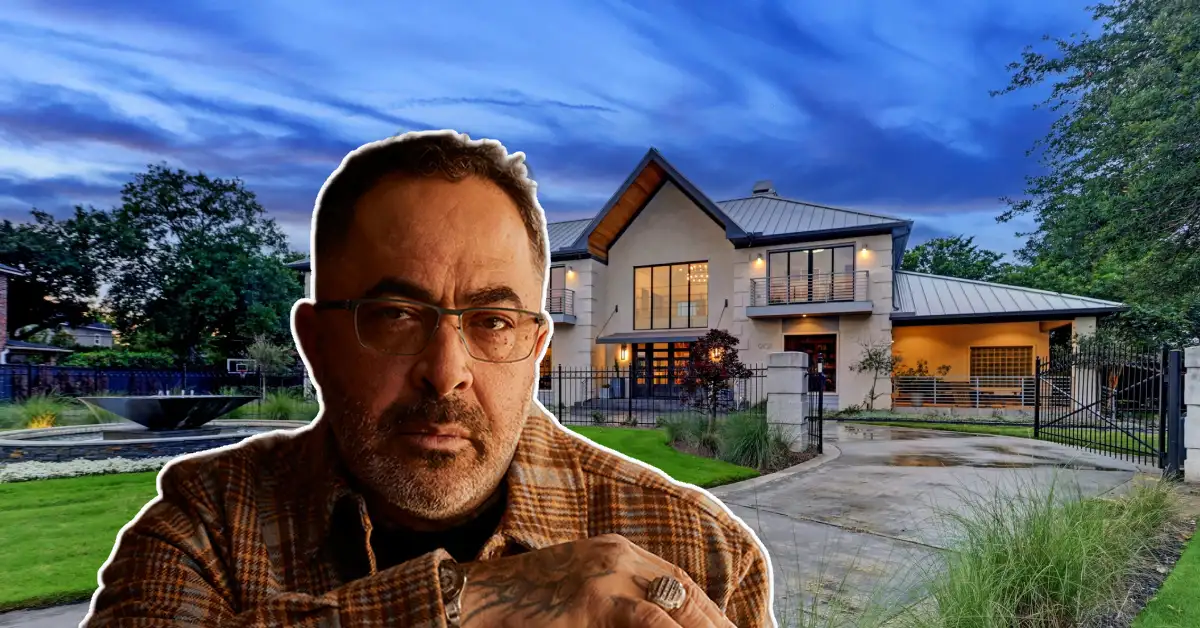
When most people picture a rock star’s home, they imagine sleek Los Angeles penthouses or flashy Nashville compounds. Aaron Lewis — the gravelly-voiced frontman of Staind and acclaimed country solo artist — had something far more distinctive in mind. Tucked into the rolling hills of Western Massachusetts, the Aaron Lewis house is a castle-like rural estate that is equal parts private sanctuary, working musician’s workshop, and testament to two decades of extraordinary success. In this complete guide, we tour the property in full detail, explore its remarkable history, and uncover what makes this one of the most unique celebrity homes in America.
Aaron Lewis House: Quick Facts
| Feature | Details |
|---|---|
| Location | Worthington (Cudworth Road), Hampshire County, Massachusetts |
| Purchase Price | $475,000 (2001) |
| Listing Price | $3,500,000 (2020); reduced to ~$2,995,000 |
| Size | 14,240 square feet |
| Land | 12.1 acres |
| Bedrooms | 4 (main house) + 3-bedroom barn apartment |
| Bathrooms | 5 full / 3 half |
| Architectural Style | Post-and-beam / Castle-like rural estate |
| Previous Owner | Kevin Eastman (co-creator, Teenage Mutant Ninja Turtles) |
Who Is Aaron Lewis?
Before diving into the home itself, a brief introduction to the man behind it. Aaron Lewis was born on April 13, 1972, in Rutland, Vermont, and grew up across New England — spending formative years in Longmeadow and Springfield, Massachusetts, where he graduated from Longmeadow High School. He co-founded the alternative metal band Staind in Springfield in 1995, serving as its lead vocalist and rhythm guitarist.
Staind rose to enormous commercial success in the late 1990s and early 2000s. Their breakthrough album Break the Cycle (2001) — released the same year Lewis purchased his Massachusetts estate — spent three weeks at number one on the Billboard 200 and sold over four million copies in the United States alone, powered by smash hits like “It’s Been Awhile,” “Outside,” and “So Far Away.”
Around 2010, Lewis pivoted toward a parallel solo career in country music, releasing a string of successful albums including Town Line (2011), The Road, Sinner, State I’m In, Frayed at Both Ends, and most recently The Hill in March 2024. This dual identity — hard rock icon and authentic country artist — has made Lewis one of the more fascinatingly versatile figures in American music, with an estimated net worth of approximately $6 million.
Where Does Aaron Lewis Live?
Aaron Lewis is most closely associated with his estate in Worthington, Massachusetts, a small, rural town in Hampshire County nestled in the scenic Berkshires region of Western Massachusetts. The property sits on Cudworth Road and has been Lewis’s primary residence since 2001 — nearly two decades of life, music, and family in the quiet hills of New England.
In more recent years, Lewis has increasingly divided his time between Massachusetts and Nashville, Tennessee, where the country music industry is centered. His listing agent, George Cain of William Pitt Sotheby’s International Realty, confirmed this shift directly: “Lewis is selling now because he has been refocusing on country music, so he spends most of his time in Nashville.”
Worthington itself is a picturesque, close-knit community far from the celebrity spotlight — exactly the kind of place Lewis has always gravitated toward. It is known for its lush wooded landscapes, strong community ties, and peaceful rural character: the ideal environment for a private family and an artist who values authenticity above all.
The History of the Aaron Lewis House
The story of the Aaron Lewis house begins long before the Staind singer ever set foot in the Berkshires. The property was previously owned by Kevin Eastman — one of the co-creators of the Teenage Mutant Ninja Turtles — adding a unique piece of pop culture trivia to the home’s provenance.
In 2001, at the height of Staind’s commercial dominance, Lewis purchased the property for just $475,000. At the time, the home was already a substantial rural estate built in the classic New England post-and-beam tradition, but it bore little resemblance to the castle-like compound it would become. Over the following two decades, Lewis poured extensive resources and personal vision into transforming the property into a one-of-a-kind luxury estate tailored to every aspect of his life as a musician, father, and outdoorsman.
By the time he listed it for sale in August 2020 at $3.5 million — making it the highest-priced residential listing in the entire county at that time — the property had appreciated nearly sevenfold from his original purchase price, a remarkable real estate success story by any measure. The listing was subsequently adjusted to approximately $2.995 million, and it remains one of the most discussed celebrity properties in New England.
Architecture: A Castle in the Berkshires
The exterior of the Aaron Lewis house makes an immediate and unforgettable impression. Multiple sources and visitors have described the home as resembling an actual castle — an effect created by its commanding scale, stone and timber construction, and the way it rises from the surrounding wooded landscape.
The architectural bones of the property are rooted in the traditional post-and-beam construction style — a centuries-old New England building method that uses large, heavy timber frames joined together without nails, creating structures of extraordinary strength and visual character. Lewis preserved and honored this existing post-and-beam structure during his renovations, then expanded it thoughtfully outward.
“Aaron reconstructed the house using a lot of the post-and-beam style that was existing, then connected on one side to the garage and the other side to the pool,” listing agent George Cain explained. The result is a property that feels organically unified — where the original historic structure flows seamlessly into the modern additions Lewis commissioned over the years.
The main residence spans a remarkable 14,240 square feet, set on 12.1 acres of beautifully landscaped land in Hampshire County. The grounds include formal gardens, open lawns, wooded areas, and a fishing pond — creating the sense of a private park surrounding the estate.
Inside the Aaron Lewis House: Room by Room
The Main Living Areas
The interior of the Aaron Lewis house is defined by the warmth and grandeur of its materials. Throughout the home, dark walnut hardwood floors — rich, deep-toned, and luxurious underfoot — set the tone for every room. Complementing the floors are the original exposed post-and-beam timbers that run through the living spaces, connecting the home visually and structurally to its New England heritage.
The main house features cathedral ceilings that lend an expansive, almost ecclesiastical quality to the principal rooms. These soaring ceilings, combined with the warm wood tones and stone elements throughout, create an interior atmosphere that is simultaneously grand and deeply cozy — no small architectural achievement.
The home also features a sophisticated Vantage Lighting System — an automated, programmable lighting control system that allows for precise control of ambience across every room — alongside an indoor/outdoor intercom system and a comprehensive security system.
The Bedrooms
The main house contains four bedrooms, including a master suite that stands as a genuine retreat within the retreat. The master bathroom features a steam shower and an overflow tub — spa-level amenities that bring the luxury of a five-star hotel into the privacy of the home. In addition to the main house bedrooms, the property includes a fully self-contained in-law apartment within the main structure, as well as a three-bedroom apartment located above the horse barn — giving the estate a total residential capacity far beyond its headline bedroom count.
The Game Room and Home Office
Among the interior highlights are a large game room — perfect for entertaining family and friends during the long New England winters — and a dedicated home office, a practical necessity for a working artist and music industry professional managing recording, touring, and business operations from his rural base.
The Indoor Olympic-Sized Saltwater Pool
Perhaps the single most spectacular feature of the Aaron Lewis house is its Olympic-sized indoor heated saltwater pool. This extraordinary amenity — rare even among high-end celebrity properties — is housed within a dedicated wing that Lewis connected to the main house as part of his extensive renovations.
An indoor pool of this scale transforms the estate into a year-round wellness and recreation destination, entirely independent of New England’s notoriously harsh winters. Whether used for serious swimming, family recreation, or entertaining, the pool gives the property a resort-like quality that sets it apart from virtually every other home in the region.
The Heating and Climate Systems
Given the estate’s location in the Massachusetts hills — where winters can be long, cold, and demanding — Lewis invested in exceptional climate infrastructure. Radiant floor heating runs throughout the home, providing consistent, energy-efficient warmth from below. A state-of-the-art humidification system maintains ideal interior air quality year-round. And for complete peace of mind, the property is equipped with a full-house commercial generator capable of powering every system in the event of a power outage — a critical feature for a rural estate of this scale.
The Outbuildings and Grounds
The Eight-Car Garage
Lewis added a custom eight-car garage with radiant heat to the property — a practical luxury for a man with a known love of vehicles and the space to keep them. The garage was designed with open interior architecture: “so you can pull in and not see all these posts from one side to the other,” as listing agent Cain described, giving the space a clean, uncluttered character.
The Horse Barn and Guest Apartment
One of the most distinctive structures on the property is its horse barn, which includes a stable in the basement level and a fully equipped three-bedroom apartment above. The barn lends the estate an authentic working-farm character that is entirely in keeping with Lewis’s love of rural New England life and the outdoors.
The Fireproof Guitar Vault
For a musician of Aaron Lewis’s stature — a man whose guitar collection represents both extraordinary monetary and personal value — one of the most brilliantly practical features of the estate is its fireproof walk-in vault, located within the horse barn. This climate-controlled, secure space protects Lewis’s prized instrument collection from fire, theft, and environmental damage: a detail that speaks volumes about the care and intentionality with which every aspect of this property was designed.
The Fishing Pond and Grounds
The 12.1 acres surrounding the estate include a fishing pond, manicured gardens, wooded trails, and open lawns. The grounds have been described as resembling a private park — a setting that gives the property an extraordinary sense of space, privacy, and natural beauty that no urban or suburban estate could replicate.
Community Legacy: The It Takes a Community Foundation
The Aaron Lewis house story is inseparable from the community impact the singer and his wife Vanessa made during their nearly two decades in Worthington. When local budget cuts forced the closure of three out of five area elementary schools, the Lewis family refused to stand by and do nothing.
Together, they established the “It Takes a Community Foundation” and helped create the R.H. Conwell Community Education Center in Worthington. The foundation funded everything from classroom desks, books, and school supplies to teachers’ salaries — a deeply personal and impactful commitment to the community that had been their home throughout some of the most successful and demanding years of Lewis’s career.
This legacy of community investment adds a dimension to the Aaron Lewis house story that goes well beyond real estate or celebrity. It reflects the values of a man who chose to put roots down in a rural New England town not as a temporary escape from fame, but as a genuine home — and who gave back to that community in meaningful, lasting ways.
Why Aaron Lewis Is Selling
The decision to list the Worthington estate came directly from the evolution of Lewis’s music career. As his country solo work deepened — with albums released under his own name drawing significant audiences across the American heartland — the gravitational pull of Nashville grew stronger. The country music capital, with its studios, collaborators, and industry infrastructure, increasingly became Lewis’s professional center of gravity.
“Lewis is selling because he has been refocusing on country music, so he spends most of his time in Nashville,” his listing agent confirmed. It is the classic musician’s dilemma — balancing the demands of a music industry centered in one city with the desire to maintain roots in a deeply personal place.
Whether or not the estate has formally sold, it stands as a remarkable chapter in the life of one of rock music’s most distinctive voices.
Aaron Lewis House: Real Estate Investment Snapshot
| Year | Event | Value |
|---|---|---|
| 2001 | Aaron Lewis purchases estate from Kevin Eastman | $475,000 |
| 2001–2020 | Extensive renovations: pool wing, garage, barn, vault, interiors | Significant investment |
| 2020 | Listed for sale (highest-priced listing in Hampshire County) | $3,500,000 |
| 2025 | Current estimated listing/market value | ~$2,995,000 |
| Total appreciation | From purchase to listing | ~6x original price |
Final Thoughts: What the Aaron Lewis House Tells Us
The Aaron Lewis house in Worthington, Massachusetts is many things at once: a post-and-beam New England castle, a rock musician’s personal sanctuary, a family home, a community landmark, and a savvy real estate investment that multiplied in value nearly six times over two decades.
What it is not is a typical celebrity home. There is no Malibu ocean view, no Hollywood Hills address, no Beverly Hills zip code. Instead, there are 12.1 acres of Berkshire woodland, a fishing pond, a fireproof vault full of guitars, an Olympic pool to swim laps through a Massachusetts winter, and the memory of a community foundation that helped keep local schools alive.
That gap between expectation and reality is precisely what makes the Aaron Lewis house so compelling — and so perfectly expressive of the man who built it.