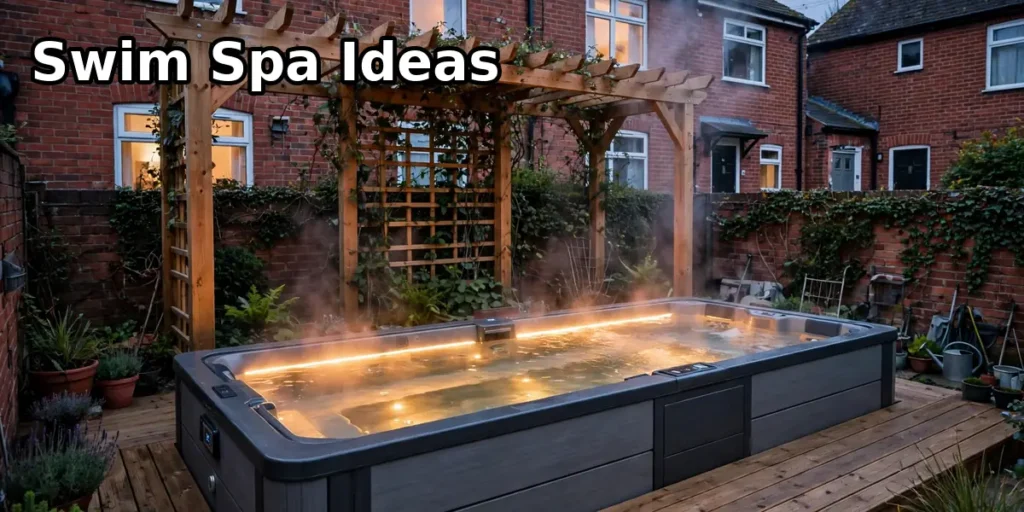
A swim spa costs from about £9,899 to £38,499 in the UK in 2026, and the best swim spa ideas start with the size of your garden, not the brochure. That price is the shell alone, before the base, the electrics and the crane. This guide prices the whole job, then shows 12 layouts that fit a real British garden.
A swim spa is a pre-built shell with a swim current you push against, plus heating and seats. It fits in about 16 square metres, where a built pool wants 60 or more. You swim in place, so the length that matters is the swim length, not the shell length.
I have priced this the way I would price my own garden. Every figure carries its source and its date, and where sources disagree I say so instead of picking the number that sounds best. Retailer list prices are shown as list prices, because the VAT status is not always stated.
This is the fourth post in our Pools guides, after small backyard pool ideas, above-ground landscaping and plunge pools. Those cover the pool itself. This one is the swim spa: the training pool that fits where a pool will not.
Swim Spa Ideas by Size: What Fits a Small Garden
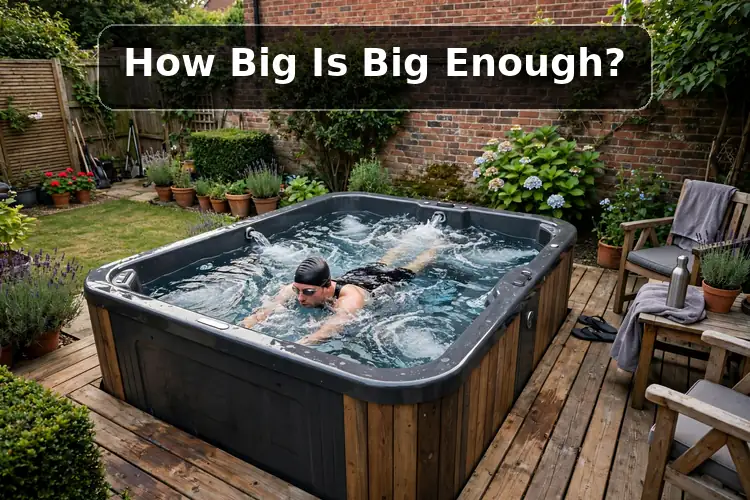
Start with the tape, not the catalogue. A swim spa is sold by shell length, but you swim in the current, and the current needs 12 to 19 feet of clear water. A 13 foot shell gives you that. A 10 foot shell does not, however good the jets sound.
| Model | Shell size | Water | Space to allow |
|---|---|---|---|
| Active, 13 ft | 390 x 224 x 117 cm | 4,780 litres | 490 x 324 cm |
| Active Pro, 15 ft | 450 x 220 x 136 cm | 5,853 litres | 550 x 320 cm |
| Mini Pool, 18 ft | 550 x 225 x 153 cm | 9,159 litres | 650 x 325 cm |
| Active Pro Plus, 19 ft | 590 x 235 x 140 cm | 7,162 litres | 690 x 335 cm |
Compact models run 10 to 15 feet long and 7 to 8 feet wide. Sundance says its 10 to 13 foot models fit a 20 by 20 foot patio and yards of 300 to 500 square feet, with planning.
Measure the walking lane too. You want about 4 feet clear on one side and 2 to 3 feet of service clearance around the shell.
The cover needs somewhere to go. A roll-off cover adds about 3 feet behind the spa, and the service side needs access for a technician, not just a glance. If the spa sits against a fence with no gap, the first repair becomes a crane job.
What a Swim Spa Costs in the UK in 2026
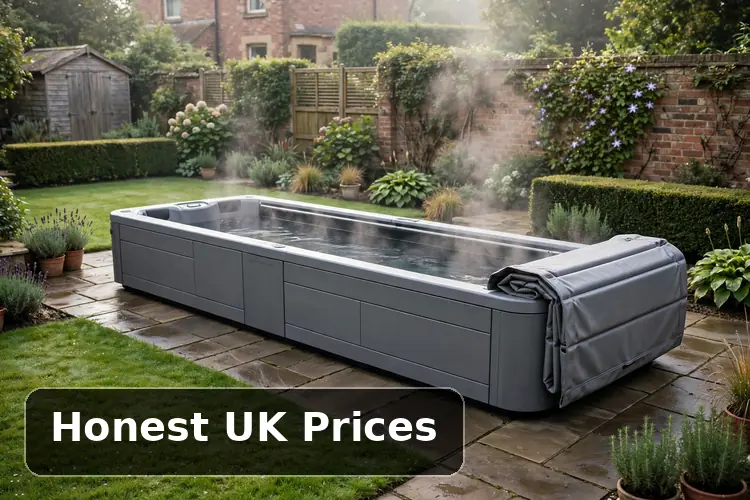
Most guides on swim spa ideas quote the shell price and stop there. The shell is the biggest line, but the base, the electrics, the delivery and the crane can add thousands, and none of them appear in the headline price.
| Band | Typical price | Source |
|---|---|---|
| Entry | £8,000 to £12,000 | ThinkKnoll 2026 |
| Mid-range | £15,000 to £25,000 | ThinkKnoll 2026 |
| Premium | £30,000 and up, some over £50,000 | ThinkKnoll 2026 |
| Compact single-zone | From £11,995 | Fonteyn 2026 |
| Mid-range training | £15,000 to £21,000 | Fonteyn 2026 |
| Premium dual-zone | £22,000 to £25,000 | Fonteyn 2026 |
| Retailer list, all models | £9,899 to £38,499 | Outdoor Living, Oct 2026 |
| UK new, all tiers | £10,000 to £55,000 | BuildaHotTub, Sep 2026 |
Read those bands as retailer list prices. The sources do not all state whether VAT is included, so I have not added a VAT label where the source does not give one. Ask the retailer to confirm it in writing before you compare two quotes.
The Outdoor Living buying guide and the BuildaHotTub cost guide both lay out the same bands, and both are worth reading before you shortlist.
Then add the extras. ThinkKnoll puts installation at £2,000 to £5,000 depending on site prep, electrics and delivery. Outdoor Living charges £499 for kerbside delivery, £899 for delivery and positioning, and £1,299 for delivery, installation, setup and guidance. A concrete pad runs about £1,500 to £3,000, and a crane or HIAB lift adds £300 to £1,500.
A dual-zone model costs more because it heats two bodies of water to two temperatures. If you only swim and never sit in the hot end, a single-zone model saves you money twice: once at purchase, and again on every bill.
The Base, the Weight and the Crane
A swim spa is heavy in a way that surprises people. The shell alone weighs 800 to 1,200 kg empty, and the water is the real load. One litre of water weighs one kilogram, so a 13 foot model holding 4,780 litres carries nearly five tonnes of water before anyone climbs in.
That maths settles a conflict in the sources. Sundance puts a filled swim spa at 12,000 to 20,000 lbs, which is about 5,400 to 9,100 kg, and that matches the water volume.
One UK guide quotes 1,000 to 2,500 kg filled, which cannot be right for a filled spa, and I have not used that figure. Its own weight section gives 2,000 to 3,500 kg filled with people, which is still low against the water alone.
The base is a reinforced concrete pad, at least 150 mm thick with steel mesh, poured on compacted hardcore and at least 100 mm larger than the spa on every side. It must be flat and level, and it needs at least 7 days to cure, ideally 28, before the spa arrives.
A pad costs roughly £1,500 to £3,000. American brands quote a 4 inch pad. UK installers quote 150 mm. I would follow the UK figure.
Standard decking will not hold one. Garden decking is built for foot traffic at about 150 kg per square metre, while a filled spa presses down at 300 to 500 kg per square metre. A deck can work, but only if it was engineered for that load from the start.
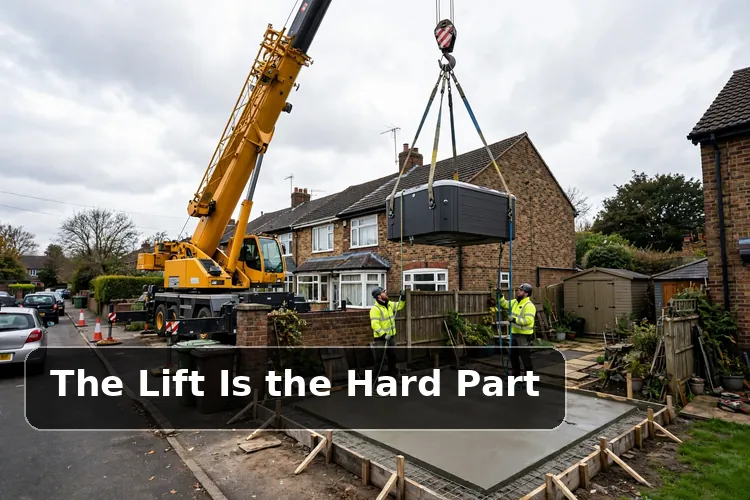
Getting it in is the other half of the job. A spa is 4 to 6 metres long and does not fit through a standard garden gate. Side access needs about 2.5 metres of clear width and a straight path.
Without it, you need a crane at £500 to £1,500 or a HIAB lorry at £300 to £800. Measure the tightest point before you order, and send the retailer a photo of it.
Power and Running Costs
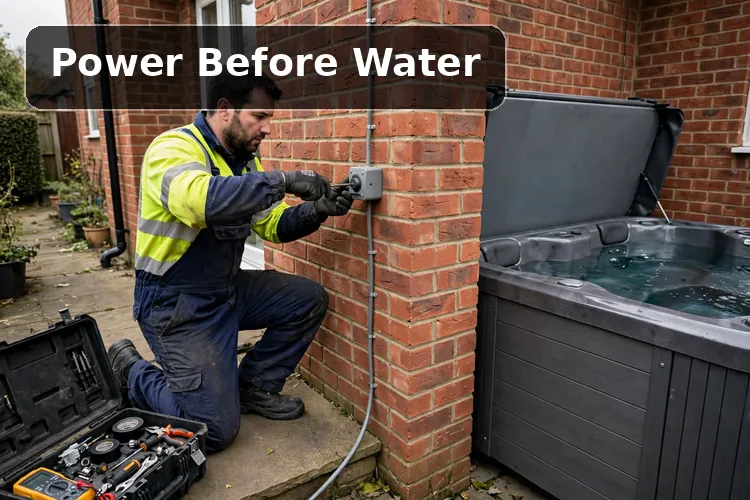
Sort the power before the spa arrives, because the delivery team connects to a supply that must already be in place and tested. A swim spa is not a plug-in appliance.
It needs a dedicated circuit from the consumer unit, installed by a qualified electrician, and the work is notifiable under Part P of the Building Regulations in England and Wales.
| Item | What you need |
|---|---|
| Circuit | Dedicated 32A for most models, 40A for larger ones |
| Cable | 6 mm2 for 32A, 10 mm2 for 40A, armoured cable outdoors or buried |
| RCD | 30 mA, ideally a dedicated RCBO |
| Isolator | Lockable, in sight of the spa but at least 2 m from the water |
| Certificate | Part P notification and an Electrical Installation Certificate |
A new circuit is notifiable work, so the electrician must be registered with a competent person scheme such as NICEIC or NAPIT, or the work must be notified to building control. You get a certificate when it is done. Keep it with the house paperwork.
Running costs depend on the model, the tariff and how warm you keep the water. Outdoor Living, at the October to December 2026 price cap of 26.32p per kWh, prices an hour of swimming a day with the cover on.
The 13 foot Active runs about £4.60 a day, or about £3.00 with a heat pump. The Mini Pool runs about £6.60 a day, and water care adds £0.90 to £1.40 a day.
| Model | Electricity a day | With a heat pump | Water care a day |
|---|---|---|---|
| Active, 13 ft | about £4.60 | about £3.00 | about £0.90 |
| Active Pro, 15 ft | about £5.30 | about £3.40 | about £1.10 |
| Active Pro Plus, 19 ft | about £6.40 | about £3.80 | about £1.20 |
| Mini Pool, 18 ft | about £6.60 | about £4.20 | about £1.40 |
Other sources give lower figures, and I am not going to settle the argument for you. ThinkKnoll puts annual running costs at £800 to £1,500, which works out below the daily figures above when annualised. Fonteyn quotes £30 to £55 a month.
A London and Essex retailer puts the monthly total at about £210, or roughly £7 a day. The honest range is about £3 to £7 a day for electricity, plus water care, and your tariff decides where you land.
The cover is the cheapest running-cost decision you will make. A spa left uncovered loses heat fast, and no heat pump recovers that. Keep the cover on whenever you are not in the water, and keep the water at 28 degrees for swimming rather than hot-tub temperature.
Planning Permission and Building Control
A freestanding swim spa usually falls under permitted development in England and Wales, so most gardens need no planning permission at all. That is the normal case, not a loophole, and it is the reason most spas go in without a planning application.
Four things break the normal case. The spa sits in front of the house, facing the road. The house is listed, or the garden sits in a conservation area, a national park or an area of outstanding natural beauty.
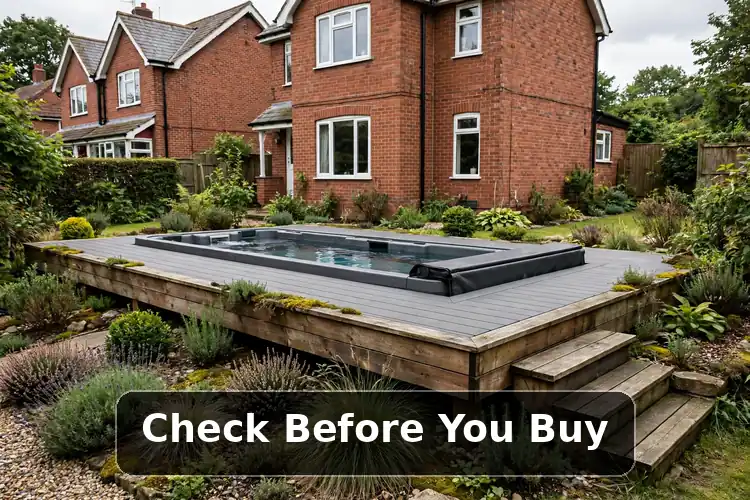
The spa and its surround cover more than half the garden. Or the job becomes a structure: a sunken install with retaining walls, a raised deck over 30 cm, or a building over the top.
The deck rule catches more people than the spa rule. A raised platform over 30 cm high in England can need permission on its own, even when the spa does not. The same goes for any shelter over it.
A pergola within 2 metres of a boundary must stay under 2.5 metres at the eaves. Check the deck and the pergola as well as the spa.
Building control is a separate question from planning. A new electrical circuit is notifiable under Part P, and an in-ground install with retaining walls is a structure your local building control may want to see. A five-minute call to your local planning department costs nothing and settles both questions before you spend anything.
Twelve Layouts That Work in a Real Garden
The layouts below are the swim spa ideas that survive contact with a real garden: small, overlooked, or sloping. Each one solves a specific problem, and each one keeps the service side reachable. For the planting around them, our small garden design ideas keep the beds low and the paths clear.
1. The deck oasis
Build the deck level with the rim, so you step across, not up and over. Wide steps on the long side do the same job as a handrail for most people, and the deck hides the shell from the house. Leave one side open for the technician.
2. The cedar pergola
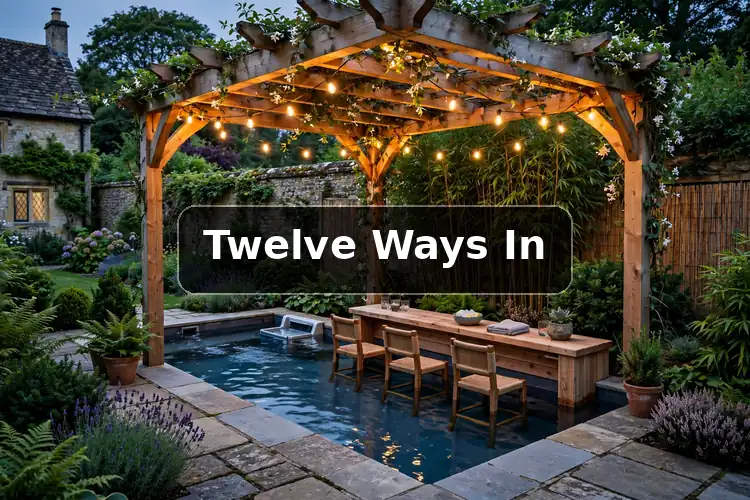
A cedar pergola over the swim end gives shade at midday and a frame for warm string lights at night. Keep the roof open, not solid, so steam escapes and the timber dries. Step lighting at 2700K keeps the walk safe without glare.
3. The partial recess
Sink the spa 18 to 30 inches into the ground and the shell stops looking like a box on a patio. The step height drops to 16 to 18 inches, and a 48 inch wide step makes entry easy. Keep 36 inches of service clearance on the pump side, or the recess becomes a trap.
4. The swim-up bar
A counter and two stools at the deep end turn the spa into the evening spot, not just the exercise slot. Keep the counter narrow and the stools light, so they move out of the way on cover day. Glass near water is a bad idea. Use acrylic.
5. The privacy screen
Bamboo and evergreen shrubs in layers beat a tall fence, because they block the view without blocking the light. Plant in containers if the roots would reach the pad. A screen that needs cutting back twice a year is a screen you will resent.
6. The fire bowl corner
One fire bowl beside the seating end gives the garden a warm corner for the months you do not swim. Set it on stone, not decking, and keep it clear of the cover when it rolls back. The spa and the fire share the evening, not the same square metre.
7. Stone pavers and a dry path
Pavers from the back door to the spa keep mud out of the water and bare feet clean in winter. Lay them with a slight fall away from the shell, so rain runs off the path and not under the spa. A path that puddles is a path nobody uses.
8. The sunken look
Multi-level decking and a low retaining wall make the spa read as built in, even when it sits above ground. The wall doubles as seating, and the lower level holds the cover when it rolls off. This is the layout to pick if the neighbours overlook the garden.
9. Glass railing on a raised deck
Glass railing keeps the view and the safety at the same time, which matters on a raised deck in a small garden. It costs more than timber, and it shows water marks, so budget ten minutes a week with a squeegee. The garden feels bigger for it.
10. Curved steps with a handrail
Wide curved steps with a handrail suit everyone: kids, older swimmers, and anyone climbing out with wet feet. Grip underfoot matters more than looks, so pick a textured tread over smooth stone. One handrail is enough if the steps are wide.
11. Splash-proof planting
Ornamental grasses, dwarf evergreens, lavender and rosemary all survive the odd splash, and they smell good when the steam rises. Keep thirsty plants away from the shell, and keep anything that drops leaves out of the skimmer’s reach. Less planting, placed well, beats a crowded bed.
12. The dual-zone split
Two zones, two temperatures: the swim end at 28 degrees and the hot end at 38. It costs more to buy and more to run, but it ends the argument about who wants the water hot. If only one person swims and nobody soaks, the single-zone model is the better buy.
Swim Spa Questions, Answered
These are the questions I hear most, with the short answers I give friends before they spend anything.
How much does a swim spa cost in the UK?
New swim spas run from about £9,899 to £38,499 on retailer lists in October 2026, and from £10,000 to £55,000 across all tiers. A good small model starts near £12,000. The base, electrics, delivery and crane add £2,000 to £5,000 or more, so budget the all-in figure, not the shell price.
What size swim spa fits a small garden?
A 13 foot model is the smallest that gives a proper swim, and it needs about 490 by 324 cm of space including clearance. Yards of 300 to 500 square feet can fit one with planning. Measure the walking lane and the cover space as well as the shell.
Do I need planning permission for a swim spa in the UK?
Usually not. A freestanding swim spa normally falls under permitted development in England and Wales. You will need permission if the house is listed, the garden is in a conservation area, the spa sits in front of the house, or a raised deck over 30 cm or a structure over it changes the picture.
What electrical supply does a swim spa need?
A dedicated 32A circuit for most models, 40A for larger ones, with 30 mA RCD protection and a lockable isolator in sight but at least 2 metres from the water. The work is notifiable under Part P, so a registered electrician must do it and issue a certificate.
How much does it cost to run a swim spa per day?
About £3 to £7 a day for electricity, plus £0.90 to £1.40 a day for water care, at the October to December 2026 price cap of 26.32p per kWh. Sources disagree on the annual total, so treat any single figure as a guide. Your tariff, the model and the cover decide the real number.
The One I Would Buy
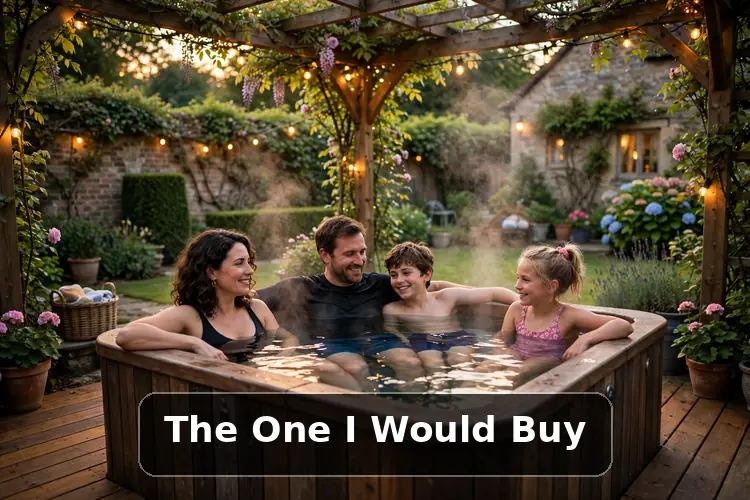
Good swim spa ideas end with a decision, not a shortlist. If this were my garden, I would buy the 13 foot single-zone model at about £9,899, on a 150 mm reinforced pad, with a 32A supply and a heat pump, sunk 18 inches into a low deck with a cedar pergola over the swim end.
The all-in figure lands near £14,000 to £16,000 once the pad, the electrics, the delivery and the heat pump are in. That is the number to budget for, not the £9,899 on the product page. A dual-zone model is the upgrade I would skip unless two people in the house genuinely want two temperatures.
Then I would get three itemised quotes, all listing the same things: shell, pad, electrics, delivery, crane, commissioning and VAT. And I would not sign the cheapest one until I knew what it had left out. A swim spa is the one garden job where the expensive mistake is invisible until the crane leaves.