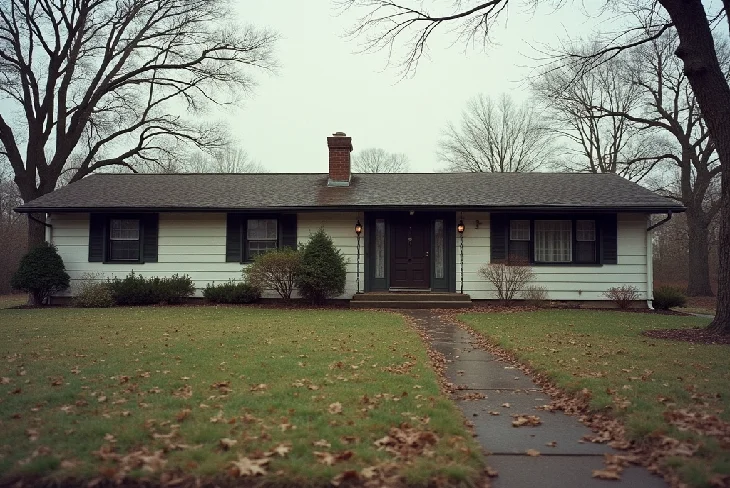
The Joel Rifkin house at 1492 Garden Street, East Meadow, New York is one of the most chilling addresses in Long Island’s history. It was here that one of New York’s most prolific serial killers lived quietly with his mother and sister while secretly committing some of the worst crimes the state had ever seen. The story of this home tells you a lot about how evil can hide in plain sight.
What looks like a modest four-bedroom ranch house on a quiet suburban street held secrets that horrified an entire region. Rifkin confessed to killing 17 women between 1989 and 1993, and several of those murders happened inside or directly connected to this home. Understanding the house, its history, and what happened inside it helps explain one of America’s most disturbing true crime stories.
Key Facts About the Joel Rifkin House
Before we get into the full story, here’s a quick snapshot of the property itself:
| Feature | Detail |
|---|---|
| Address | 1492 Garden Street, East Meadow, NY 11554 |
| Built | 1951 |
| Style | Two-story split-level ranch |
| Size | 1,675 square feet |
| Bedrooms / Baths | 4 bedrooms, 2 bathrooms |
| Original Asking Price | $424,500 |
| Final Sale Price | $322,000 (2011) |
| Price Drop | $102,500 below original listing |
Where the Joel Rifkin House Is Located and What It Looks Like
The house sits at 1492 Garden Street in East Meadow, New York, in Nassau County on Long Island. From the outside, it’s an ordinary-looking two-story expanded ranch. It doesn’t scream danger. It doesn’t stand out from any other house on the block. That’s exactly what made it so unsettling to the neighbors who lived nearby for years.
The four-bedroom split-level ranch was built in 1951, and the garage, which played a central role in police evidence collection, is visible on the left side of the house. The neighborhood is described as pleasant and family-friendly, which made the eventual discovery all the more shocking.
According to investigators, the rest of the house was described as fairly well kept, but Rifkin’s personal room was a different story entirely. That contrast between the normal-looking home and what was hidden inside it became one of the most talked-about details of the entire case.
Joel Rifkin’s Life Before the Murders
You have to understand who Rifkin was before you can understand what the house meant to his crimes. Joel David Rifkin was born on January 20, 1959, and adopted by Bernard and Jeanne Rifkin when he was just three weeks old. The family was upper-middle class, and they settled in East Meadow when Joel was still a young child.
Rifkin had difficulty fitting in with his peers and became a frequent target of school bullies. He was excluded from team sports and neighborhood games because of his sloping posture and slow gait. Suffering from undiagnosed dyslexia, he also struggled academically despite his 128 IQ.
His father, Bernard Rifkin, died by suicide on February 20, 1987, after battling prostate cancer. Notably, Rifkin’s first murder took place on the second anniversary of his father’s death. That timing was not a coincidence, according to investigators who studied his psychology closely. Rifkin never held a steady job and was working as a landscaper when the killings began.
What Happened Inside the House During His Crime Spree
Here is the thing that makes the Joel Rifkin house so critical to his case. The home wasn’t just where he slept. It was the active location of several murders.
In his first several murders, Rifkin waited until his mother was out of town on business, then brought his victims home, where he murdered and dismembered them. His very first victim, Heidi Balch, was killed in his bedroom on February 20, 1989. Following Balch’s murder, Rifkin drifted off to sleep for six hours before waking up and dismembering her body.
Rifkin strangled his victims and brought some of the bodies to the home, where he would dismember them. He then went to careful and disturbing lengths to dispose of body parts across multiple states and locations, making identification difficult and delaying police connections between victims.
What investigators found when they finally searched the property was deeply disturbing. When the police arrived at the house on Garden Street, they discovered human blood in a wheelbarrow in the garage and a chainsaw that had pieces of flesh on it. Neighbors said that there had been a foul odor coming from the garage for quite some time. Seriously though, the smell had been noticed, but nobody had reported it.
Evidence Found at the Garden Street Property
The Garden Street property gave police an enormous collection of evidence. There, amid the filth and debris, investigators found Rifkin’s trophies: victims’ driver’s licenses, underwear, bras, and other personal items. These were items he kept as souvenirs, which is a pattern seen in other organized serial killers as well.
During a search of his bedroom, investigators found jewelry, clothing, IDs, and pocketbooks belonging to some of his victims. These personal items helped police connect Rifkin to women who had gone missing over the previous four years. Without the house search, several cases may have remained cold far longer.
Despite living under the same roof, investigators found no evidence connecting his mother or adult sister to the homicides. It was highly unusual in terms of family makeup, as nobody went into his room. That detail is almost hard to believe, but it was confirmed by the lead detective on the case.
“Nobody went into his room. The rest of the house was fairly well kept.” — New York State Police Investigator (via A&E’s account of the Rifkin case)
How the House Was Sold After His Arrest
The story of the Joel Rifkin house sale is its own chapter. When Rifkin’s mother, who owned the house for many years, passed away, his sister inherited the home. That triggered the decision to sell. And selling it turned out to be anything but easy.
The home was originally listed at $424,500 and described in real estate listings as “an excellent handyman’s special” with “hardwood floors, four nice-size bedrooms, and two lovely bathrooms.” What the listing didn’t mention was the home’s deeply disturbing past.
Here’s where New York real estate law gets interesting. According to real estate attorney Adam Leitman Bailey, there is no requirement under New York law to notify a purchaser of a murder, death, or unpleasant act that occurred in the home. New York is a caveat emptor, or buyer beware, state.
The property eventually sold far below asking price:
- Original listing price: $424,500
- Final asking price before sale: $349,998
- Actual sale price: $322,000
- Total discount from original price: $102,500
The real estate manager remarked that nowhere could a buyer find a home at that price with that square footage, suggesting the buyers saw it as a financial opportunity despite the history. The new owners researched the property’s background on their own and went ahead with the purchase anyway.
The Neighborhood’s Reaction and the Legacy of the Address
The people of East Meadow had lived next to this house for years without knowing what was happening inside. Rifkin’s neighbors described him as a quiet loner who was always respectful and pleasant to deal with. That description is something you hear again and again in serial killer cases, and it never gets less disturbing.
The East Meadow community was well-regarded and considered a safe, family-friendly area. “It’s a really beautiful area,” said the real estate agent who handled the listing. That contrast between the peaceful suburban setting and the crimes committed there became part of what made Rifkin’s case so troubling for Long Island residents.
The address itself has since become a landmark of sorts for true crime enthusiasts and dark history researchers. It’s now privately owned, and the current residents have nothing to do with the case. The house is private property, and visiting or approaching it without permission is trespassing.
Rifkin’s Arrest, Trial, and Where He Is Now
The Joel Rifkin house investigation only began because of a random traffic stop. New York state troopers Sean Ruane and Deborah Spaargaren were patrolling Long Island’s Southern State Parkway at 3:15 a.m. on June 28, 1993, when they spotted a Mazda pickup truck with no rear license plate.
Rifkin refused to stop, leading to a high-speed chase across Nassau County. The wild chase ended after the Mazda’s driver missed a turn in Mineola and crashed his truck into a telephone pole at 3:36 a.m. In the back of the truck, wrapped in a tarpaulin, was the body of Tiffany Bresciani, his last victim.
On May 9, 1994, Rifkin was sentenced to 25 years to life for murder, as well as reckless endangerment for leading police on a car chase. He kept receiving additional sentences, and Rifkin is now serving 203 years in Clinton Correctional Facility. He is eligible for parole in 2197.
“The nature of evil is that it can live quietly among us, undetected, for years.” — A widely noted observation from criminologists studying the Rifkin case.
What the Joel Rifkin House Tells Us About True Crime and Suburban Danger
Most people think serial killers live in remote, eerie locations. Rifkin’s case destroys that idea completely. The Joel Rifkin house is in a regular suburban neighborhood, on a regular street, surrounded by regular families. That’s what makes it so powerful as a case study in how violence hides in ordinary spaces.
Criminologists and true crime researchers often point to the Rifkin case when discussing how neighbors, family members, and communities miss warning signs. The foul smells from the garage. The social isolation. The unemployed adult son who never moved out. Each of those details, viewed separately, might seem unremarkable. Viewed together, they paint a picture that still haunts investigators.
The house also raises serious questions about stigmatized real estate, buyer disclosure laws, and how communities process tragedy when it hits so close to home.
“Evil doesn’t always look like what you expect. Sometimes it looks like your neighbor.” — Forensic psychologist comment referenced in A&E’s coverage of the Rifkin case.
FAQ: Joel Rifkin House
Where is the Joel Rifkin house located?
The Joel Rifkin house is at 1492 Garden Street, East Meadow, New York, NY 11554. It’s a four-bedroom split-level ranch built in 1951 in Nassau County on Long Island.
Was the Joel Rifkin house ever sold?
Yes. After Rifkin’s mother passed away, his sister inherited and sold the property. It originally listed at $424,500 and sold in 2011 for $322,000, a drop of over $102,500 from the original asking price.
Did Joel Rifkin commit murders inside the house?
Yes. Several of his killings took place inside the home, including his first confirmed murder in 1989. He also used the garage to dismember victims’ bodies, and police found blood, flesh, and a chainsaw on the property when they searched it.
Did New York law require sellers to disclose the home’s dark history?
No. New York is a caveat emptor state, meaning sellers are not legally required to tell buyers about murders or deaths that occurred in a property. Buyers must do their own research before purchasing.
Who currently owns the Joel Rifkin house?
The home was sold in 2011 to a private family whose identity was not disclosed. It remains private residential property, and visiting without permission is considered trespassing.
How long did Rifkin live at the Garden Street house?
Rifkin’s family moved to East Meadow in 1965. He lived at the Garden Street address for most of his life, right through his arrest in 1993, a span of nearly three decades.
What evidence was found at the Joel Rifkin house?
Police found a blood-stained wheelbarrow, a chainsaw with human flesh, and in Rifkin’s bedroom, a collection of victims’ IDs, jewelry, underwear, and personal items he had kept as trophies from his crimes.
Final Words
The Joel Rifkin house is more than just an address. It’s a reminder of how the most dangerous things in life don’t always announce themselves. A quiet suburban home. A polite neighbor. A seemingly ordinary family. And underneath all of that, something horrifying that went undetected for four years.
Understanding this case, this house, and what happened inside its walls isn’t about glorifying the crimes. It’s about learning. It’s about paying attention to warning signs. It’s about knowing that true crime history isn’t just television drama. It happened in real neighborhoods, on real streets, to real people whose stories deserve to be remembered with dignity.
The victims of Joel Rifkin were real women with real lives. Their stories matter far more than the address where evil once lived.
Stay inspired with ArteriorsHome and explore the world of celebrity homes, luxury real estate, and stylish interior design. Subscribe now to receive exclusive mansion tours, decor inspiration, and premium lifestyle stories straight to your inbox.