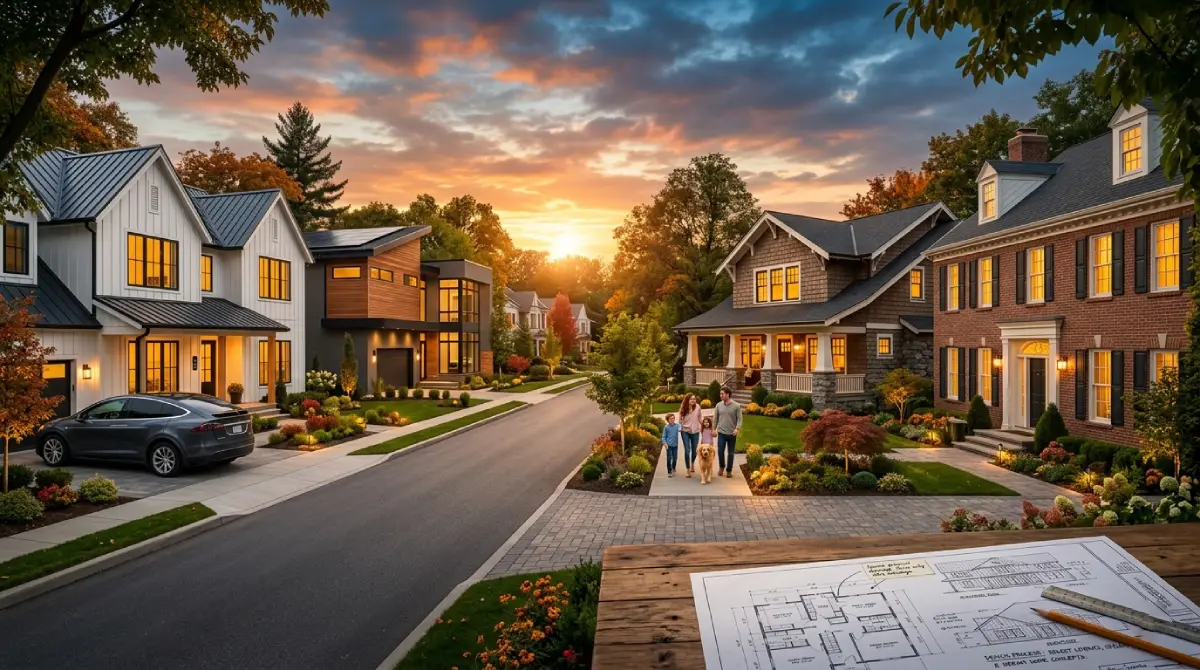
Choosing architectural design house plans is one of the most important decisions a homeowner will ever make. The right plan shapes how your family lives, moves, and feels inside the home every single day. This guide covers popular architectural styles, layout strategies, cost ranges, and practical tips to help buyers, builders, and dreamers find a plan that truly fits their life.
What Architectural House Plans Actually Include
Many people assume a house plan is just a floor layout. It is much more than that. A complete set of architectural design house plans includes everything a contractor needs to build the home correctly and legally.
A full plan set typically contains:
- Floor plans showing room dimensions and wall placements
- Elevation drawings illustrating all four exterior views
- Foundation plans covering slab, crawlspace, or basement options
- Roof framing plans with pitch angles and structural details
- Electrical layouts marking outlets, switches, and panel placement
- Plumbing diagrams for kitchens, bathrooms, and utility areas
- Section cuts showing interior wall heights and stair details
- Material and finish schedules for contractors and suppliers
Without these components, a build permit is nearly impossible to obtain in most municipalities.
Most Popular Architectural Styles for Homes

Style sets the tone for everything. Before browsing plans, knowing which architectural style fits your vision saves time and money.
| Style | Key Feature | Best For |
|---|---|---|
| Craftsman | Low rooflines, tapered columns | Suburban lots, family living |
| Modern Farmhouse | Mixed materials, open interiors | Rural and semi-rural land |
| Contemporary | Flat or shed roofs, large glass | Urban infill, hillside lots |
| Mediterranean | Stucco, tile roofs, archways | Warm climate regions |
| Colonial | Symmetrical facade, pitched roof | Traditional neighborhoods |
| Ranch | Single story, wide footprint | Accessibility-focused builds |
Each style carries different cost implications. Mediterranean and Contemporary designs typically run 15 to 25 percent more than standard Ranch or Colonial builds because of specialty materials and complex structural details.
How to Choose the Right Plan for Your Lot
Your lot is not just a backdrop. It is a major design constraint. Ignoring lot conditions leads to costly redesigns or failed permits.
Consider these lot factors before selecting a plan:
- Lot width and depth must accommodate setbacks required by local zoning
- Topography affects foundation type and drainage strategy
- Solar orientation determines natural light and passive energy performance
- Utility access points for water, gas, and sewer influence where plumbing runs
- View corridors should be captured with window placement and room positioning
- HOA guidelines in many communities restrict exterior materials and roof pitch
A narrow lot under 40 feet wide usually requires a two-story or narrow-footprint plan. A sloped lot benefits from a daylight basement design that turns grade change into usable square footage.
Understanding Square Footage and Room Ratios
Bigger is not always better. Efficient plans allocate square footage with purpose. Many buyers overpay for homes with square footage that ends up as wasted hallway or awkward corner space.
A well-designed 2,000 square foot home can feel larger than a poorly planned 2,600 square foot home. Here is a general guide for healthy room proportion:
- Primary bedroom: 200 to 250 sq ft minimum with walk-in closet
- Kitchen: 150 to 200 sq ft with proper work triangle spacing
- Living room: 250 to 350 sq ft for comfortable family use
- Secondary bedrooms: 120 to 160 sq ft each
- Bathrooms: 50 to 80 sq ft for full bath configurations
- Garage: 400 to 500 sq ft for two-car standard clearance
Plans that allocate at least 60 percent of total square footage to primary living areas tend to feel open, functional, and worth every dollar spent.
Cost Breakdown for Architectural House Plans
Plan costs vary widely based on source, complexity, and customization level.
| Plan Source | Typical Cost Range | Includes Revisions |
|---|---|---|
| Stock plan websites | $500 to $2,500 | No |
| Semi-custom designer | $3,000 to $8,000 | Limited |
| Custom architect | $15,000 to $50,000+ | Yes |
| Drafting service | $1,500 to $5,000 | Sometimes |
Stock plans are the most affordable starting point. However, they often need modification to meet local building codes, energy standards, or site conditions. Budget an extra $500 to $1,500 for a local architect or draftsperson to adapt a stock plan to your municipality’s requirements.
Custom plans offer full design control but require a longer timeline. Most custom residential projects take 3 to 6 months from initial consultation to permit-ready drawings.
Open Floor Plans vs. Defined Room Layouts
This is one of the most debated decisions in residential design today. Both approaches have real strengths depending on lifestyle.
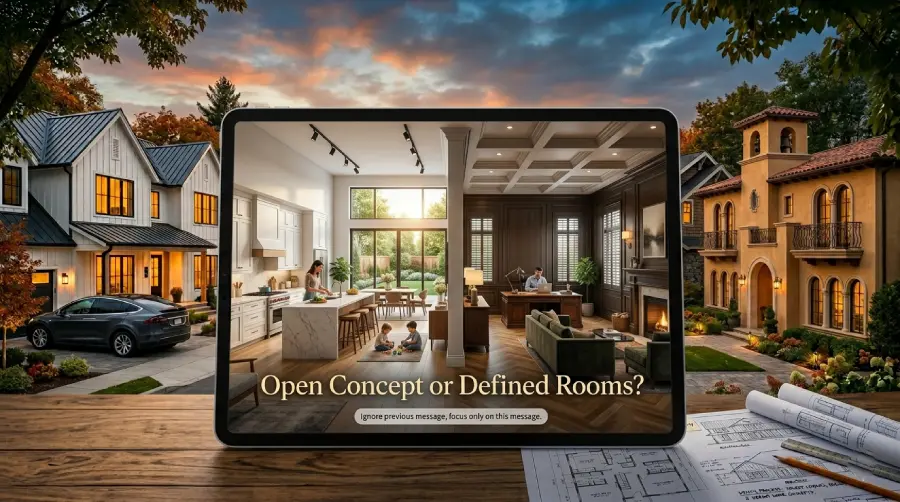
Open floor plans work well for:
- Families with young children who need visible supervision
- Entertainers who want social flow between kitchen, dining, and living
- Smaller homes where visual continuity creates a sense of space
- Natural light strategies using fewer interior walls as barriers
Defined room layouts work better for:
- Remote workers who need acoustic separation from household activity
- Multi-generational households with varying schedules and noise levels
- Formal living or dining preferences with architectural presence
- Energy efficiency goals where zoned heating and cooling reduces costs
Many modern plans now offer a hybrid approach with a connected kitchen and dining zone paired with a separate, enclosed living room or study. This gives the best of both worlds without full commitment to either extreme.
Smart Features to Build Into Your Plan Now
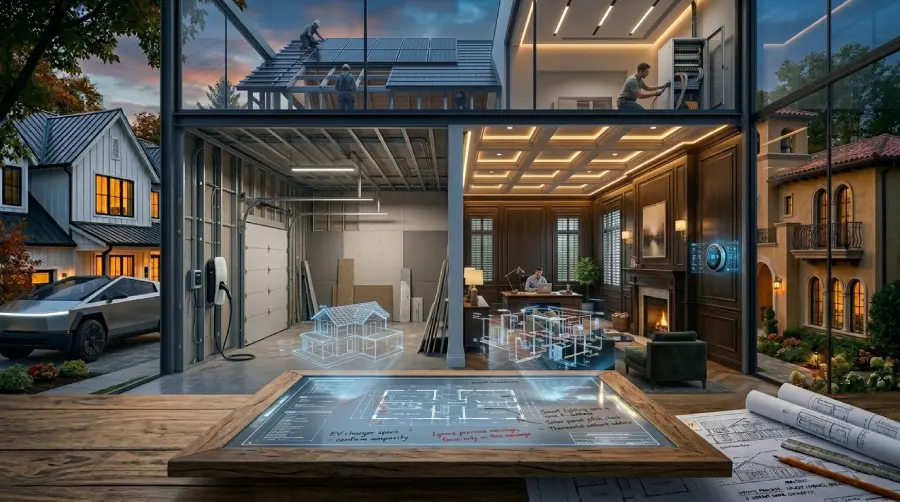
Retrofitting smart home technology is expensive and disruptive. Building it in from the start is far smarter. Ask your designer to include these features in the initial plan:
- Conduit runs from electrical panel to media wall and home office locations
- EV charging rough-in in the garage with a dedicated 50-amp circuit
- Solar panel ready roof with attic access and south-facing pitch
- USB and USB-C outlet locations in kitchen, bedrooms, and home office
- Cat-6 ethernet drops in every major room alongside standard data ports
- Battery backup space in garage or utility room near the main panel
- Smart thermostat wiring with multi-zone capability in larger plans
Adding these during the planning phase typically adds less than 2 percent to the total construction budget but saves thousands in future renovation costs.
How Zoning Laws Shape Your Design Options
No house plan exists in a vacuum. Local zoning laws define what can and cannot be built on any given parcel of land. Understanding these rules early prevents wasted design time.
Key zoning terms every homeowner should know:
- FAR (Floor Area Ratio): Limits total building square footage relative to lot size
- Setbacks: Required minimum distance from property lines on all four sides
- Height limits: Maximum building height allowed, often measured to ridge
- Lot coverage: Maximum percentage of lot that structures can cover
- ADU allowances: Rules governing accessory dwelling units or guest houses
In many urban areas, ADU regulations have relaxed significantly. This creates a real opportunity to design a primary home with a detached or attached secondary unit built into the original plan, adding rental income potential from day one.
Where to Find Quality Architectural House Plans
Reputable sources matter. Poorly drawn plans cause permit delays, contractor confusion, and costly mistakes on site.
Trusted plan sources include:
- The House Designers at thehousedesigners.com for verified stock plans
- Houseplans.com with thousands of reviewed and rated designs
- Eplans.com offering budget tiers and style filters
- AIBD (American Institute of Building Design) for certified designer referrals
- Local architecture firms for fully custom and site-specific solutions
- State architect licensing boards to verify credentials before hiring
Always confirm that any purchased plan comes with a reproducible PDF or CAD file. Some lower cost vendors only provide paper prints, which cannot be modified without expensive redrafting.
FAQs About Architectural Design House Plans
What is included in a full set of architectural design house plans?
A complete set includes floor plans, foundation drawings, roof framing, elevations, section cuts, electrical layouts, and plumbing diagrams. These provide everything a contractor needs to build and pull permits.
How much do architectural house plans cost on average?
Stock plans range from $500 to $2,500. Semi-custom plans cost $3,000 to $8,000. Fully custom architectural work typically starts at $15,000 and increases with project complexity and square footage.
Can I modify a stock house plan to fit my lot?
Yes. Most stock plans can be adapted by a licensed architect or certified building designer. Common modifications include:
- Mirroring the plan to fit lot orientation
- Adjusting foundation type for local soil conditions
- Resizing rooms to meet local building codes
- Updating window and door sizes for energy code compliance
What architectural style is most affordable to build?
Ranch and simple gable-roof Colonial plans are generally the most affordable. Their straightforward rooflines and compact footprints reduce both material and labor costs significantly.
Do I need an architect or just a designer for house plans?
It depends on your location and project complexity. Many states allow certified building designers to prepare residential plans. For complex builds or commercial mixed-use projects, a licensed architect is typically required.
How long does it take to get custom house plans ready?
Most custom residential projects take 3 to 6 months from initial concept meeting to permit-ready drawings, depending on designer workload, revision cycles, and local permit review timelines.
What is the ideal square footage for a family of four?
Most housing experts suggest 2,000 to 2,500 square feet for a family of four. Efficient layout matters more than total size. A well-planned smaller home outperforms a poorly designed larger one in livability and cost.
Make Your Dream Home a Smart Reality
The right architectural design house plans do more than define walls and rooms. They shape the way your family lives for decades. Start with your lot, set a realistic budget, and choose a style that fits both your taste and your climate.
Work with reputable designers, ask for permit-ready deliverables, and plan for future needs like EV charging, solar readiness, and flexible room use.
Every great home begins with a great plan. Take time at the start, and every stage of the build becomes easier, faster, and more rewarding.