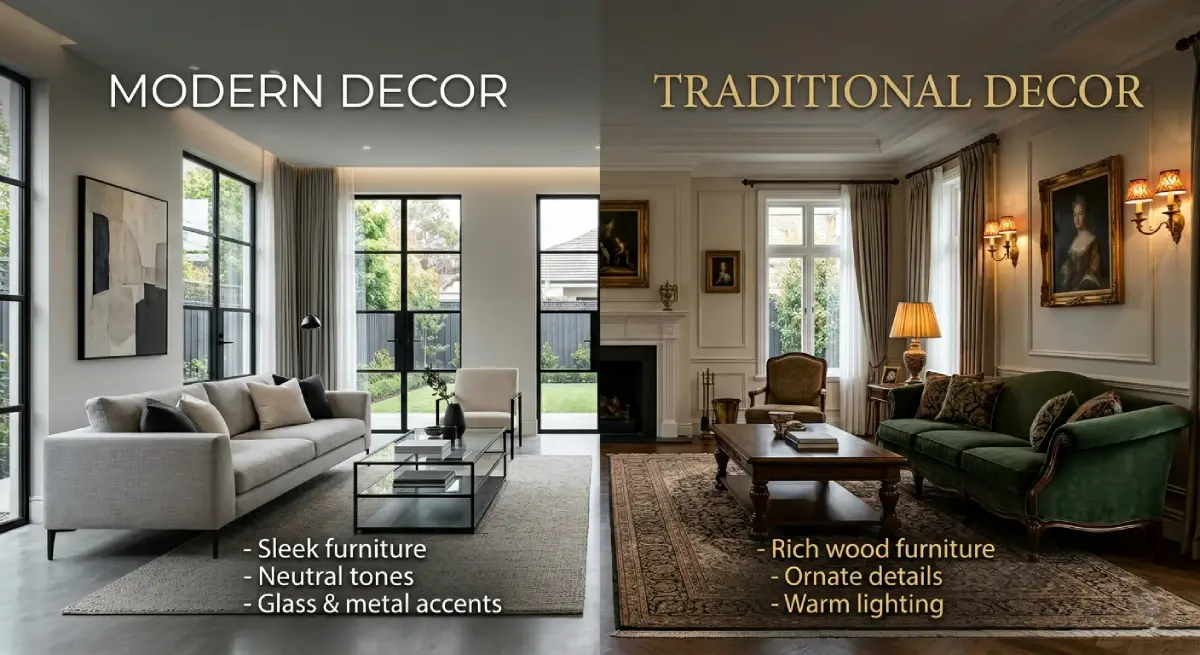
Choosing between modern and traditional decor often comes down to the balance between sleek efficiency and timeless comfort. Modern design is rooted in the early to mid-20th century, emphasizing “form follows function” through clean lines, a neutral color palette, and industrial materials like metal, glass, and concrete. It leans heavily into minimalism, aiming for an uncluttered, airy feel. In contrast, traditional decor draws inspiration from 18th- and 19th-century European sensibilities, characterized by symmetry, rich wood tones, and intricate architectural details. While modern style celebrates simplicity and negative space, traditional style embraces “layered” aesthetics—think ornate crown molding, plush textiles, and classic art—to create an atmosphere of warmth and historical elegance.
Key Differences: Modern vs Traditional Decor Styles
| Feature | Modern Style | Traditional Style |
| Philosophy | Minimalist / Functional | Formal / Comfort-focused |
| Lines | Straight, sharp, or geometric | Curved, ornate, and symmetrical |
| Materials | Chrome, glass, molded plastic | Mahogany, oak, velvet, silk |
| Color Palette | Neutral, monochromatic, or bold pops | Deep jewel tones, warm neutrals, and patterns |
| Furniture | Low profile, raised legs | Heavier silhouettes, tufted upholstery |
Understanding the Visual Language
To better understand how these styles interact with a room’s architecture, it helps to look at the structural elements. Traditional spaces often use symmetry to create a sense of order, while modern spaces might use asymmetry to create visual interest.
Finding a Middle Ground: Transitional Decor
If you find yourself torn between the two, you aren’t alone. Transitional design is one of the most popular styles today because it blends the clean, updated lines of modernism with the cozy, familiar textures of traditional homes. It allows for the use of a traditional wooden dining table paired with sleek, modern chairs, providing a balanced look that feels both current and classic.
The debate of modern vs traditional decor styles is one of the most common questions homeowners face when designing or refreshing a space. Neither style is objectively better. But one is almost certainly a better fit for your lifestyle, your home’s architecture, and the way you want to feel when you walk through the door. Below, we break down aesthetics, materials, colors, layouts, and pros and cons — so you can make a confident, informed choice.
What Is Modern Decor?
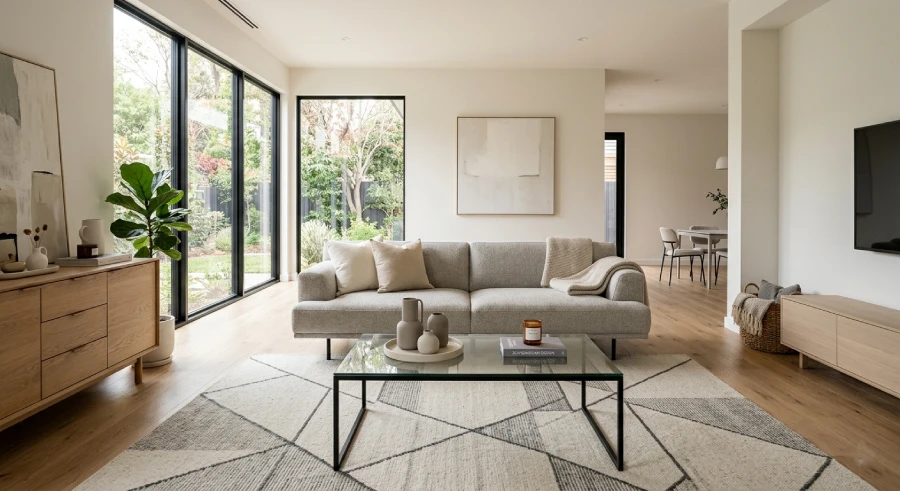
Modern interior design draws from mid-20th-century movements including the Bauhaus school, Scandinavian functionalism, and post-war American design. At its core, it follows one guiding principle: form follows function.
Key characteristics of modern interior design include:
- Clean, straight lines and geometric shapes
- Open-plan layouts with minimal visual barriers
- Neutral color palettes punctuated by bold accent tones
- Materials like polished concrete, glass, metal, and engineered wood
- Low-profile, multi-functional furniture (storage ottomans, sofa beds, modular shelving)
- Concealed storage to maintain clutter-free surfaces
- Recessed or track lighting rather than ornate fixtures
Modern decor values what you don’t see as much as what you do. Negative space is intentional. Every object earns its place. In 2025 and beyond, “warm minimalism” — a softer, more livable evolution of strict modernism — has surged in popularity, incorporating natural textures and earthy tones to prevent spaces from feeling cold or sterile.
What Is Traditional Decor?
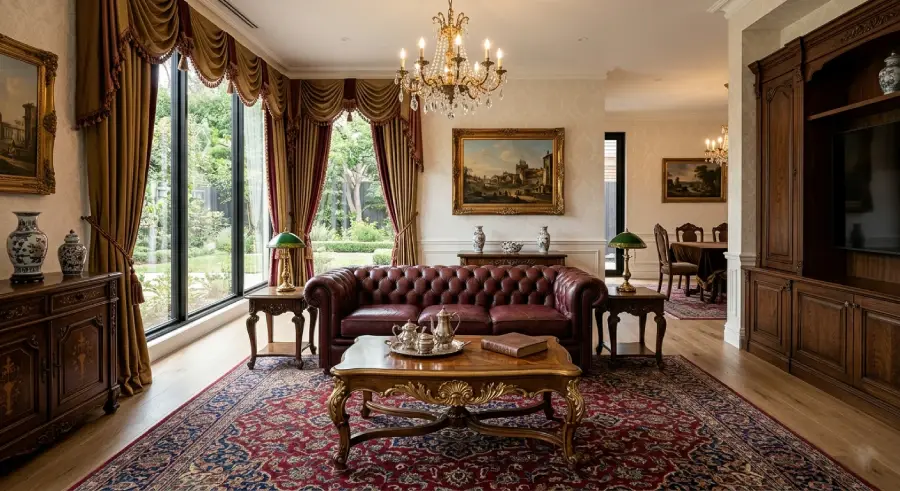
Traditional interior design is rooted in the classic decorative styles of Western Europe — English, French, Colonial, and Victorian — and has remained a beloved aesthetic for centuries for a simple reason: it feels like home.
Defining features of traditional decor include:
- Symmetrical room arrangements and formal layouts
- Rich wood furniture with carved detailing — wingback chairs, Chesterfield sofas, dark dining tables
- Architectural elements like crown molding, wainscoting, and coffered ceilings
- Layered textiles: velvet, brocade, damask, wool, and silk
- Warm color palettes — burgundy, forest green, cream, and gold
- Chandeliers, table lamps, and sconces for soft, layered lighting
- Open display shelving, armoires, and curio cabinets for collectibles and art
In 2025, traditional design isn’t sitting still. Designers are blending it with contemporary touches in what’s often called “New Traditional” or “Updated Classic” style — fresher palettes, more streamlined silhouettes, and a harmonious mix of old and new that feels both timeless and current.
Modern vs Traditional Decor Styles: Side-by-Side Comparison
The table below captures the core differences at a glance across the most important design dimensions:
| Design Element | Modern | Traditional |
|---|---|---|
| Core Philosophy | Form follows function; “less is more” | Beauty, comfort, and timeless elegance |
| Lines & Shapes | Straight, geometric, angular | Curved, ornate, symmetrical |
| Color Palette | White, gray, beige + bold accents (navy, emerald, mustard) | Burgundy, forest green, cream, gold, warm neutrals |
| Primary Materials | Glass, metal, concrete, engineered wood, smooth finishes | Solid wood, leather, brass, crystal, natural fabrics |
| Furniture Style | Low-profile, modular, multi-functional | Statement pieces, carved wood, tufted upholstery |
| Textures | Smooth, matte, occasional metallic | Layered — velvet, brocade, damask, wood grain |
| Lighting | Recessed, track lighting, floor lamps | Chandeliers, sconces, table lamps |
| Storage | Hidden, built-in, integrated | Open display, armoires, curio cabinets |
| Room Layout | Open-plan, fluid zones | Defined rooms, formal seating areas |
| Emotional Tone | Calm, airy, controlled | Warm, nostalgic, welcoming |
| Best For | Small apartments, minimalists, tech-forward homes | Larger homes, collectors, formal entertainers |
Visual Aesthetics: How Each Style Looks and Feels
Beyond a checklist, the real question is: how does it feel to be in that room?
Modern spaces feel calm and airy. Surfaces are uncluttered. The eye isn’t pulled in many directions at once. There’s a quiet confidence to a well-done modern interior — it communicates control and intention. Natural light is maximized; window treatments are minimal.
Traditional spaces feel cozy and layered. Everywhere you look there’s something to appreciate — a carved table leg, a framed oil painting, a silk throw. This richness creates warmth and a sense of history. Lighting is soft, often coming from multiple lower-positioned sources that bathe the room in a golden glow.
Neither feeling is wrong. But they are genuinely different emotional experiences. A person who finds empty surfaces anxiety-inducing will struggle in a rigidly modern home. Someone who feels suffocated by “stuff” won’t thrive in a deeply traditional one.
Colors and Textures: Setting the Mood
Color and texture are among the fastest ways to shift a space from one style to another — and they have a measurable impact on how large or intimate a room feels.
- Modern color schemes rely on neutral foundations — white, off-white, warm gray, or greige — with one or two deliberate accent colors. Think emerald green cushions against a white sofa, or a single navy blue wall in an otherwise pale room. In 2025, jewel tones like sapphire and amethyst are popular modern accents, especially paired with warm metallic hardware.
- Traditional color schemes lean into warmth and depth. Deep burgundy, hunter green, cream, and gold are classics. These richer tones make rooms feel intimate and grounded — ideal for formal dining rooms and cozy sitting rooms where the goal is to slow down and linger.
- Modern textures tend toward smooth, matte, and reflective surfaces — polished concrete floors, sleek cabinetry, and brushed steel fixtures. Natural textiles like linen or organic cotton soften the look without adding visual clutter.
- Traditional textures are layered and tactile. A traditional living room might feature a wool rug over hardwood floors, a brocade sofa with velvet cushions, silk drapes, and a carved wood coffee table — all existing together in deliberate harmony.
Furniture and Space Planning
How a home is arranged says a lot about how it’s meant to be lived in. Modern and traditional design reflect fundamentally different philosophies about space.
In modern interiors, open-plan layouts dominate. The kitchen flows into the dining area, which flows into the living room. Furniture is placed to define zones rather than walls. Pieces are low-profile and functional — a sofa might double as a guest bed; a coffee table might conceal a toy chest. This layout suits fast-paced households that value flexibility and easy maintenance.
In traditional interiors, rooms have defined purposes. The dining room is for dining. The sitting room is for sitting. Furniture arrangements are formal and symmetrical — a pair of armchairs flanking a fireplace, a sofa and loveseat facing each other across a Persian rug. This layout suits people who entertain formally, value privacy between spaces, or live in older homes with defined room structures.
Room-by-Room: Style in Action
Living Room
Modern
Neutral sectional, geometric rug, gallery wall, concealed media unit, floor lamp
Traditional
Tufted Chesterfield, Persian rug, fireplace surround, layered table lamps, framed portraits
Kitchen
Modern
Flat-panel cabinets, handle-less doors, stainless steel, waterfall island, pendant lighting
Traditional
Shaker cabinets, brass hardware, farmhouse sink, open shelving, ceramic tile backsplash
Bedroom
Modern
Platform bed, monochrome scheme, integrated wardrobe, minimal bedside table
Traditional
Four-poster bed, canopy drapes, ornate headboard, bedside chest of drawers, upholstered bench
Pros and Cons: An Honest Look
Pros
- Easy to clean and maintain
- Works well in small or open spaces
- Integrates seamlessly with smart home tech
- Feels fresh and current
- Lower cost to style minimally
Cons
- Can feel cold or sterile without careful styling
- Trend-sensitive — colors and finishes date faster
- Requires discipline to avoid clutter creep
- May feel impersonal for families with heirlooms
Pros
- Timeless — rarely looks truly “dated”
- Naturally warm, cozy, and welcoming
- Ideal for showcasing antiques and heirlooms
- Rich layering creates depth and character
- Suits older homes with architectural detail
Cons
- Can feel heavy or cramped in small spaces
- Quality pieces are often more expensive upfront
- More complex to maintain (fabrics, wood care)
- Can look dated if not refreshed with modern lighting
Emotional Tone and Lifestyle Fit
Design is ultimately personal. The style that looks best on a mood board has to also work for your actual daily life.
Modern decor tends to suit: Busy professionals who want a calm sanctuary to come home to. Minimalists who find clutter mentally exhausting. Tech-savvy households where smart home devices need to blend in. Renters or frequent movers who need flexible, low-investment styling.
Traditional decor tends to suit: Families with heirlooms, antiques, or sentimental pieces to display. People who love formal entertaining and defined social spaces. Homeowners in older properties with existing architectural features like crown molding, fireplaces, or hardwood floors. Those who find comfort in a sense of history and craftsmanship.
Neither is more sophisticated or more livable than the other. They simply speak to different people and different ways of being at home.
The Best of Both: Modern-Traditional Fusion
One of the most exciting — and practical — directions in interior design today is the blending of both aesthetics. Sometimes called “transitional,” “New Traditional,” or “soft modern,” this approach refuses to choose sides.
Popular fusion combinations include:
- A modern, low-profile sofa in a neutral fabric paired with a vintage Persian rug and ornate brass table lamp
- Shaker-style kitchen cabinetry (traditional) with flat hardware and a concrete countertop (modern)
- A sleek platform bed in a room with thick antique picture frames and dark wood bedside tables
- Modern open-plan layout with traditional architectural details like wainscoting or coffered ceilings
This approach is particularly well-suited to older homes where the bones are traditional but the owners want a fresher, lighter feel. It also gives you freedom to buy investment pieces from both camps without feeling like your home is having an identity crisis.
How to Choose: Your Quick Decision Guide
Still on the fence? This checklist should make it clearer:
- You love clean surfaces and find clutter stressful → lean modern
- You enjoy collecting art, antiques, or decorative objects → lean traditional
- You move frequently or rent your space → lean modern (easier to style, less investment)
- You live in an older home with fireplaces, moldings, or high ceilings → lean traditional
- You entertain casually and want flexible open spaces → lean modern
- You host formal dinners and love a defined dining room → lean traditional
- You want easy integration of smart home devices → lean modern
- You want a space that feels warm and cozy from day one → lean traditional
- You’re drawn to both, but can’t commit fully → try transitional / fusion
Trend Longevity: Which Style Ages Better?
One practical consideration that often gets overlooked: will you still love this in ten years?
| Factor | Modern | Traditional |
|---|---|---|
| Core Principles | Timeless (simplicity, function) even as trends shift | Based on centuries-old styles — inherently enduring |
| Trend Sensitivity | High — specific colors and finishes date | Low — classic shapes rarely look “outdated” |
| Investment Advice | Buy neutral/timeless foundation pieces; use accessories for trends | Invest in quality solid-wood pieces; refresh with modern lighting |
| Biggest Ageing Risk | A very specific “moment” look (e.g. 2020s all-grey) dates quickly | Heavy window treatments and dark walls can feel heavy over time |
| Easiest Refresh | Change accent cushions, art, and a single statement piece | Update lighting fixtures and repaint walls in a fresher tone |
Practical Tips for Getting Started
- Build a mood board first. Collect 10–20 images from Pinterest, design magazines, or Instagram that genuinely excite you. Patterns will emerge — and those patterns will tell you which style family you really gravitate toward.
- Start with one room. The living room is the ideal starting point. Get the foundation right there, then build outward. Room-by-room choices can differ — a modern kitchen and a traditional living room can coexist beautifully.
- Invest in anchor pieces. Whether modern or traditional, spend your real budget on the sofa, dining table, and bed frame. These set the tone. Accessories and textiles can pivot the feel quickly and cheaply.
- Don’t ignore architecture. A 1920s craftsman bungalow will always fight against hyper-modern decor. Work with your home’s bones, not against them.
- Small changes make a big difference. Swapping out lighting fixtures, changing paint color, or replacing textiles can shift a room from modern to traditional — and back again — with minimal effort and cost.
- Visit showrooms in person. Scrolling is useful, but the only way to know if you love a fabric or a finish is to touch it.
Which Style Fits Your Home Best?
Modern and traditional decor represent two genuinely beautiful ways to live. One strips things back to essentials; the other layers richness and history into every corner. Neither is a wrong choice — the “best” style is the one that reflects how you actually live, the architecture of your home, and what makes you feel at peace when you walk through the door.
If you leave with one idea: don’t feel locked in. The most interesting interiors in 2025 mix the clean confidence of modern design with the warmth and soul of traditional elements. Your home doesn’t have to pick a side — and neither do you.