
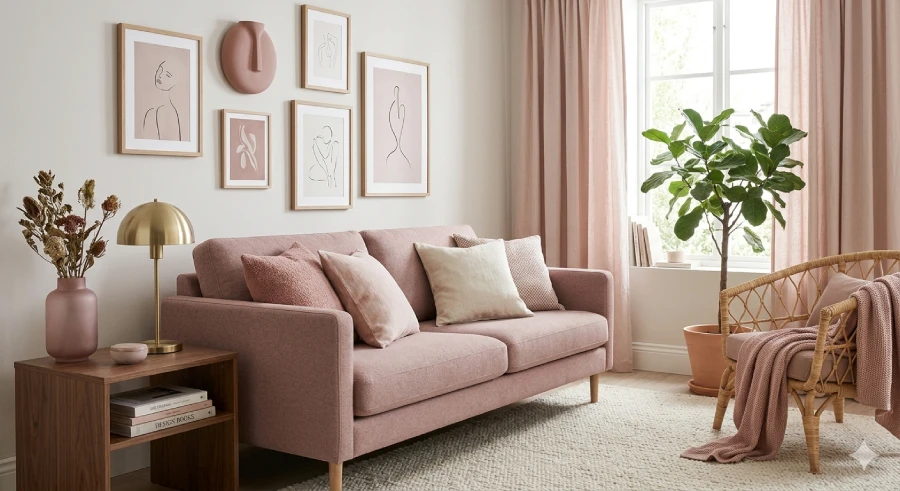
Dusty pink has quietly become one of the most versatile shades in both interior design and fashion. It sits in that rare middle ground between warm and neutral, adding softness to a space without turning everything sugary sweet. If you’ve been scrolling through home decor inspiration lately, you’ve already seen it everywhere.
The color has serious staying power. Unlike trend-driven shades that come and go with each season, dusty pink has been showing up in 2025 and 2026 design palettes from professional decorators and everyday homeowners alike. The reason is straightforward: it works with almost everything.
This guide covers what dusty pink actually is, what it communicates, and how to use it effectively in your home and wardrobe. You’ll also find practical color pairings, styling tips, and answers to the questions people search for most.
What Is Dusty Pink?
Dusty pink is a muted, slightly grayed version of pink. It carries grey or beige undertones that soften the brightness you’d find in pastel or hot pink, giving it a more refined, grown-up quality. The result is a color that reads as sophisticated rather than playful.
The two most commonly referenced HEX codes for dusty pink are #D8A8A8 and #E1AD9D. These represent slightly different temperatures of the shade, one leaning cooler and one warmer, but both share that signature muted quality.
It’s easy to confuse dusty pink with similar shades, but they each carry distinct personality. The table below shows how dusty pink compares with its closest relatives.
Dusty Pink vs Similar Shades
| Shade | Undertone | Feel | Best Use |
| Dusty Pink | Grey/beige | Muted, sophisticated | Interiors, fashion neutrals |
| Blush Pink | Warm/peachy | Soft, romantic | Weddings, bedrooms |
| Millennial Pink | Salmon/warm | Modern, gender-neutral | Branding, lifestyle |
| Pastel Pink | Light/pure | Playful, delicate | Children’s rooms, spring decor |
| Mauve | Purple/grey | Deep, moody | Accent walls, fashion |
Blush leans warmer and peachy, making it the go-to for romantic or bridal settings. Millennial pink carries a stronger salmon tone and became famous in tech branding. Pastel pink is lighter and more innocent. Dusty pink sits apart from all of them because of its grey undertone, which gives it that muted, almost vintage quality.
Dusty Pink Meaning and Color Psychology
In color psychology, dusty pink communicates calm, nostalgia, and quiet warmth. It carries the emotional associations of pink, including kindness, care, and nurturing, without the intensity that brighter shades bring. Where hot pink grabs attention, dusty pink invites you to slow down.
Research has shown that pink tones can reduce aggression and create a sense of emotional ease. Dusty pink, with its muted quality, takes that a step further. It’s the kind of color that makes a room feel comfortable and lived in rather than vibrant or stimulating. Interior designers have described it as pink with experience, a shade that’s been softened by time.
Designers also value it because it avoids the trap that color expert Kate Smith warns about: the tendency of pink to ‘go sweet and sappy quickly.’ The grey undertone in dusty pink keeps it from tipping into overly feminine or saccharine territory. That balance is exactly why it works across so many different design styles.
Why Dusty Pink Works in Modern Design
Dusty pink functions almost like a neutral. It doesn’t dominate a room the way a saturated color would, but it adds far more personality than beige or grey on their own. That’s a difficult balance to achieve, and it’s why interior designers keep returning to it.
The 2026 forecast from design trend analysts places dusty pink and dusty mauve firmly within the broader ‘pink and pastels’ movement, described as a romantic minimalism aesthetic. Paired with light woods, matte ceramics, and brushed brass, dusty pink fits naturally into the quiet luxury spaces that are defining contemporary interiors right now.
It also spans design styles without effort. Minimalist rooms benefit from its warmth without gaining clutter. Traditional spaces find it familiar and soft. Even contemporary or industrial interiors can use dusty pink as a single accent color to bring in some warmth against harder materials.
Interior Design Styling With Dusty Pink
Best Rooms for Dusty Pink
Bedrooms are the most natural fit. Dusty pink on walls or in soft furnishings creates a restful, cozy mood that supports winding down. Combine it with warm lighting around 2,700K and matte wall finishes to prevent the color from reading grey under artificial light.
Living rooms benefit from dusty pink through furniture and textiles rather than full wall coverage. A dusty pink sofa, armchair, or set of cushions against a warm grey or white wall is a proven combination that feels current without being trendy.
Bathrooms work well with dusty pink when kept simple. Paired with white tiles and brushed brass fixtures, even a small amount of dusty pink can make a bathroom feel spa-like and intentional.
Kids’ rooms are another strong candidate. Unlike brighter pinks that can feel overpowering in small spaces, dusty pink stays calm and works for older children who have moved past primary-color palettes.
PAA: Where can dusty pink be used in a room? It works in bedrooms, living rooms, bathrooms, and children’s rooms. It suits walls, soft furnishings, and accent pieces depending on how prominent you want the color to be.
Dusty Pink Color Combinations That Work
The table below covers the most effective dusty pink color pairings and what each combination achieves in a space.
| Color Pairing | Effect | Works Best In |
| Dusty Pink + White | Clean, airy | Bathrooms, minimalist rooms |
| Dusty Pink + Grey | Calm, contemporary | Living rooms, bedrooms |
| Dusty Pink + Beige/Taupe | Warm, earthy | Lounges, hallways |
| Dusty Pink + Gold/Brass | Glamorous, refined | Dining rooms, accent spaces |
| Dusty Pink + Charcoal | Bold contrast | Feature walls, fashion |
| Dusty Pink + Walnut Wood | Natural, grounded | Open-plan living, bedrooms |
One practical note on lighting: rooms with north-facing light will make dusty pink appear cooler and more grey. In these spaces, warm white bulbs (2,700K to 3,000K) help bring out the pink tones. South-facing rooms with natural warm light will naturally flatter dusty pink without additional adjustment.
PAA: What colors go with dusty pink in a room? Dusty pink pairs well with white, grey, beige, taupe, warm wood tones, and metallic accents like gold or brushed brass. Avoid high-saturation colors alongside it, as they overwhelm its subtlety.
Styling Dusty Pink in Fashion
Dusty pink has earned a permanent place in wardrobe basics because it flatters a wide range of skin tones. Its neutral undertone means it doesn’t clash with cool or warm complexions the way brighter pinks can. It reads as soft and approachable without looking washed out.
For casual outfits, dusty pink tops pair naturally with mid-wash or dark denim. The contrast grounds the lightness of the color without making it look overdressed. A dusty pink sweatshirt or knit with straight-leg jeans is a reliable, low-effort combination that works across seasons.
For more formal occasions, dusty pink dresses with neutral accessories, cream, ivory, or warm camel, create a polished look that isn’t trying too hard. Metallic accessories in gold or rose gold work particularly well here, carrying the warmth of the shade through the full outfit.
For layering, dusty pink works as both a base and an accent. A dusty pink turtleneck under a charcoal blazer brings softness to an otherwise sharp outfit. A dusty pink scarf or bag used as an accent against cream or tan keeps the look cohesive.
PAA: How should I style dusty pink in outfits? Pair it with denim for casual wear, neutrals like cream and camel for smart looks, and charcoal or dark grey for contrast. Avoid bright or saturated colors alongside it.
Dusty Pink in Branding and Visual Media
Dusty pink has become a go-to color for wellness, beauty, and lifestyle branding because of what it communicates visually: approachability, softness, and quiet sophistication. It signals that a brand is warm and trustworthy without being loud about it.
In web design, dusty pink backgrounds and accents have moved well beyond feminine connotations. They work for premium and lifestyle brands that want to feel warm and inviting. Used in social graphics or packaging, dusty pink communicates empathy and calm, qualities that perform well for consumer-facing brands in health, beauty, and home categories.
Unlike millennial pink, which felt very of its moment, dusty pink’s more muted quality gives it longevity in brand identities. It doesn’t date as quickly because it reads closer to a neutral than a trend color.
Common Mistakes When Using Dusty Pink
The most frequent error is using dusty pink without sufficient contrast. Because the color is already soft, pairing it with other muted or pale tones can make a room or outfit look washed out. You need at least one element with enough contrast, whether that’s a deep charcoal, warm wood, or crisp white, to give the dusty pink somewhere to breathe against.
A second common mistake is ignoring undertones. There are warm versions of dusty pink with beige or peach leanings and cooler versions with stronger grey in them. Mixing a cool dusty pink with warm-toned furniture creates a disconnect that’s hard to identify but easy to feel. Check your existing palette’s undertone before committing to a specific dusty pink shade.
The third mistake is overuse. Dusty pink as an accent adds warmth and personality. Dusty pink across every surface in a room or every piece in an outfit can feel monotonous. The 30% rule applies here: aim for dusty pink to occupy no more than a third of the overall scheme, with the rest in neutrals or complementary tones.
Simple Ways to Add Dusty Pink at Home
The fastest way to introduce dusty pink without commitment is through textiles. Throw pillows, blankets, and curtains in dusty pink cost very little and change the feel of a room quickly. A pair of dusty pink cushions on a grey sofa is enough to warm up an otherwise cool room.
Wall art is another low-cost option. Dusty pink art prints or framed botanical illustrations with dusty pink tones can anchor the color in a room without requiring paint or furniture purchases.
For the bedroom specifically, a dusty pink duvet cover or set of pillowcases can transform the mood of the space for under twenty pounds. Combine it with white or linen sheets for a layered, considered look.
PAA: How can I add dusty pink to my home on a budget? Start with textiles: cushions, throws, or curtains. Art prints and bedding are effective, affordable ways to bring the color in without permanent changes.
Seasonal Trends and Why Dusty Pink Lasts
Dusty pink appeared as a major design shade in the 1990s, faded, and has been steadily rebuilding its presence since the mid-2010s. What’s different this time is that it’s arrived alongside a broader shift toward calm, cozy interiors, a movement that shows no sign of reversing.
For 2026, design forecasters are pointing to warm pinks, including dusty pink and dusty mauve, as part of the romantic minimalism palette driving interior choices. Paired with matte ceramics, natural stone, brushed brass, and light oak, dusty pink fits precisely into the quiet luxury aesthetic that is defining home design right now.
PAA: Is dusty pink trendy or timeless? Both. It’s currently trending in 2025-2026 interior palettes, but its muted, neutral quality means it ages better than most trend colors. It doesn’t belong to one decade the way millennial pink did.
The key reason for its longevity is that grey undertone. It keeps dusty pink from becoming tied to a single era or aesthetic. It adapts to classic interiors, contemporary spaces, and everything in between, which is rare for a color that registers as clearly pink.
Frequently Asked Questions About Dusty Pink
What is the HEX code for dusty pink?
The two most commonly used HEX codes are #D8A8A8 (a cooler, greyer tone) and #E1AD9D (a warmer version with more beige). Some sources also reference #DCAE96 for dusty rose, which sits close to dusty pink with a slightly warmer undertone.
What is the difference between dusty pink and blush?
Dusty pink has grey or beige undertones that mute its brightness. Blush tends toward warmer, peachy tones and appears brighter. Dusty pink reads as more sophisticated and versatile in interiors. Blush is softer and more romantic, making it popular for bedrooms and weddings.
What emotions does dusty pink evoke?
Dusty pink evokes calm, warmth, and nostalgia. It’s associated with nurturing and comfort without the intensity of brighter pink shades. In color psychology, it’s seen as approachable and gentle.
Does dusty pink work in every room?
It works in most rooms but is best suited to spaces where a calm, warm atmosphere is the goal: bedrooms, living rooms, and bathrooms. It can also work in dining rooms when paired with warm metals and natural materials.



No Comment! Be the first one.